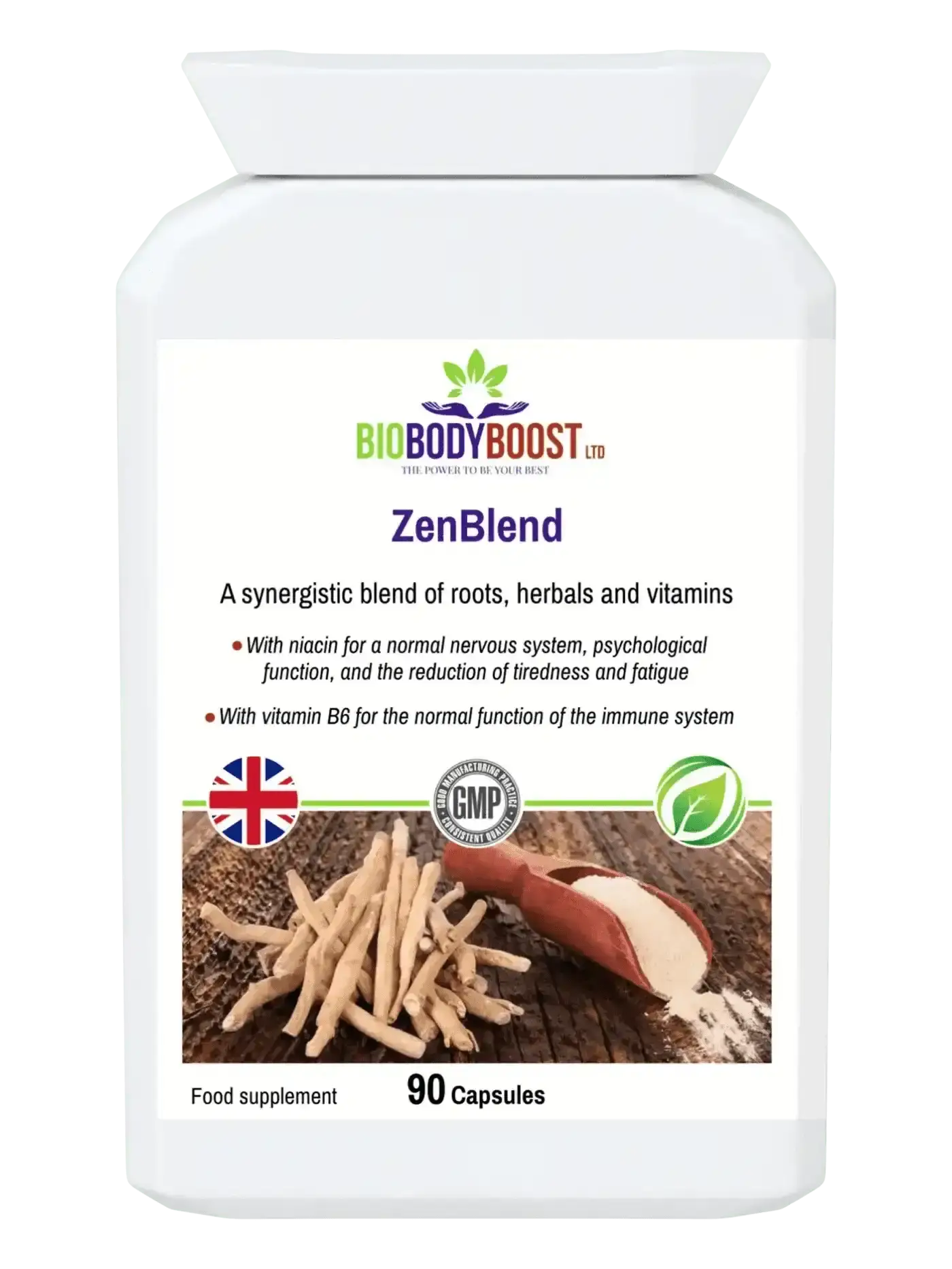
Quick answer: ashwagandha is halal. It is a plant root (Withania somnifera) with no animal involvement and no intoxicating properties. The Arabic name for ashwagandha is “عُشَقُولة” (or “القنطريون” in some regions) — it has a long history of use in Islamic medicine (Tibb al-Nabawi and Unani traditions). The compliance check for ashwagandha supplements is the capsule shell (HPMC = halal; porcine gelatine = haram) and the manufacturing environment certification. BioBodyBoost ZenBlend uses KSM-66 ashwagandha in HPMC capsules with third-party halal certification.
Why some Muslims ask about ashwagandha
The question arises because ashwagandha (Withania somnifera) is sometimes confused with other plants used in Hindu tradition, or because its Latin species name includes “somnifera” (sleep-inducing) which raises questions about sedative/intoxicant properties. Neither concern applies. Ashwagandha does not cause intoxication — its sedative effects are via cortisol reduction (HPA axis modulation) and GABA-receptor support, not via narcotic or intoxicant mechanisms. It is not classified as a prohibited substance under Islamic law by any major scholarly position we are aware of.
Is ashwagandha the same as an intoxicant?
No. Islamic prohibition on intoxicants (khamr) covers substances that cloud or impair the mind in the manner of alcohol. Ashwagandha reduces cortisol and supports calm — it does not impair cognition, cause euphoria or produce any narcotic effect. Its mode of action is anti-stress (adaptogenic), not intoxicant. This is analogous to chamomile tea, which also promotes calm without any intoxicant concerns in Islamic jurisprudence. No mainstream Islamic scholarly body has ruled ashwagandha haram.
The evidence for ashwagandha
KSM-66 is the most clinically studied ashwagandha extract. Key trials: Langade 2019 RCT (n=60): significantly improved sleep quality, sleep onset, total sleep time and cortisol reduction vs placebo. Wankhede 2015 JISSN (n=57 male resistance trainers): significantly increased testosterone, muscle size and recovery. Choudhary 2017 Journal of Dietary Supplements: significantly reduced anxiety and cortisol in chronically stressed adults. All using standardised KSM-66 extract at 300–600mg/day. ZenBlend — KSM-66 ashwagandha with rhodiola, L-theanine, niacin, B vitamins. Halal certified, vegan, HPMC capsule.
Is ashwagandha halal or haram?
Ashwagandha is halal. It is a plant root with no animal content, no intoxicant properties and a long history of use in Unani (Islamic) medicine. The question of intoxicants (haram under Islamic law) does not apply — ashwagandha reduces cortisol and supports calm via adaptogenic mechanisms, not via narcotic or mind-altering pathways. No major Islamic scholarly body has issued a ruling that ashwagandha is haram. The compliance check for ashwagandha supplements is not the ingredient but the format: HPMC plant-derived capsule (halal) vs porcine gelatine capsule (haram).