"How long does ashwagandha take to work?" is one of the most searched questions about this supplement in the UK, and the honest answer is more nuanced than most articles admit. Here's the actual timeline from clinical data — and why people who give up at week two are stopping just before results begin.
The Short Answer
Most people who respond to ashwagandha notice initial effects at 2–4 weeks, with full cortisol normalisation and peak anxiety benefits typically at 6–8 weeks of consistent daily use. Some studies run to 12 weeks and continue to show improvement. There is no clinically meaningful same-day effect on stress or cortisol.
Week-by-Week Timeline Based on Clinical Evidence
Week 1–2: Foundational changes, limited perception
During the first two weeks, ashwagandha is accumulating in the system and beginning to modulate HPA axis signalling. Most people notice little at this stage. Some report marginally better sleep onset or reduced muscle tension — these are the earliest signs of cortisol modulation. Do not expect anxiety relief or energy changes this early.
Week 2–4: First noticeable effects
The majority of people who respond to ashwagandha begin to notice changes in week 2–4. The most commonly reported early effects are:
- Reduced reactivity to stressful situations — the same trigger feels less overwhelming
- Improved sleep quality and fewer night wakings
- Reduced muscle tension, particularly across the shoulders and jaw
- Slightly more stable energy through the afternoon
These are not placebo-consistent: the 2019 Chandrasekhar RCT showed statistically significant cortisol reductions measurable at 4 weeks versus placebo.
Week 4–8: Primary benefit window
The 6–8 week mark is where the most significant effects are documented in clinical trials. A 2020 RCT published in Medicine found that 240mg daily for 8 weeks produced significant reductions in morning cortisol, GAD-7 anxiety scores and self-reported wellbeing versus placebo. The cortisol reductions at this stage are measurable via salivary cortisol tests, not just subjective.
Week 8–12: Continued improvement and stabilisation
Longer studies (12 weeks) show continued improvement beyond 8 weeks, with some measures (physical recovery, hormonal balance) continuing to improve. This suggests cumulative benefit — not a plateau at 8 weeks.
Why Some People Don't Respond
Non-response is real and worth understanding. The most common reasons:
- Underdosed product — the clinical dose is 300–600mg of extract standardised to ≥5% withanolides. Products with unstandardised root powder at 100–200mg are unlikely to produce measurable effects regardless of duration.
- Stopping too early — the most common reason. Weeks 1–2 show little because the mechanism (HPA axis rebalancing) is slow by nature.
- Stress is structural, not biological — ashwagandha modulates the hormonal stress response. If stress is caused by an unresolved life situation, ashwagandha reduces reactivity but does not solve the underlying problem.
- Thyroid interaction — in some individuals with thyroid conditions, ashwagandha's effect on thyroid hormone levels (it can increase T3/T4) may counteract sleep benefits.
How to Take Ashwagandha for Best Results
- Take consistently daily — skipping days resets the accumulation effect
- Evening dosing tends to support sleep better; morning dosing tends to support daytime stress management; split dosing covers both
- Take with food to reduce the small risk of GI discomfort in sensitive individuals
- Give it a minimum of 8 weeks before judging effectiveness
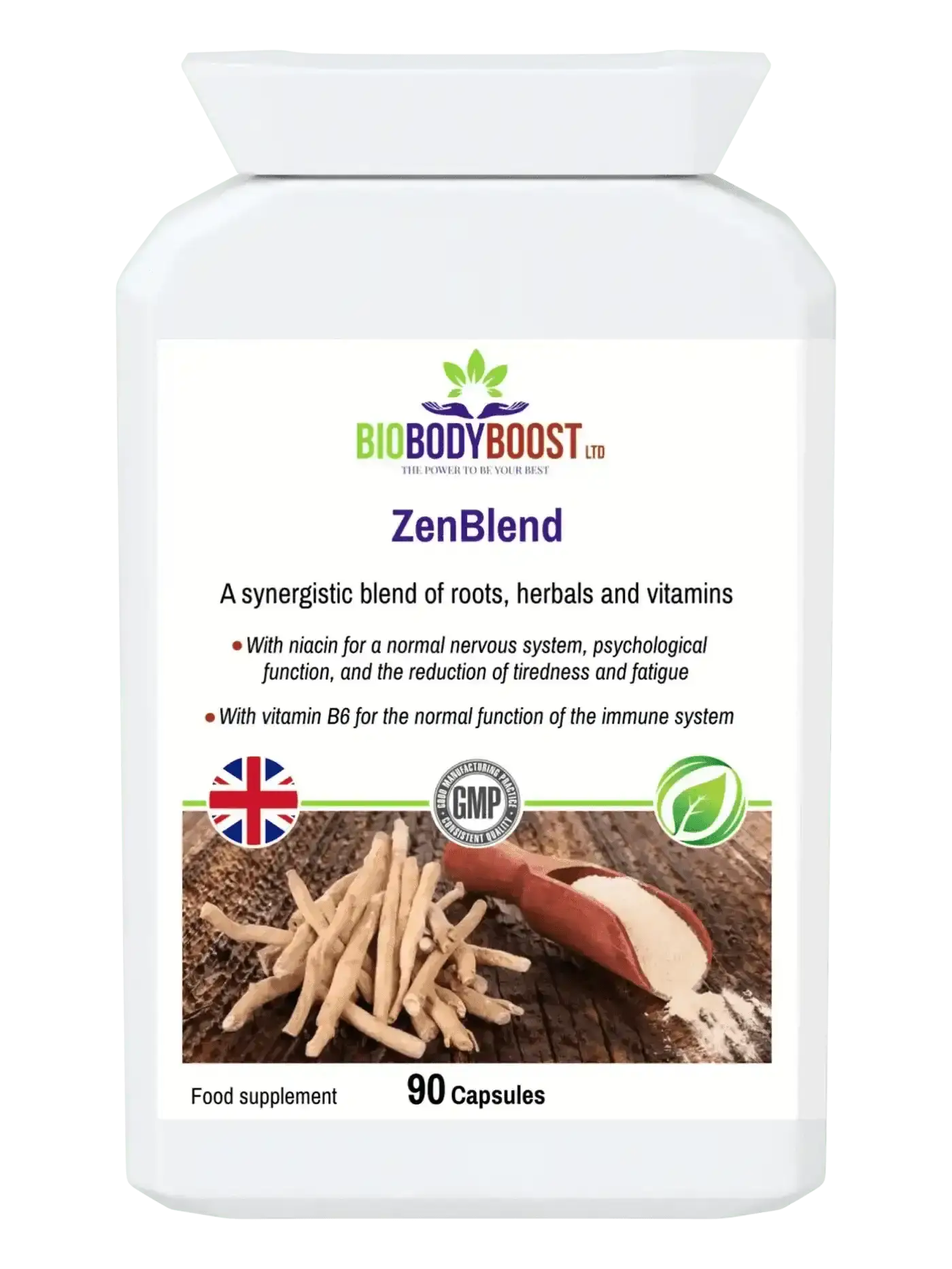
ZenBlend by BioBodyBoost contains KSM-66 standardised ashwagandha extract alongside rhodiola, ginseng, maca and B vitamins — the complete adaptogen stack for cortisol, energy and sleep. Halal certified, vegan, UK GMP. View all BioBodyBoost supplements.