Quick answer: the three nutrients with the strongest evidence and EU-authorised health claims for children’s immune function are vitamin D (also recommended by the NHS for all UK children), vitamin C and zinc. Probiotics have emerging evidence particularly for reducing duration of upper respiratory infections in children. Everything else in the children’s immunity supplement market has significantly weaker evidence. The halal compliance check for children’s supplements is primarily the gelatine source in gummies (see the full halal children’s vitamins guide).
Why children’s immunity is frequently challenged in UK winters
Children’s immune systems are still developing — particularly the adaptive immune memory that builds through exposure to pathogens. The average UK child aged 1–6 experiences 6–8 respiratory infections per year — a normal and expected part of immune education. However, nutritional deficiencies can impair immune responses and increase severity and duration of infections. The UK winter — with indoor crowding, vitamin D synthesis shutting down and seasonal viral circulation — creates the highest-risk period for nutritionally-driven immune vulnerability.
1. Vitamin D — mandatory and most impactful
The NHS recommends 400 IU (10mcg) vitamin D daily for all UK children aged 1–4 years and for older children with limited sun exposure. Vitamin D receptors are present on all major immune cells — T cells, B cells, macrophages, dendritic cells and natural killer cells. Vitamin D deficiency impairs both innate and adaptive immune function. Martineau et al. (2017, BMJ, meta-analysis of 25 RCTs, n=11,321) found vitamin D supplementation significantly reduced the risk of acute respiratory infections, with the largest protective effect in those severely deficient. For South Asian children who require year-round supplementation, lichen-derived D3 in a halal-certified format is the appropriate choice. Lipovita D3+K2 drops — discuss dose with your GP for your child’s age.
2. Vitamin C — neutrophil function and infection duration
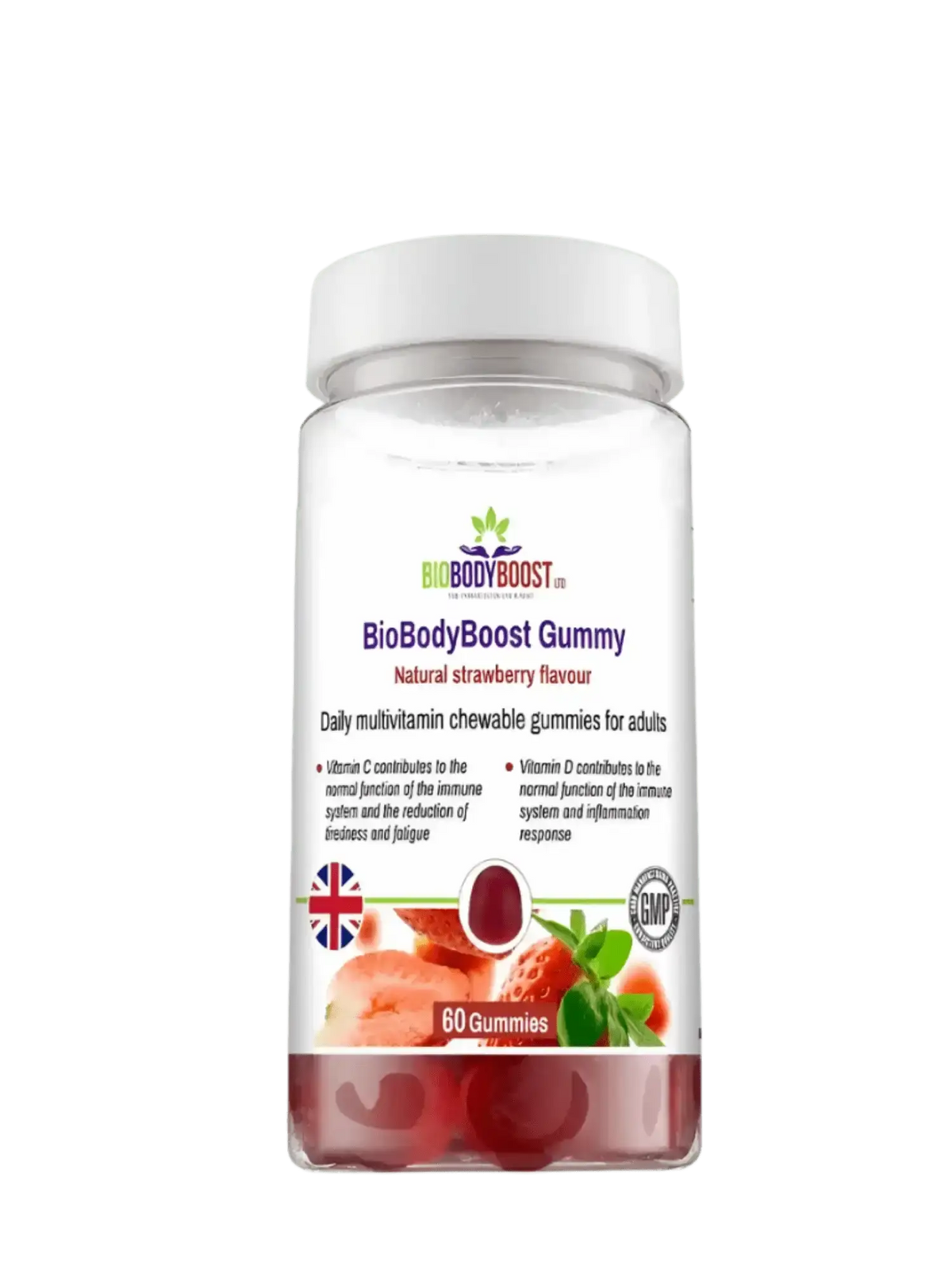
Vitamin C concentrates in neutrophils (the front-line immune cells) at up to 50x plasma levels, supporting oxidative burst during bacterial killing and protecting neutrophils from self-inflicted oxidative damage. EU-authorised claim: vitamin C contributes to the normal function of the immune system. Hemilä and Chalker (2013, Cochrane Review) found regular vitamin C supplementation reduced cold duration in children by 14% — more than the 8% reduction seen in adults. BioBodyBoost Multivitamin Gummies provide vitamin C alongside vitamins A, D, E, B12 and folic acid in a halal-certified pectin gummy (no gelatine). Halal Multivitamin Gummies — halal approved, vegan, pectin-based.
3. Zinc — immune cell development
Zinc is required for the development and function of T lymphocytes, B lymphocytes, natural killer cells and macrophages. Zinc deficiency is common in UK children on restricted diets or with low meat intake. EU-authorised claim: zinc contributes to the normal function of the immune system. Singh and Das (2011, Cochrane Review) found zinc supplementation significantly reduced cold duration and severity in healthy children.
4. Probiotics — gut immunity in children
Approximately 70% of the immune system’s tissue (gut-associated lymphoid tissue) is in the gut. A 2014 Cochrane Review found probiotic supplementation in children significantly reduced the number of days of illness, school absence and antibiotic prescriptions vs placebo. Lactobacillus rhamnosus GG (LGG) has the strongest evidence for children specifically. Little BioGut — vegan probiotic powder suitable from birth, halal approved, no gelatine. Mix into milk, water or food.
What does NOT have robust evidence for children’s immunity
- Elderberry: plausible mechanism (antiviral), limited RCT evidence in children specifically
- Echinacea: inconsistent evidence; some studies show modest benefit, others none
- Vitamin E: EU-authorised immune claim but less consistent paediatric evidence than D, C and zinc
- Garlic extracts: antimicrobial properties in vitro, limited robust RCT evidence for childhood infection prevention
Browse the full Halal Vitamins UK collection and see the complete halal children’s vitamins guide.
What vitamins help children’s immune system UK?
The three with the strongest evidence and EU-authorised health claims for immune function: (1) vitamin D — NHS-recommended for all UK children 1–4 years; Martineau 2017 BMJ meta-analysis (n=11,321) confirmed significant reduction in respiratory infections; (2) vitamin C — Hemilä 2013 Cochrane found 14% cold duration reduction in children; (3) zinc — Singh 2011 Cochrane found significant cold duration and severity reduction. All three are in BioBodyBoost halal-certified Gummy Multivitamins (pectin-based, no gelatine). Probiotics (Little BioGut) address gut immunity. Everything else in the children’s immunity market has significantly weaker or inconsistent evidence.
Are children’s immune supplements safe to take daily?
Vitamin D at 400 IU, vitamin C at 30–40mg and zinc at 5mg daily (typical children’s multivitamin levels) are safe for daily use in children. Do not supplement children with adult-dose single nutrients without medical guidance — the safe upper levels for children are lower than adult upper limits. For example, the UK safe upper level for vitamin D in children under 10 is 50mcg (2,000 IU) per day — standard paediatric doses of 400 IU provide significant safety margin. Always check with your GP or health visitor before starting supplements in children under 2 years.