
Quick answer: "hair, skin and nails" supplements are one of the fastest-growing wellness categories on social media right now, with views up more than 30,000% year-over-year — but the format hides a compliance question almost nobody flags. These formulas are typically built around collagen (usually marine or bovine) plus biotin, hyaluronic acid and vitamin C. Marine-sourced collagen sidesteps the bovine gelatine question that trips up land-animal collagen, but it introduces a different one: fish-derived ingredients are halal by most scholarly positions, but only when the specific fish species and slaughter-adjacent handling meet certain conditions — a nuance that's rarely mentioned on a category built almost entirely around glossy TikTok testimonials.
Why this category is exploding right now
Hair, skin and nails supplements have gone from a niche beauty-aisle product to one of the most-discussed wellness categories on TikTok, with growth outpacing most other supplement trends tracked in 2026. The appeal is straightforward: it's a "beauty from within" pitch rather than a topical product, framed around visible, personal results rather than abstract internal health markers — which makes it inherently more shareable as before/after content than, say, a magnesium supplement.
What's actually in these formulas — and why the combination matters
A well-formulated hair, skin and nails supplement typically combines four components, each doing a different job:
- Collagen (usually marine or bovine): the structural protein that forms the scaffold of skin, and a component of hair and nail structure. Natural collagen production declines from the mid-20s onward, which is the basis for supplementing it externally.
- Biotin (vitamin B7): has an EU-authorised health claim specifically for the maintenance of normal hair and normal skin — one of the few beauty-adjacent nutrients with formal regulatory backing rather than just traditional use.
- Hyaluronic acid: a naturally occurring skin component that holds significant water weight relative to its mass, contributing to skin hydration and plumpness.
- Vitamin C: has an EU-authorised claim for contributing to normal collagen formation for the normal function of skin — meaning it's not just an antioxidant bystander in these formulas, it's mechanistically necessary for the collagen component to actually work as intended.
This is why a genuinely well-built formula combines these rather than relying on collagen alone: vitamin C is a required cofactor for collagen synthesis in the body, so a collagen supplement without adequate vitamin C is working against its own mechanism.
Marine vs bovine collagen: the halal question changes, it doesn't disappear
Marine collagen (typically sourced from fish skin, a byproduct of the fish processing industry) is the more common choice in halal-marketed beauty supplements, and for good reason: it avoids the bovine gelatine and slaughter-method questions that apply to land-animal collagen entirely. But "fish-derived" isn't automatically a free pass — the compliance question shifts rather than vanishes.
For most Sunni schools of Islamic jurisprudence, all sea creatures (including fish) are considered halal without requiring a specific slaughter method, which is why marine collagen is generally treated as straightforwardly compliant. This is a genuinely simpler position than land-animal collagen, where gelatine sourcing, slaughter method and cross-contamination all need individual verification. The remaining checks for marine collagen specifically are the same as any supplement: capsule shell material (HPMC vs gelatine) and processing aids.
What the evidence actually shows
Collagen supplementation research has grown substantially in recent years. Multiple randomised controlled trials have found oral collagen peptide supplementation associated with measurable improvements in skin elasticity and hydration over 8-12 week periods compared to placebo, with effect sizes generally modest but consistent across several independent trials. Biotin deficiency is specifically linked to hair thinning and brittle nails in the research literature — though it's worth being direct that biotin supplementation shows its clearest benefit in people who are actually biotin-insufficient, rather than a universal hair-growth guarantee for everyone regardless of baseline status.
Our approach

Collagen, biotin, vitamin C and hyaluronic acid together — not collagen alone, since vitamin C is a required cofactor for the collagen mechanism to function.
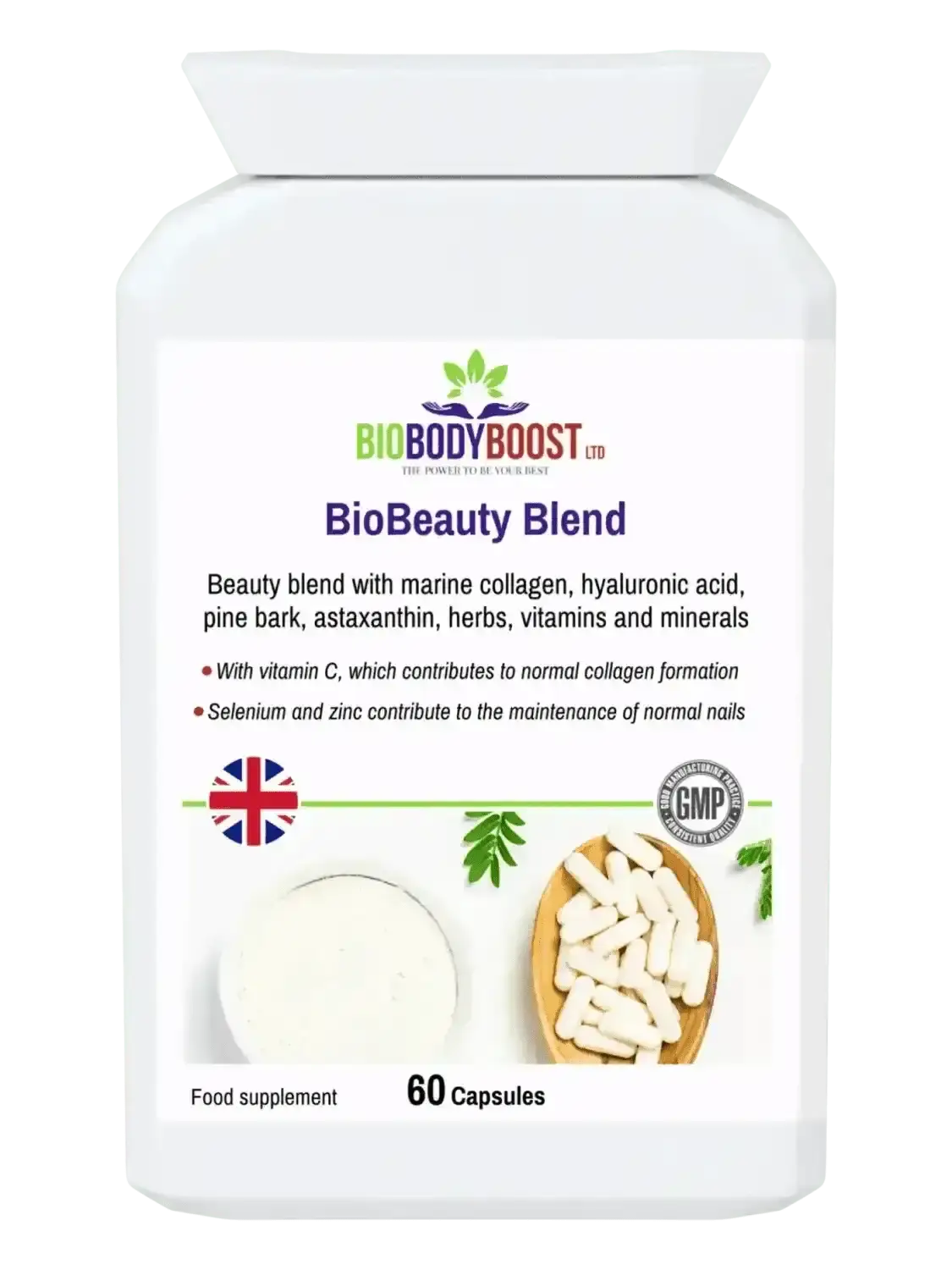
BioBeauty Blend combines marine collagen (Peptan Type I) with biotin, hyaluronic acid, vitamin C, astaxanthin and pine bark extract — built around the ingredient combination the evidence actually supports, rather than collagen marketed alone. Halal approved. As a pescatarian rather than fully vegetarian or vegan product (it contains fish-derived collagen), it sits specifically for those whose dietary framework permits fish, which halal dietary guidelines generally do without the additional verification land-animal ingredients require.
Frequently Asked Questions
Is marine collagen halal?
Yes, under most scholarly positions. Fish and other sea creatures are generally considered halal without requiring a specific slaughter method under most Sunni schools of jurisprudence, which is why marine collagen avoids the gelatine and slaughter-method questions that apply to bovine (cattle-derived) collagen. The remaining compliance checks are the same as any supplement: capsule shell material and manufacturing processing aids.
What should a hair, skin and nails supplement actually contain?
The evidence supports a combination rather than collagen alone: collagen (marine or bovine) as the structural component, vitamin C as a required cofactor for collagen synthesis, biotin with its EU-authorised claim for normal hair and skin maintenance, and often hyaluronic acid for skin hydration. A collagen-only product is missing the vitamin C its own mechanism depends on.
Do hair, skin and nails supplements actually work?
Multiple randomised controlled trials support modest but measurable improvements in skin elasticity and hydration from oral collagen supplementation over 8-12 weeks. Biotin's clearest evidence is in people who are actually biotin-insufficient rather than as a universal hair-growth guarantee. Results are generally gradual rather than dramatic, and consistent daily use over months, not days, is what the research protocols actually reflect.
Is BioBeauty Blend vegan or vegetarian?
No — it contains marine collagen (fish-derived), making it pescatarian rather than vegetarian or vegan. It is halal approved, since fish is generally permissible under Islamic dietary law without the additional slaughter-method verification required for land-animal ingredients.
This article is for general information and does not constitute medical advice. Speak to a healthcare professional before starting any new supplement, particularly if pregnant, breastfeeding, or if you have a fish or shellfish allergy.
BioBodyBoost — Halal Certified UK Supplements
Use code HALAL10 for 10% off your first order — halal approved under UHA Certificate Ref. 24623, UK made. Shop Hair, Skin & Beauty UK →