Hair loss has multiple causes — most of which require medical assessment before supplementation. The NHS recommends speaking to your GP about hair loss, particularly if it is sudden, patchy or accompanied by other symptoms. This guide covers evidence-based nutritional support for hair loss with a nutritional or deficiency cause.
Quick answer: the supplement ingredients with the strongest evidence for hair loss are iron (the most common nutritional cause of hair loss in UK premenopausal women), zinc, vitamin D (deficiency linked to alopecia areata), and biotin (only relevant if you are actually deficient — which is rare). For androgenetic alopecia (pattern baldness driven by DHT), no supplement replaces medical treatment (minoxidil, finasteride) — but nutritional support prevents deficiency-driven acceleration. All the relevant nutrients are available in halal-certified format. Marine collagen has emerging evidence for hair structure support.
Why hair loss has a nutritional dimension
Hair follicles are among the most metabolically active structures in the body — they require continuous energy, protein and micronutrients to sustain the hair growth cycle. The three phases of hair growth: anagen (active growth, 2–7 years), catagen (regression, 2–3 weeks) and telogen (resting/shedding, 3 months). Nutritional deficiencies do not usually stop hair growth permanently but push follicles prematurely into telogen (the shedding phase), causing telogen effluvium — diffuse shedding that typically appears 2–3 months after the triggering deficiency or stressor.
The NHS identifies nutritional deficiencies as one of the recognised causes of telogen effluvium, alongside stress, illness, hormonal changes and certain medications.
1. Iron — the most common nutritional cause in UK women
Iron deficiency is the most prevalent micronutrient deficiency globally and one of the most common reversible causes of hair loss in premenopausal women. Ferritin (stored iron) is a critical signal for the hair follicle — when ferritin levels fall below approximately 30μg/L, hair follicles prioritise other iron-dependent processes over hair growth, pushing follicles into telogen.
What research shows: Rushton et al. (2002, Journal of Dermatology, n=312 women with hair loss) found significantly lower ferritin and serum iron in women with diffuse hair loss vs controls, and that correction of iron deficiency alongside L-lysine supplementation significantly reduced hair shedding. A 2006 Journal of the American Academy of Dermatology review by Trost et al. confirmed iron deficiency as a significant contributor to female pattern hair loss and telogen effluvium.
Practical point: ferritin (not just haemoglobin) is the relevant test. You can be iron-deficient in terms of stored iron (low ferritin) without being anaemic. Many GPs will not flag low ferritin unless it drops below 12μg/L — but for hair follicles, levels below 30μg/L are associated with shedding. Request a full iron panel including ferritin specifically.
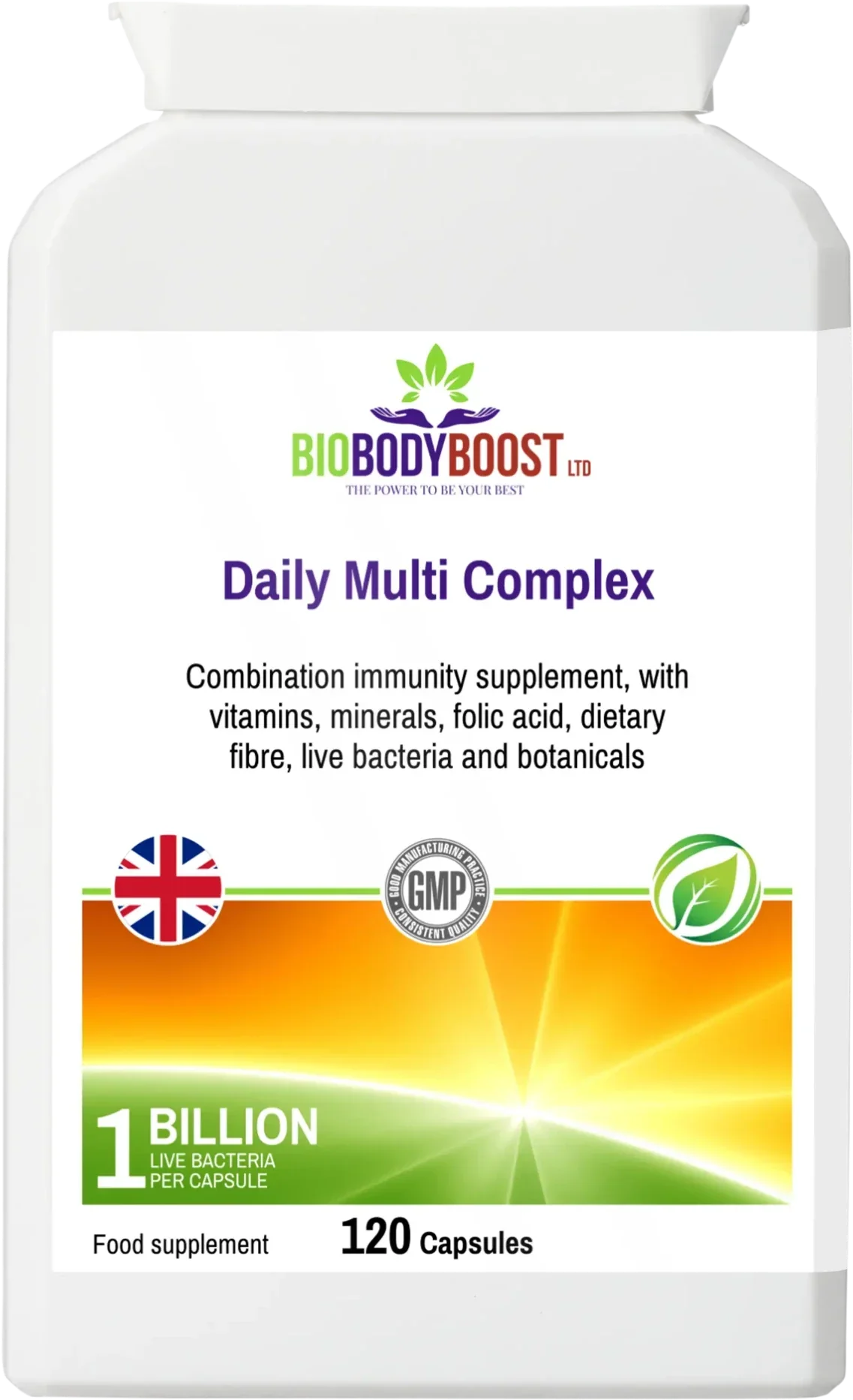
Daily Multi Complex contains iron 14mg (100% NRV) as ferrous fumarate. Daily Multi Complex — halal certified, vegan, HPMC capsule.
2. Zinc — follicle enzyme cofactor
Zinc is a cofactor for multiple enzymes involved in keratin synthesis and the regulation of sebaceous glands. Zinc deficiency causes hair loss — this is well-established. The mechanism: zinc is required for RNA polymerase and thymidine kinase, both essential for rapidly dividing hair matrix cells. Low zinc impairs the proliferation of follicular keratinocytes, slowing hair production.
What research shows: Park et al. (2013, Annals of Dermatology) found significantly lower serum zinc levels in patients with alopecia areata, telogen effluvium and female pattern hair loss compared to healthy controls, with the lowest levels in alopecia areata. A 2012 International Journal of Trichology study found zinc supplementation in zinc-deficient hair loss patients produced significant hair regrowth. EU-authorised health claim: zinc “contributes to the maintenance of normal hair.”
Magnesium 3 Complex provides zinc 10mg (100% NRV). Daily Multi Complex provides zinc 15mg (150% NRV). Both halal certified.
3. Vitamin D — the alopecia areata connection
Vitamin D receptors (VDR) are expressed in hair follicles. Vitamin D signalling through VDR is required for the initiation of the anagen (growth) phase of the hair cycle. Deficiency impairs this signalling. The most specific association is with alopecia areata (patchy hair loss driven by autoimmune attack on follicles) — where vitamin D deficiency is significantly more prevalent than in the general population.
What research shows: Cerman et al. (2014, JEADV) found significantly lower serum 25-OH-D in alopecia areata patients vs controls, with the severity of hair loss inversely correlated with vitamin D levels. A 2019 meta-analysis in Dermatology and Therapy confirmed significantly lower vitamin D in alopecia areata patients across multiple studies. The NHS recommends vitamin D supplementation for all UK adults October to March — and year-round for South Asian adults. Lipovita D3+K2 — lichen-derived D3, halal, vegan.
4. Biotin — the overhyped one
Biotin (vitamin B7) is heavily marketed for hair, skin and nails. The reality: biotin deficiency causes hair loss — but biotin deficiency is genuinely rare in people eating a varied diet. Biotin is found in eggs, nuts, meat and wholegrains. Supplementing biotin in non-deficient people has very limited evidence for hair growth benefit. A 2017 Skin Appendage Disorders review found only case reports and uncontrolled trials showing biotin benefit — all in people with confirmed deficiency or specific genetic conditions.
Who may be genuinely biotin-deficient: people taking anticonvulsant medications (impair biotin absorption), people on very restrictive diets, those who eat large amounts of raw egg white (avidin binds biotin), and people with certain rare genetic conditions. For everyone else: biotin supplementation is unlikely to produce meaningful hair growth benefit, though it is safe and inexpensive. Daily Multi Complex provides biotin 50μg (200% NRV) as a standard component of the multivitamin formula.
5. Marine collagen — emerging hair structure support
Hair is approximately 95% keratin — a structural protein. Marine collagen peptides provide glycine, proline and hydroxyproline — the amino acids the body uses to synthesise keratin. Additionally, collagen has antioxidant properties that may protect hair follicle stem cells from free radical damage, which contributes to follicle miniaturisation in androgenetic alopecia.
What research shows: A 2012 Journal of Investigative Dermatology study found that collagen forms a critical component of the dermal papilla, the structure that controls follicle cycling. A 2016 double-blind RCT found collagen peptide supplementation significantly improved hair thickness and growth rate in women with thinning hair. The evidence is emerging rather than definitive — but the mechanism is sound and the safety profile is excellent. Marine Collagen Powder — 9g per serving, halal certified fish-source collagen.
What does NOT have meaningful evidence for hair loss
- Saw palmetto: used for androgenetic alopecia via DHT inhibition — limited human trial evidence, mechanistically plausible but not robust enough to recommend confidently. Not currently in the BBB range.
- Caffeine shampoo: topical only — no meaningful effect from oral supplementation.
- Collagen creams: topical collagen molecules are too large to penetrate the dermis — oral supplementation is the evidence-based route.
- Silica from bamboo: some evidence for nail strength; hair evidence very limited.
The halal hair health stack
| Supplement | Hair mechanism | Evidence |
|---|---|---|
| Daily Multi Complex | Iron + zinc + biotin + B vitamins in one | Strong (for deficiency correction) |
| Lipovita D3+K2 | VDR signalling for anagen initiation | Strong for alopecia areata |
| Marine Collagen 9g | Amino acids for keratin + dermal papilla | Emerging |
| Magnesium 3 Complex | Zinc for keratinocyte proliferation + B6 | Good for deficiency |
Browse the full Halal Vitamins UK collection.
What vitamin deficiency causes hair loss UK?
The most clinically significant nutritional causes of hair loss in the UK: (1) iron deficiency — the most common, particularly in premenopausal women; ferritin below 30μg/L is associated with telogen effluvium (shedding). (2) Zinc deficiency — significantly lower in patients with alopecia areata, telogen effluvium and female pattern hair loss (Park et al. 2013). (3) Vitamin D deficiency — VDR signalling required for anagen initiation; strongly associated with alopecia areata. (4) Biotin deficiency — causes hair loss but is rare in people eating a varied diet. Request a blood test for ferritin (not just haemoglobin), zinc and vitamin D if experiencing significant hair loss. The NHS recommends GP assessment for hair loss to identify the cause before starting supplements.
Is biotin good for hair loss UK?
Only if you are actually deficient in biotin — which is uncommon in people with a varied diet. Biotin deficiency does cause hair loss, and correcting it restores hair growth. But supplementing biotin in non-deficient people has very limited clinical evidence for hair growth benefit (2017 Skin Appendage Disorders review: only case reports in deficiency or genetic conditions). The heavy marketing of high-dose biotin (5,000–10,000mcg) for hair growth is not supported by robust RCT evidence in non-deficient adults. At 200–400% NRV (50–100μg/day), biotin as part of a multivitamin is appropriate as nutritional insurance. Megadoses are unnecessary and can interfere with thyroid and cardiac biomarker lab tests — always tell your GP if you are taking high-dose biotin before blood tests.
Are hair supplements halal UK?
The main compliance risks in hair supplements: gelatine capsules (typically porcine — haram), biotin from animal-derived sources (rare but possible), and flavouring systems in gummy-format hair supplements (may contain alcohol carriers or E120 carmine colouring). BioBodyBoost products addressing hair health use HPMC plant-derived capsules, are vegan and carry full third-party halal certification. Daily Multi Complex provides iron, zinc, biotin and B vitamins; Lipovita D3+K2 provides vitamin D from lichen (plant-derived); Marine Collagen is from halal-certified fish species.
Does vitamin D help with hair loss?
For alopecia areata specifically, yes — multiple studies confirm significantly lower vitamin D in alopecia areata patients vs controls, with severity of hair loss inversely correlated with vitamin D levels (Cerman 2014, JEADV). Vitamin D receptors in hair follicles regulate the transition into anagen (active growth) phase — deficiency impairs this. For female pattern hair loss and telogen effluvium, the evidence for vitamin D is less consistent but deficiency correction is appropriate given its near-universal UK winter prevalence. The NHS recommends vitamin D supplementation for all UK adults from October to March.