Ramadan produces one of the most dramatic dietary pattern changes of the year — a daily shift from continuous eating to a single extended fasting window, with two concentrated eating occasions at Suhoor and Iftar. This pattern has measurable effects on the gut microbiome, digestive enzyme activity and intestinal motility that most supplement and health guides completely ignore.
What fasting does to the gut microbiome
The gut microbiome is profoundly shaped by feeding patterns. Thaiss et al. (2014, Cell) established that the gut microbiome has its own circadian rhythm synchronised with host feeding patterns. Ramadan’s reversal of normal eating timing — with the main meal at night — temporarily disrupts this microbial circadian synchrony, contributing to the digestive discomfort many experience in the first week. Akkermansia muciniphila (associated with gut barrier integrity) increases during fasting periods — a beneficial shift. But microbial diversity initially decreases in the first 1–2 weeks as populations adjust to the new feeding window.
The Iftar digestive challenge
Breaking a 14–17 hour fast with a large meal creates a specific digestive burden. After extended fasting, digestive enzyme activity is lower — the gut has been producing fewer enzymes during the fasting window. A large varied Iftar meal — often high in fat, refined carbohydrate and protein simultaneously — arrives in a gut with reduced enzyme preparedness. The result: bloating, gas, sluggish digestion and post-Iftar heaviness.
The halal Ramadan gut stack
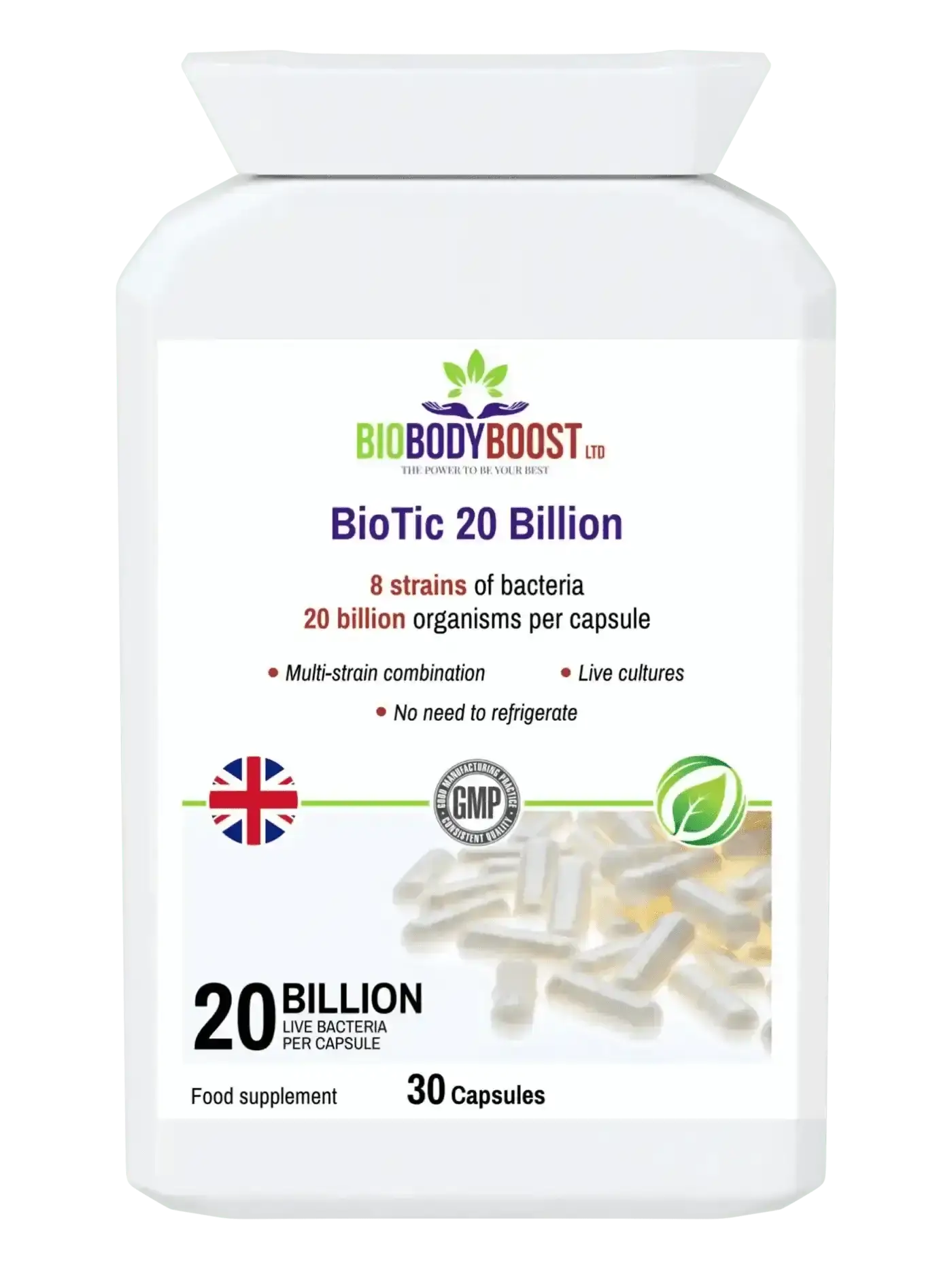
Probiotics at Suhoor — BioTic 20 Billion
Probiotics taken with Suhoor food survive the stomach acid environment better and support microbiome diversity through the month-long dietary disruption. BioTic 20 Billion — 20 billion CFU, 8 strains, halal certified, vegan. Suhoor timing confirmed appropriate — dry capsules with pre-dawn food do not break the fast.
Saccharomyces boulardii for gut resilience
McFarland meta-analysis (2010, World J Gastroenterology, 31 RCTs) confirmed S. boulardii significantly reduces digestive disruption. SaccharoMyTum — 5 billion CFU + D3, halal certified.
Digestive enzymes before Iftar
Taking plant digestive enzymes 10–15 minutes before Iftar addresses the enzyme preparedness gap. Protease, amylase, lipase, bromelain and papain support digestion of the typical large Iftar meal. EnzymeXtreme — plant-derived full-spectrum enzymes, halal certified, vegan.
Liver support at Suhoor — BioHep
Extended fasting reduces bile cycling. A large fatty Iftar demands high bile output from a reduced-cycling system. Choline supports hepatic bile synthesis and fat metabolism. BioHep — artichoke, choline, herbal complex, halal certified.
Browse the full Gut Health UK collection.
Should I take probiotics during Ramadan?
Yes. Take at Suhoor with food for optimal bacterial survival. Consistency through the month supports the microbiome through dietary pattern disruption. BioTic 20 Billion (20 billion CFU, 8 strains, halal certified) is taken as a dry capsule with Suhoor food and does not break the fast.
Why am I bloated after Iftar?
Three main causes: (1) reduced digestive enzyme preparedness after the fasting window; (2) rapid eating at Iftar increasing swallowed air; (3) high refined carbohydrate content of typical Iftar foods producing rapid fermentation. EnzymeXtreme before Iftar addresses cause 1. Eating dates first then pausing before the main meal addresses causes 2 and 3.