Quick answer: the gut and brain communicate continuously via three pathways — the vagus nerve (80% of signals travel gut-to-brain, not the other way), the enteric nervous system (500 million neurons in the gut wall), and the immune-endocrine axis (gut bacteria directly influence cortisol and systemic inflammation). Approximately 90–95% of the body’s serotonin is produced in the gut. Disrupted microbiome composition reduces serotonin production and amplifies the cortisol stress response — which is why gut problems and anxiety, depression and poor sleep frequently co-occur.
How the gut and brain actually communicate
The gut-brain axis is not a metaphor — it is a set of well-characterised biological pathways:
- The vagus nerve: a direct neural highway running from the brainstem to the gut. Critically, approximately 80% of vagus nerve signals travel from the gut to the brain, not the other way. The gut is constantly reporting its state to the brain — microbiome composition directly influences what those signals say.
- The enteric nervous system: the gut contains over 500 million neurons — more than the spinal cord — operating largely independently of the central nervous system. This “second brain” regulates gut motility, secretion and blood flow, but its signalling extends to mood and cognitive function via vagal and humoral connections.
- The immune-endocrine axis: gut bacteria directly produce and modulate neurotransmitters (GABA, serotonin, dopamine precursors), short-chain fatty acids that affect brain function, and cytokines that cross the blood-brain barrier. They also regulate HPA axis reactivity — how strongly the cortisol stress response fires.
Why 90% of serotonin is in the gut
This is the most counterintuitive fact in gut-brain biology and the most important for understanding why gut health affects mood. Enterochromaffin cells in the gut lining synthesise approximately 90–95% of the body’s serotonin, primarily to regulate intestinal movement. But gut-derived serotonin also signals back to the brain via the vagus nerve, influencing mood, cognition and sleep quality.
Gut bacteria directly influence enterochromaffin cell activity. A diverse, healthy microbiome correlates with higher serotonin production. Dysbiosis — microbial imbalance characterised by reduced diversity and overgrowth of inflammatory species — reduces serotonin synthesis. This is why gut problems and low mood frequently co-occur and why antidepressants (SSRIs) cause GI side effects — they act on serotonin receptors that are predominantly in the gut.
The microbiome-stress bidirectional cycle
Stress disrupts the gut microbiome, and a disrupted microbiome amplifies the stress response. Cortisol alters gut permeability, reduces beneficial bacteria and promotes inflammatory species. Those inflammatory changes feed back to the brain via the vagus nerve and systemic immune signals, increasing anxiety, brain fog and sleep disruption. This bidirectional cycle is now well-characterised in clinical research.
This mechanism explains: why people under prolonged stress develop IBS-type symptoms; why anxiety frequently correlates with gut discomfort; why improving gut health can have measurable psychological effects; and why antibiotics — which devastate gut microbiome diversity — are associated with increased anxiety and depression in large epidemiological datasets.
What the research shows about probiotics and mental health
What research supports: A 2019 systematic review in General Psychiatry (Huang et al., 34 RCTs) found probiotic supplementation produced significant improvements in depression and anxiety scores across multiple trials. A 2021 meta-analysis in Neuroscience and Biobehavioral Reviews (20 RCTs) confirmed that psychobiotics — probiotics targeting mental health outcomes — significantly reduced depression scores.
The most studied strains for gut-brain effects:
- Lactobacillus rhamnosus JB-1: reduced anxiety behaviour and GABA receptor expression changes in animal models; human trial (Bravo et al. 2011, PNAS) showed significant reduction in cortisol and psychological stress vs placebo
- Bifidobacterium longum NCC3001: a 2019 landmark RCT (n=44) found it significantly reduced anxiety scores and altered brain activity patterns measured by fMRI vs placebo
- Lactobacillus acidophilus: immune modulation and serotonin pathway support via multiple mechanisms
Honest limit: most human gut-brain trials are small. The field is maturing rapidly but the specific strain-outcome matching is less certain than for physical health outcomes. The general principle — that microbiome diversity and composition affects mood and stress response — is well-supported. The specific “which strain for which outcome” is still being established.
Practical steps to support the gut-brain axis
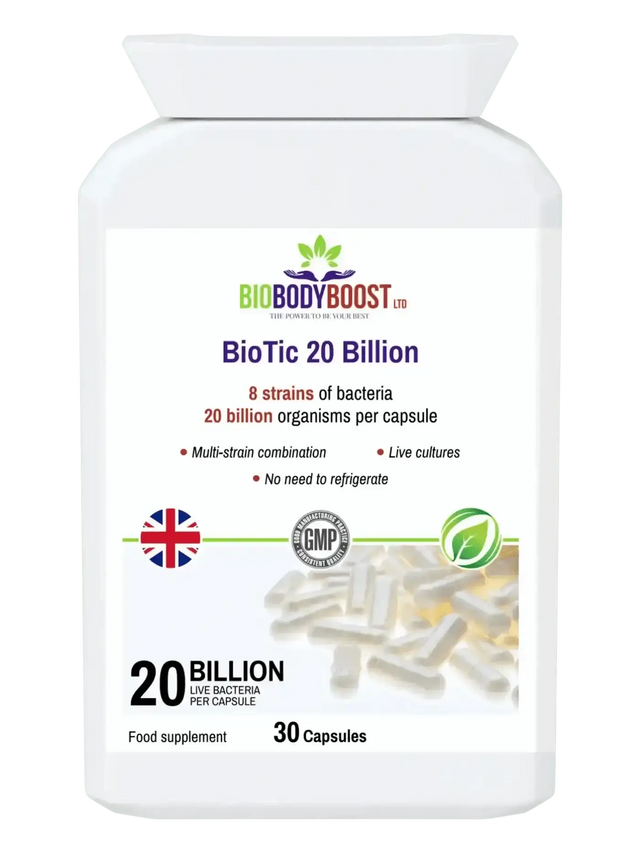
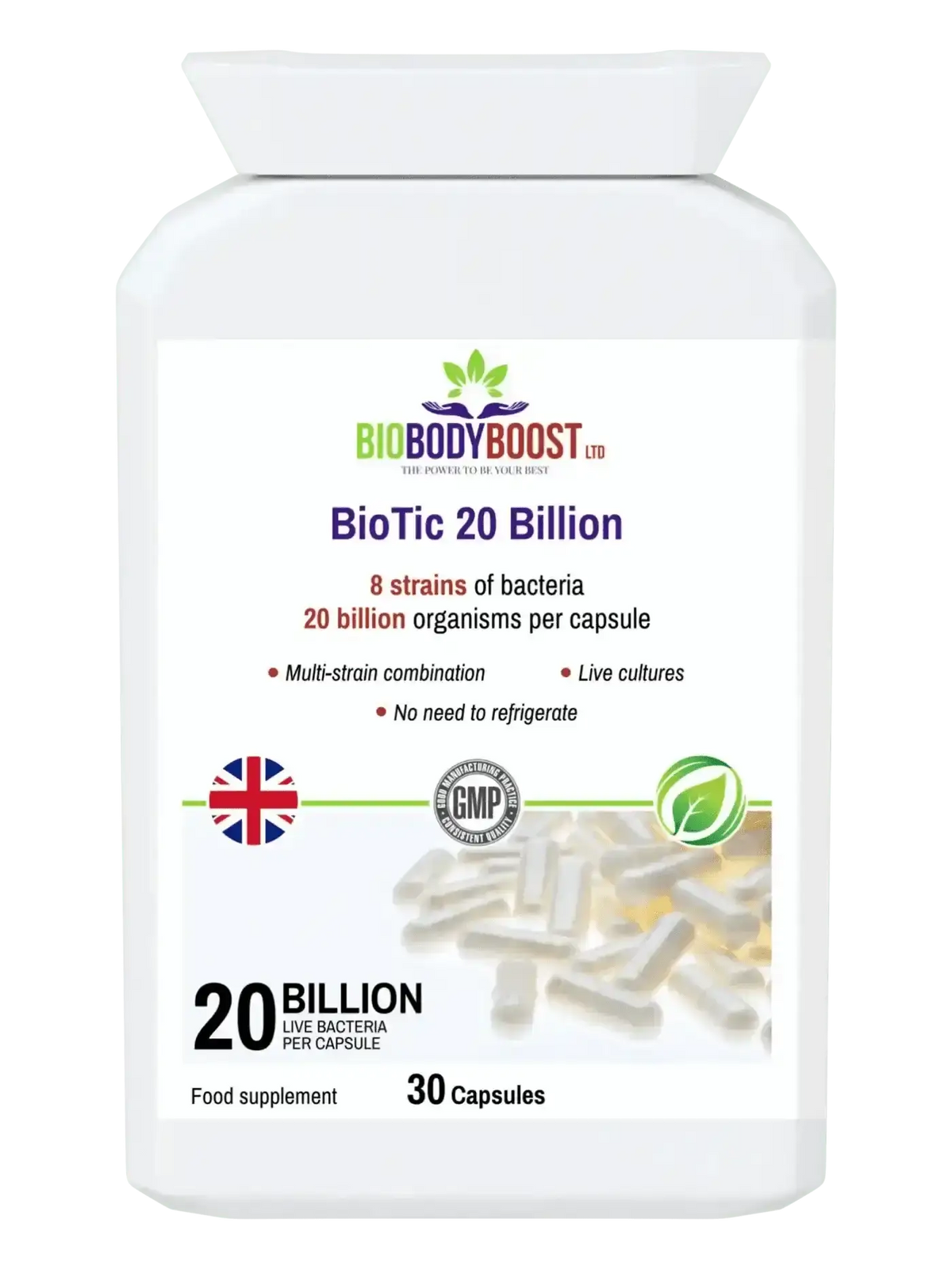
- Multi-strain probiotic at meaningful dose: 10B+ CFU/day from named strains. Single-strain, low-CFU products are unlikely to produce measurable microbiome change. Our BioTic 20 Billion — 8 strains including L. rhamnosus, B. longum and L. acidophilus, HPMC capsules, halal certified.
- Prebiotic fibre: feeds beneficial bacteria. Psyllium husk, inulin, FOS, garlic, onion, chicory root. Start at low dose and increase slowly to avoid initial gas amplification.
- Cortisol management: the cortisol-microbiome loop means gut work needs to run alongside stress reduction. Adaptogens like ashwagandha directly reduce the cortisol disruption that damages gut microbiome composition. Our ZenBlend — KSM-66® ashwagandha, rhodiola, L-theanine, halal certified.
- Sleep consistency: the microbiome follows a circadian rhythm. Disrupted sleep disrupts microbial composition — shift workers have significantly altered microbiome profiles vs consistent sleepers.
- Dietary diversity: aiming for 30+ different plant foods per week is the single most evidence-backed dietary intervention for microbiome diversity. A 2022 Nature study (American Gut Project, n=11,000) found plant food diversity was the strongest predictor of microbiome diversity across all dietary patterns.
Browse the full Gut Health UK collection for halal-certified probiotic and prebiotic options with named strains and declared doses.
Does gut health really affect mental health?
Yes — the evidence is substantial and mechanistically well-characterised. The gut produces approximately 90–95% of the body’s serotonin. Gut bacteria directly regulate HPA axis reactivity (the cortisol stress response) via vagal and immune signalling. A 2019 systematic review (34 RCTs) found probiotics significantly improved depression and anxiety scores in human trials. The B. longum NCC3001 RCT (n=44) showed probiotic supplementation altered brain activity patterns measurable by fMRI. The mechanism is real; the clinical evidence in humans is growing; and the practical implication is that improving gut health can produce measurable improvements in mood, stress resilience and sleep quality.
Which probiotics are best for anxiety and mood?
The strains with the most direct human evidence for anxiety and mood outcomes are Lactobacillus rhamnosus (JB-1 strain shown to reduce cortisol and stress in PNAS 2011), Bifidobacterium longum NCC3001 (significantly reduced anxiety and altered brain activity in a 2019 fMRI RCT), and Lactobacillus acidophilus (multiple mechanisms relevant to serotonin and immune modulation). Multi-strain products including these strains are the practical approach — choosing a product with named strains rather than an anonymous blend. Give 4–8 weeks of consistent daily use before assessing results, as microbiome changes take time to translate to measurable mood effects.
Can improving gut health help with depression?
The evidence supports gut health as a contributing factor to mood and depression, not a treatment for clinical depression. The research is clear that microbiome diversity correlates with mood and that probiotic supplementation can reduce depression scores in human trials. But clinical depression is a complex condition requiring professional assessment and, in many cases, medical or psychological treatment. Probiotics, dietary improvements and stress management are appropriate adjuncts to — not replacements for — clinical care. If you are experiencing symptoms of depression, see your GP. Improving gut health alongside appropriate medical or psychological support is a reasonable complementary approach.
Why does stress cause stomach problems?
The cortisol stress response directly alters gut function via multiple mechanisms: it increases gut permeability (loosening tight junctions), alters gut motility (causing either diarrhoea or constipation), reduces beneficial microbial species, promotes inflammatory bacterial overgrowth, and reduces blood flow to the gut. These physical changes produce the stomach cramps, bloating, loose stools and nausea that commonly accompany acute stress and the IBS-type symptoms that develop under chronic stress. The gut’s enteric nervous system also responds directly to emotional signals via the vagus nerve — this is the “gut feeling” mechanism, a real neurobiological phenomenon rather than a metaphor.