
In many Muslim and South Asian households there is a quiet assumption: nobody here drinks, so our livers are fine. It is an understandable belief, and it is wrong often enough to matter. The most common liver condition in the UK has nothing to do with alcohol. It is fatty liver, and people of South Asian heritage tend to develop it earlier, and at lower body weights, than many other groups.
This guide explains what fatty liver actually is, why the risk is higher in South Asian communities, which tests are worth asking your GP about, and the everyday changes that make the biggest difference. It is general information, not a diagnosis. If you are worried about your liver, your GP is the right first step.
Fatty liver has a new name: MASLD
For years doctors called it non-alcoholic fatty liver disease (NAFLD). In June 2023, the major international liver societies agreed a new name after two years of discussion with clinicians, scientists and patients: metabolic dysfunction-associated steatotic liver disease (MASLD). The British Liver Trust explains the change here. In plain English, it simply means too much fat stored in the liver, linked to how the body handles sugar, fat and weight, rather than to alcohol.
The NHS describes four stages:
- Fatty liver (steatosis): fat has built up, but there is no damage yet. Most people stay at this stage.
- MASH (previously NASH): the fatty liver has become inflamed.
- Fibrosis: scarring, although the liver usually still works well.
- Cirrhosis: severe scarring that affects how the liver works.
The good news is that the early stage is common and, for many people, can improve with the right changes. The difficult news is that it usually causes no symptoms at all, so people do not know they have it.
Why South Asians are at higher risk, even at a normal weight
Research has long shown that people of South Asian heritage (Pakistani, Indian, Bangladeshi and Sri Lankan backgrounds) tend to store more fat around the waist and inside the organs, even when their weight looks healthy. That inner fat is closely linked to insulin resistance, type 2 diabetes and fatty liver.
This is why NICE recommends lower BMI thresholds for South Asian adults: a BMI of 23 already counts as overweight (instead of 25), and 27.5 counts as obese (instead of 30). Many people who think of themselves as only a little heavy are, by these measures, carrying weight that matters for their liver.
A UK study in the British Journal of General Practice also highlighted that metabolic syndrome, the cluster of high blood sugar, raised blood pressure, abnormal cholesterol and central weight, is common in people from South Asia and is an important driver of fatty liver.
The NHS lists the main risk factors as:
- carrying extra weight, especially around the tummy and waist
- type 2 diabetes
- high blood pressure or high cholesterol
- polycystic ovary syndrome (PCOS)
- low physical activity and a less healthy diet
- being over 50
Several of these are more common in British South Asian communities, which is why the 'we don't drink' reassurance can be misleading.

Signs, and why most people have none
Fatty liver is usually silent. Most people find out by chance, when a blood test or scan done for another reason shows something unusual. Some people notice tiredness or a dull ache in the upper right of the tummy, but these are not reliable signs. Waiting for symptoms is not a plan.
A simple check you can do at home is your waist-to-height ratio. NICE advises keeping your waist measurement to less than half your height. For example, if you are 170cm tall, aim for a waist under 85cm. Measure around your middle, just above the belly button.
Which tests to ask your GP about
If you have any of the risk factors above, it is reasonable to ask your GP whether your liver should be checked. Depending on your situation, they may use:
- Liver function tests (LFTs): routine blood tests. Normal results do not rule fatty liver out, but raised enzymes can be a clue.
- A FIB-4 score: calculated from routine blood results and your age, used by many surgeries to estimate the risk of scarring.
- An ELF blood test: recommended by NICE to check for advanced scarring in people diagnosed with fatty liver.
- An ultrasound or FibroScan: imaging to confirm fat in the liver or measure stiffness.
It also helps to check the things that travel with fatty liver: HbA1c (blood sugar), blood pressure and cholesterol.
The everyday changes that matter most
The NHS advice centres on gradual weight loss if you are overweight, a healthier diet and more activity. Here is what that can look like in a South Asian kitchen, without giving up the food you love:
- Measure the oil and ghee. Curries often carry far more fat than people realise. Use a spoon rather than pouring, and let the spices do the work.
- Make fried snacks occasional. Pakoras, samosas and bhajis are a weekend treat, not a daily side. An air fryer gets surprisingly close.
- Watch the sweet things. Mithai, sugary chai and fizzy drinks add up quickly, and the liver turns excess sugar into fat.
- Rethink the rice and roti portion. Fill half the plate with vegetables or salad and a quarter with dal, chickpeas, fish or chicken.
- Walk after meals. A 10 to 15 minute walk after dinner helps the body handle the sugar from the meal.
- Sleep and stress count too. Short sleep and long-term stress make weight and blood sugar harder to manage.
Small, steady changes kept up for months do far more than a short crash diet.
Where supplements fit, and where they do not
No supplement treats or cures fatty liver, and anyone diagnosed with a liver condition should follow their GP's or specialist's advice. Supplements can, however, help you cover nutrients your diet may be short of.
The one nutrient with an officially authorised liver claim is choline. Choline contributes to the maintenance of normal liver function, normal lipid metabolism and normal homocysteine metabolism. Your body makes some choline, but not enough, so the rest has to come from food, mainly eggs, liver, meat and fish. People who eat little of these, including many vegans, can fall short. We explain how to get enough in our guide to choline on a vegan or halal diet.
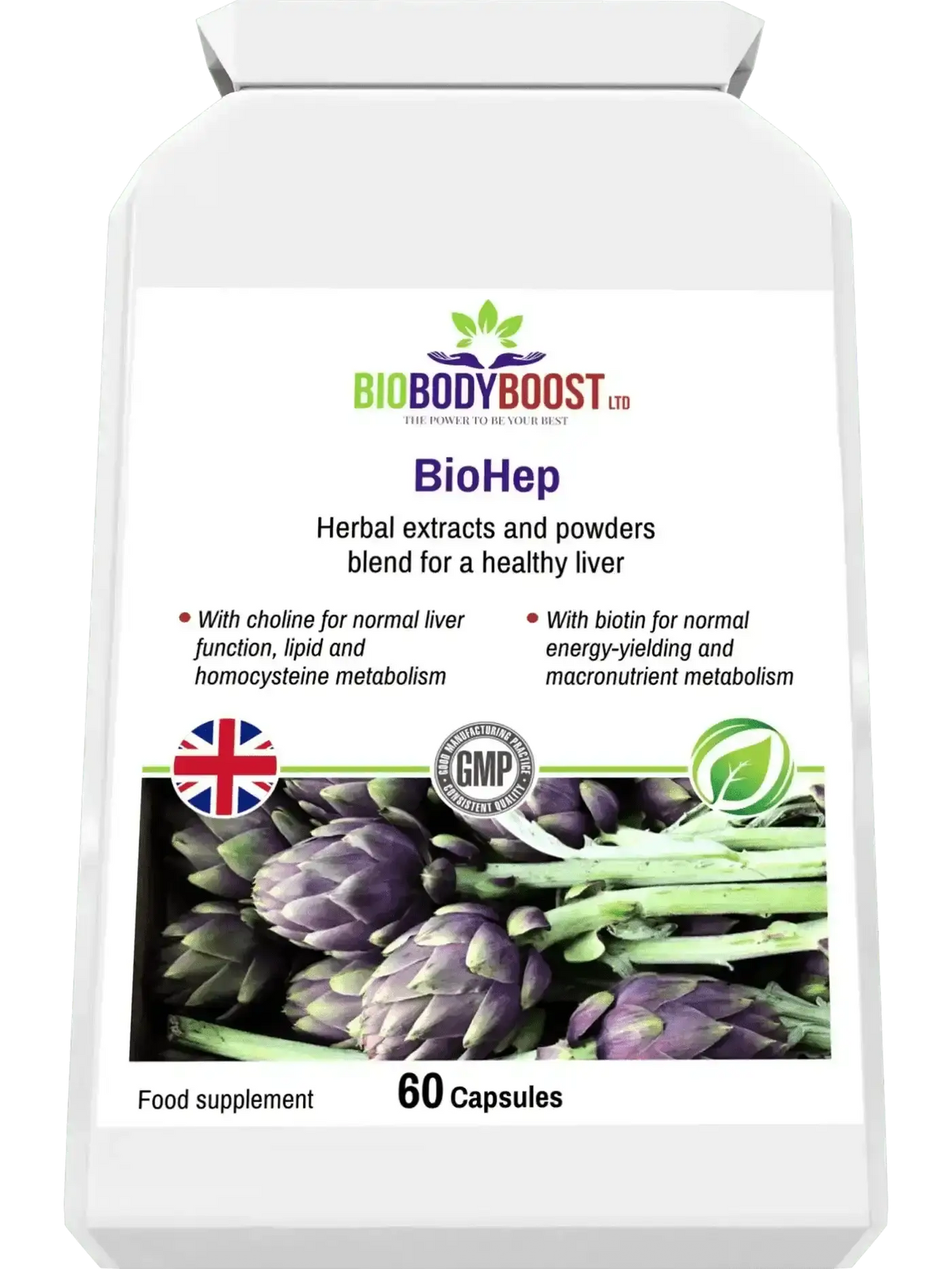
BioHep provides 85.8mg of choline per capsule, alongside 4800mg equivalent of artichoke leaf and ten further traditional botanicals. It is vegan, and halal and kosher approved, with every dose published on the label. For a wider look at liver nutrients, see our halal liver supplements guide.

Try BioHep with 10% off your first order
Use code HALAL10 at checkout (one use per customer). Halal and kosher approved, vegan, made in the UK. Shop BioHep
Questions people ask
Can you get fatty liver if you have never drunk alcohol?
Yes. MASLD is caused by fat building up in the liver because of weight, blood sugar and how the body processes fat. It is not related to alcohol, which is why people who never drink can still have it.
Can slim people get fatty liver?
Yes. Some people store fat inside the organs even when their weight looks healthy. This is more common in people of South Asian heritage, which is why NICE uses lower BMI thresholds for South Asian adults.
Is fatty liver reversible?
Early fat build-up often improves with gradual weight loss, a healthier diet and more activity. How much depends on the stage, so ask your GP what is realistic for you.
What is the difference between NAFLD and MASLD?
They describe the same condition. MASLD is the newer name, agreed in 2023, which links it to metabolic health rather than defining it by the absence of alcohol. You will still see both names, including on the NHS website.
Can a supplement fix fatty liver?
No. No supplement treats or cures a liver condition. Choline contributes to the maintenance of normal liver function as part of a balanced diet, but diagnosis and treatment belong with your GP.
This article is general information, not medical advice. Food supplements should not replace a varied diet and healthy lifestyle. Speak to your GP before taking supplements if you have a liver condition, are pregnant or breastfeeding, or take prescription medicine.


