Ask most people to name the nutrients that matter on a vegan diet and you will hear B12, iron, omega-3 and maybe iodine. Almost nobody mentions choline. Yet choline is essential, your body cannot make enough of it on its own, and its richest sources are exactly the foods that vegans skip and that many halal households eat less of today: eggs and liver.
In 2019 a UK nutritionist warned that choline may be as important to watch on a vegan diet as B12, and called for it to be tracked in national food surveys (Nutrition Insight report). The Vegan Society responded that a varied, well-planned plant-based diet can provide enough. Both can be true: it is possible, but it takes planning. This guide shows how.
What choline is and why it matters
Choline is a vitamin-like nutrient. The liver makes a little, but according to the US National Institutes of Health, not enough to meet our needs, so the rest has to come from food. It helps build cell membranes, helps move fat out of the liver, and is used to make acetylcholine, a messenger in the nervous system.
In the UK and EU, choline carries three authorised health claims. Choline contributes to:
- the maintenance of normal liver function
- normal lipid (fat) metabolism
- normal homocysteine metabolism
It is one of very few nutrients with an official claim that names the liver directly.
How much do you need?
The European Food Safety Authority set these adequate intakes for choline:
- Adults (and teenagers aged 15 to 17): 400mg a day
- Pregnancy: 480mg a day
- Breastfeeding: 520mg a day
The UK does not yet set its own choline target, so these EFSA figures are the standard reference.
Where choline comes from: halal and vegan food guide
These figures come from the NIH choline fact sheet, which uses US serving sizes (½ cup is roughly a small handful or 80 to 90g of cooked beans or veg).
| Food | Serving | Choline |
|---|---|---|
| Beef liver (halal kaleji) | 85g, cooked | 356mg |
| Egg | 1 large | 147mg |
| Beef, lean | 85g, cooked | 72 to 117mg |
| Chicken breast | 85g, roasted | 72mg |
| Cod | 85g, cooked | 71mg |
| Soybeans, roasted | ½ cup | 107mg |
| Red potato, baked | 1 large | 57mg |
| Kidney beans | ½ cup | 45mg |
| Quinoa, cooked | 1 cup | 43mg |
| Milk (1% fat) | 1 cup | 43mg |
| Brussels sprouts | ½ cup | 32mg |
| Broccoli | ½ cup | 31mg |
| Shiitake mushrooms | ½ cup, cooked | 27mg |
| Peanuts, roasted | ¼ cup | 24mg |
| Green peas | ½ cup | 24mg |
| Brown rice, cooked | 1 cup | 19mg |
For halal eaters: liver from a halal butcher is by far the richest source, and kaleji is a traditional dish in many South Asian homes. One important exception: the NHS advises avoiding liver and liver products during pregnancy because of their very high vitamin A content. Eggs are the next best everyday source.
For vegans: no single plant food comes close to an egg, so choline has to be collected across the day from soya, beans, whole grains and vegetables.

A plant-based day that reaches about 400mg
Using the figures above, here is what it takes to reach the adult target without animal foods:
- Breakfast: a handful of roasted soybeans or edamame (around 107mg) and a small bowl of peanuts or peanut butter on toast (around 24mg)
- Lunch: a quinoa salad (43mg) with kidney beans (45mg) and broccoli (31mg)
- Dinner: a baked potato (57mg) with peas (24mg), Brussels sprouts (32mg) and shiitake mushrooms (27mg)
That adds up to roughly 390mg. It is achievable, but it is a lot of planning, and most real days fall well short. A day of toast, pasta and a vegetable curry might only provide a third of the target.
Choline supplements: what to check
If you decide to supplement, three checks matter for vegan and halal shoppers:
- The form. Common forms are choline bitartrate, choline chloride, citicoline and alpha-GPC. Look for the amount of choline itself, not just the compound.
- The halal question. Choline bitartrate is made with tartaric acid, which is commonly produced from by-products of the wine industry. Many scholars accept it because it is fully transformed, but views differ. That is why independent halal approval of the whole product matters more than the ingredient name.
- The capsule. Gelatine capsules are usually not vegan and may not be halal. Look for HPMC (plant cellulose) capsules.
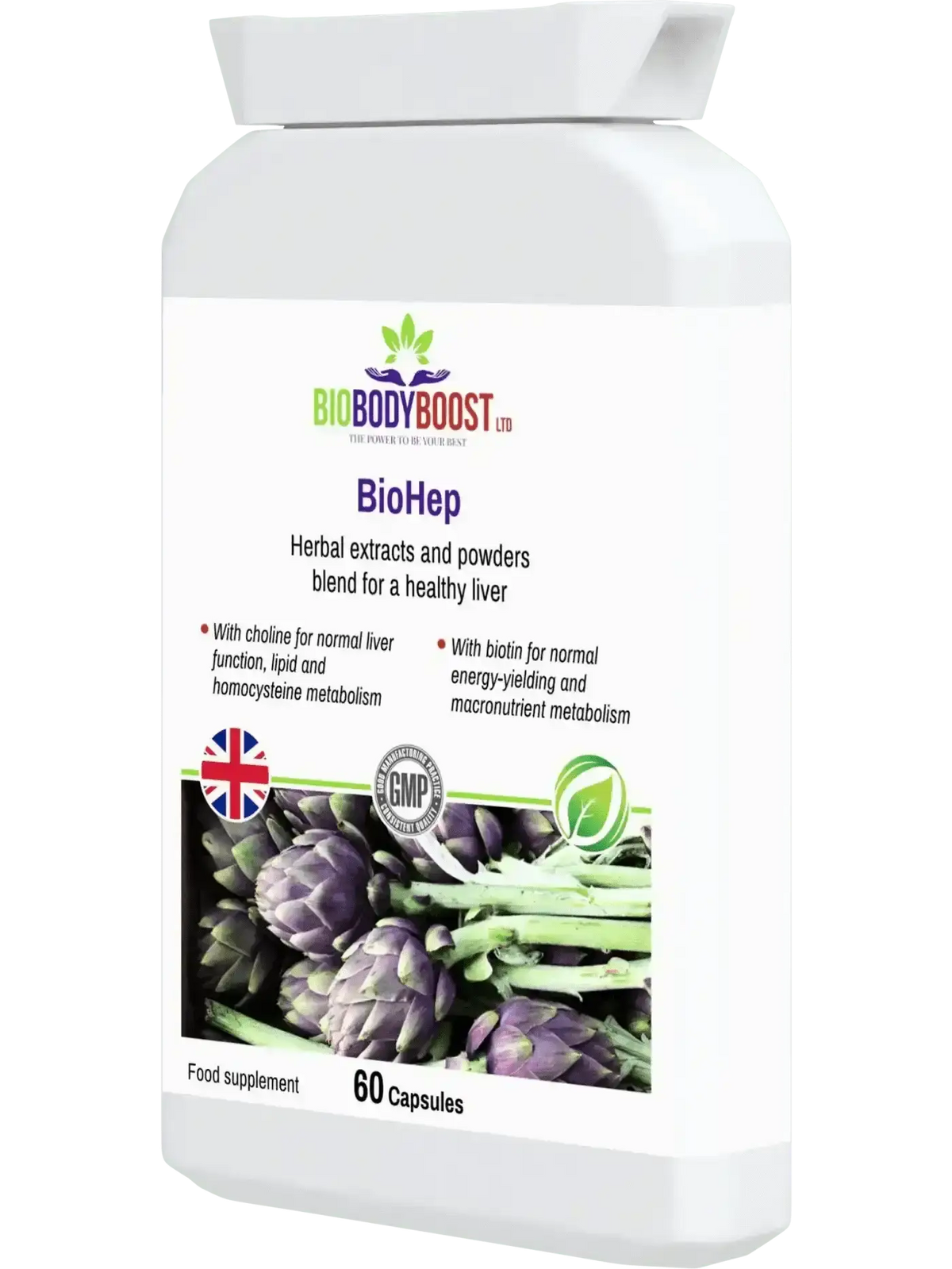
BioHep provides 85.8mg of choline per capsule in an HPMC vegan capsule, and the whole formula is halal and kosher approved. It also contains 4800mg equivalent of artichoke leaf and ten further traditional botanicals. One to three capsules a day can top up a diet that falls short, alongside the foods above.
If you are not sure whether your liver needs attention at all, our guide to fatty liver without drinking explains the risk factors, especially for South Asian families.

Vegan, halal approved choline: 10% off your first order
Use code HALAL10 at checkout (one use per customer). Shop BioHep
Questions people ask
Do vegans need a choline supplement?
Not necessarily. A carefully planned diet with soya, beans, whole grains and vegetables can reach around 400mg a day. In practice many vegans fall short, so a supplement can be a simple safety net.
How much choline do I need a day?
EFSA sets an adequate intake of 400mg a day for adults, 480mg in pregnancy and 520mg when breastfeeding.
Is choline halal?
Choline itself is not an animal ingredient, but some forms, such as choline bitartrate, are made with tartaric acid that is often produced from wine-industry by-products. Scholars differ on this, so choose products with independent halal approval of the whole formula.
What is the best vegan source of choline?
Soybeans are the richest common plant source, at around 107mg per half cup roasted. Kidney beans, quinoa, potatoes, broccoli and Brussels sprouts also contribute.
I'm pregnant. Can I eat liver for choline?
No. The NHS advises avoiding liver and liver products in pregnancy because of their high vitamin A content. Talk to your midwife or GP about choline before taking any supplement.
This article is general information, not medical advice. Food supplements should not replace a varied diet and healthy lifestyle. Speak to your GP before taking supplements if you are pregnant or breastfeeding, have a medical condition or take prescription medicine.


