Apple cider vinegar has genuine clinical evidence for blood glucose management after meals and modest appetite reduction — but not for dramatic weight loss, detoxification or the vast majority of health claims circulating on social media. The active compound is acetic acid, present in all vinegars. Here is what the research actually demonstrates, where the evidence is weak, and why the form you take it in matters.
What Is Apple Cider Vinegar and What Makes It Different?
Apple cider vinegar is produced by fermenting crushed apples with yeast and bacteria in a two-stage process: first producing alcohol, then converting alcohol to acetic acid through Acetobacter bacteria. The result is a dilute acetic acid solution (typically 5–8% acetic acid) with a small amount of polyphenols from the apple, trace minerals and ‘the mother’ — a colony of beneficial bacteria and enzymes in unfiltered versions.
The key active compound responsible for virtually all of ACV’s documented effects is acetic acid — not the mother, not apple polyphenols, and not any “special fermentation process.” Acetic acid is present in all vinegars, including white wine vinegar and balsamic vinegar. What’s different about ACV is primarily the delivery format and the additional polyphenol content from the apple.
What Does the Evidence Actually Show?
Blood glucose management: Good evidence
This is the strongest and most consistent area of evidence for ACV. Acetic acid inhibits salivary amylase and reduces starch digestion in the small intestine, slowing the rate at which glucose enters the bloodstream after carbohydrate-rich meals. Multiple clinical studies confirm:
- A 2004 study in Diabetes Care found ACV significantly reduced post-meal blood glucose and insulin responses in both insulin-resistant and healthy subjects
- A 2019 systematic review confirmed consistent reductions in post-meal glycaemic response across multiple trials
- Effects are most pronounced when taken immediately before or during a carbohydrate-rich meal
This is a clinically meaningful effect for people managing blood sugar, pre-diabetes or metabolic syndrome. It is not a substitute for diabetes medication but is a useful dietary adjunct. Dose used in trials: typically 15–30ml diluted ACV, or equivalent in capsule form.
Weight and appetite: Modest evidence
Acetic acid delays gastric emptying and increases the feeling of fullness (satiety) after meals. A 2009 Japanese study found ACV consumption over 12 weeks produced modest but statistically significant reductions in body weight, BMI, visceral fat and waist circumference in overweight participants — though the effect sizes were small (approximately 1–2kg difference).
The mechanism is real but the effect size is modest. ACV is not a fat burner. It supports appetite management as part of a calorie-controlled approach but will not produce meaningful weight loss in the absence of dietary changes. Social media claims about ACV melting fat or dramatically accelerating metabolism are not supported by clinical evidence.
Digestive support: Emerging evidence
ACV’s acetic acid content may support digestive function by maintaining gastric acid levels — relevant for people with low stomach acid (hypochlorhydria) who struggle to digest protein efficiently. The polyphenols in unfiltered ACV act as prebiotic substrates for beneficial gut bacteria. Evidence here is more mechanistic than from large clinical trials, but the biological rationale is sound.
Antimicrobial properties: Laboratory evidence, not clinical proof
ACV has documented antimicrobial activity in laboratory settings against pathogens including E. coli, Salmonella and Staphylococcus. However, in vitro (test tube) antimicrobial effects rarely translate directly to meaningful clinical outcomes when a substance is ingested and diluted throughout the digestive system. These findings should not be interpreted as clinical treatment for infections.
What ACV Does Not Do — Myths Debunked
- “ACV detoxes the liver” — The liver detoxifies itself continuously via cytochrome P450 enzymes. No food or drink “detoxes” the liver in any clinically meaningful sense.
- “ACV alkalises the body” — The body maintains blood pH within an extremely narrow range (7.35–7.45) regardless of what you eat or drink. You cannot “alkalise your body” through diet.
- “ACV cures acid reflux” — Some people with low stomach acid do report relief, but ACV can worsen acid reflux in people with normal or high stomach acid. Not a universal recommendation.
- “ACV boosts metabolism significantly” — No clinical evidence for meaningful thermogenic or metabolic acceleration effects beyond the modest appetite effects described above.
Liquid ACV vs Capsules: Which Is Better?
Liquid ACV at the doses used in clinical trials (15–30ml) is highly acidic and can damage tooth enamel, irritate the oesophagus and exacerbate digestive issues in sensitive individuals. It also has a strong taste that many people find unpleasant.
ACV capsules deliver the equivalent acetic acid dose without direct contact with teeth and throat. The evidence base uses liquid, but equivalent acetic acid delivery in capsule form is pharmacologically equivalent for the blood glucose and appetite mechanisms — acetic acid is acetic acid regardless of format.
Additional botanicals can enhance ACV’s effects meaningfully: chromium picolinate supports insulin sensitivity and glucose uptake, green tea polyphenols provide complementary blood glucose and metabolic support, and turmeric adds anti-inflammatory action relevant to metabolic health.
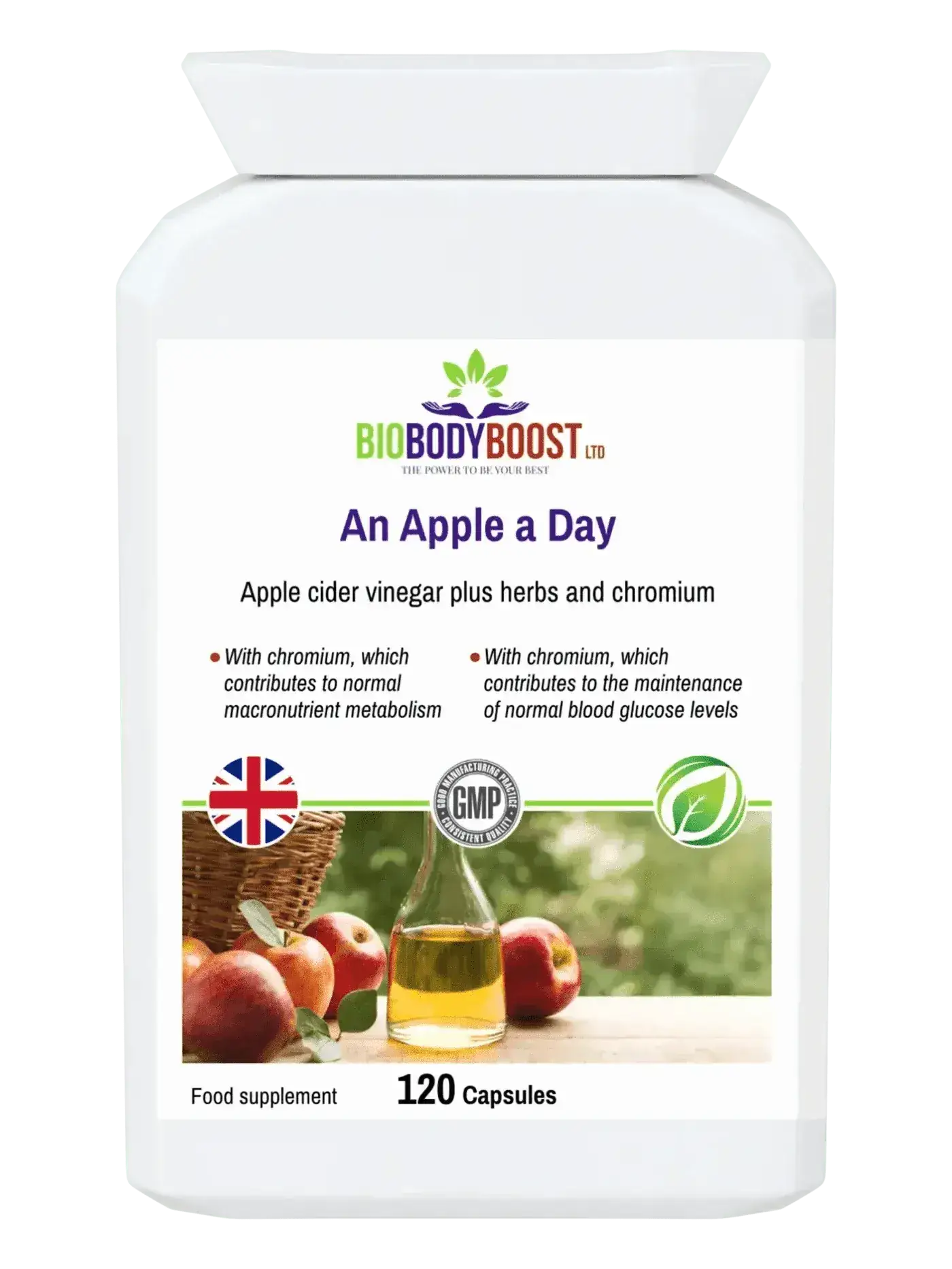
An Apple a Day by BioBodyBoost combines ACV with chromium, green tea extract and turmeric — addressing the blood glucose, appetite and metabolic pathways together. Halal certified, vegan, 120 capsules. Browse the weight management range — all halal certified, UK GMP manufactured.