Quick answer: most supplement expiry dates indicate a potency guarantee, not a safety threshold. The manufacturer guarantees the stated label dose up to the expiry date — not that the product becomes dangerous after it. The exceptions are probiotics (CFU counts decline continuously, expiry matters significantly), omega-3 oils (rancidity risk from oxidation), and vitamin C (oxidises to a less potent form). Mineral supplements are chemically stable and largely unaffected by expiry. Storage conditions affect potency decline far more than the expiry date itself.
What UK law requires on supplement labels
UK food supplement regulations (retained EU Regulation 1169/2011 post-Brexit) require a minimum durability indication on supplements — either a “best before” date (for products that retain quality long-term) or a “use by” date (for products where safety or quality degrades more rapidly). For supplements, “best before” is the standard. The legal meaning: the manufacturer guarantees the product meets label specifications (including declared potency) up to this date under stated storage conditions. It does not mean the product becomes unsafe immediately after this date.
This contrasts with “use by” dates on perishable food where safety is the concern. Supplement “best before” dates are about potency, not safety in most cases.
Supplements where expiry dates matter most
1. Probiotics — the highest-priority category
Probiotic CFU (colony-forming unit) counts decline continuously from the moment of manufacture. Temperature, humidity and oxygen exposure all accelerate death of live bacterial cultures. Manufacturers typically overfill at production to ensure CFU count meets the label at the expiry date — meaning a product showing 20 billion CFU at manufacture may already be substantially lower by the time you purchase it.
What research supports: A 2015 study in the European Journal of Pharmaceutical Sciences found probiotic products stored at room temperature lost 30–60% of viable CFU within 6 months of manufacture. Refrigerated storage significantly slowed decline. A 2019 analysis of commercial UK probiotic products found significant CFU variability between batches and between manufacturers, with some products delivering substantially less than label claims at end of shelf life.
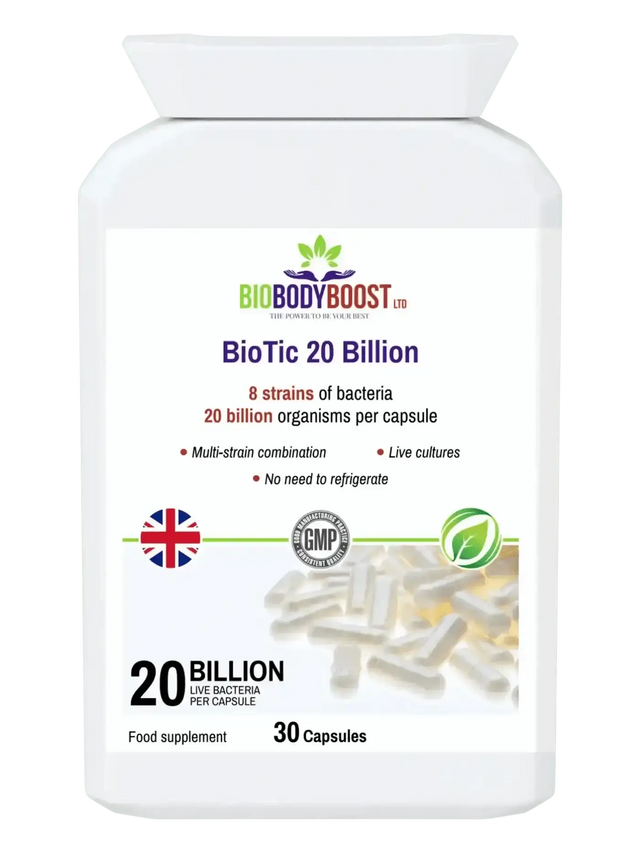
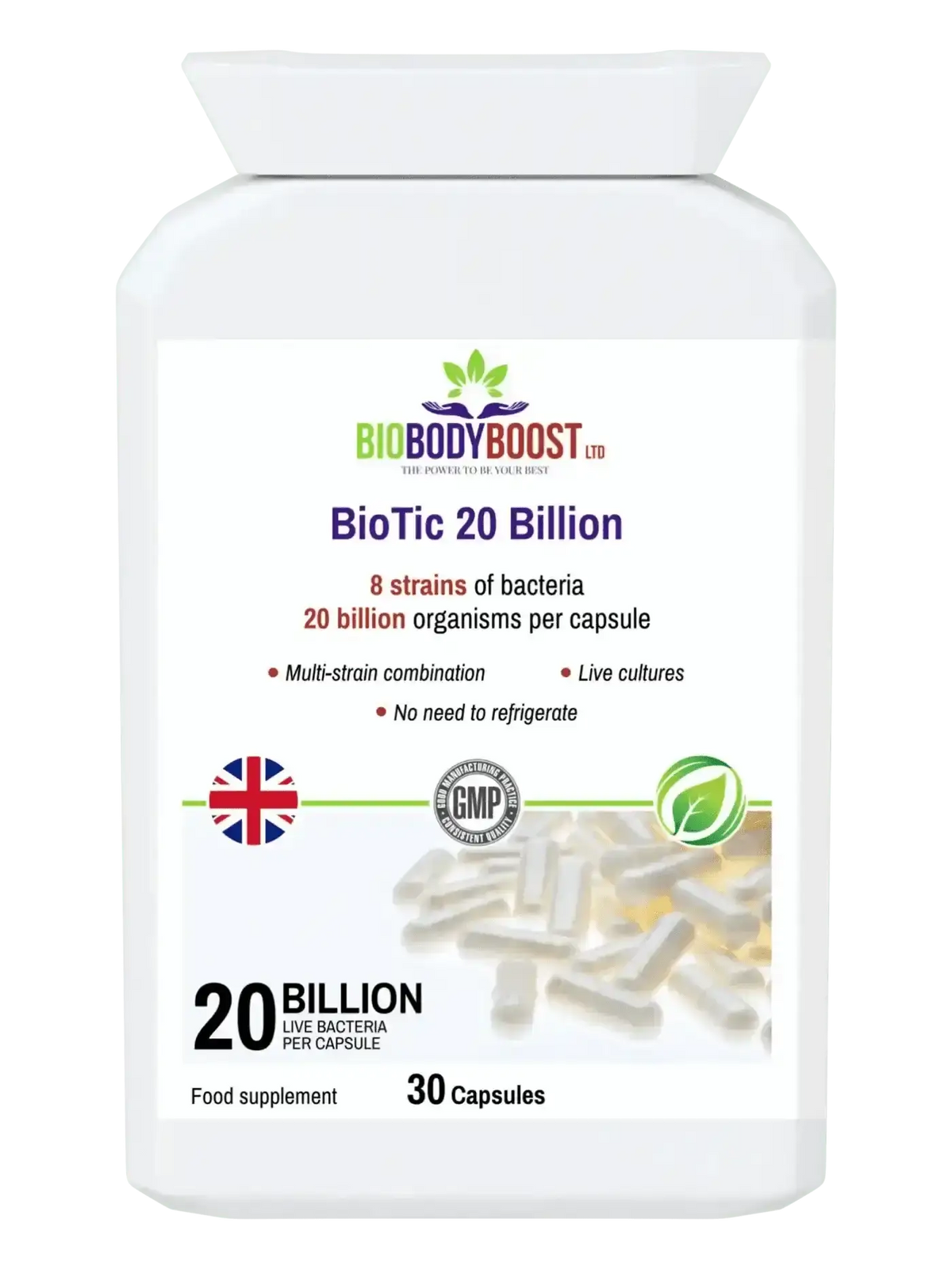
CFU count guaranteed at end of shelf life (not at manufacture) is the meaningful quality signal on a probiotic label — see our probiotic starter guide for label-reading detail. Our BioTic 20 Billion guarantees CFU count at expiry, not at manufacture.
Practical rule: use probiotics within their expiry date. Do not continue using significantly expired probiotic products expecting full effect.
2. Omega-3 fish oil and algae oil — rancidity risk
Omega-3 fatty acids (EPA and DHA) are polyunsaturated — they oxidise readily when exposed to oxygen, heat or light. Oxidised omega-3 produces aldehydes, malondialdehyde (MDA) and other peroxidation products that may have pro-inflammatory rather than anti-inflammatory effects at high levels.
What research supports: A 2015 study in Scientific Reports found that a significant proportion of commercial fish oil supplements exceeded the GOED (Global Organisation for EPA and DHA Omega-3s) recommended peroxide value threshold, indicating significant oxidation. A 2021 Norwegian study found that retail fish oil products were frequently more oxidised than fresh fish. The peroxide value threshold recommended by GOED: below 5 mEq/kg; above 10 mEq/kg indicates significant oxidation.
You cannot see oxidation but you can smell it: fresh fish oil should have only a mild oceanic smell. A strong, pungent fishy or paint-like smell indicates rancidity. If your fish oil smells significantly off, discard it regardless of expiry date. Refrigerating omega-3 capsules after opening significantly extends quality.
3. Vitamin C — oxidises visibly
Ascorbic acid (vitamin C) is an antioxidant precisely because it readily donates electrons — which means it oxidises itself. Oxidised vitamin C converts to dehydroascorbic acid, which has reduced biological potency and further degrades to diketogulonic acid (no biological activity). The visible sign: ascorbic acid powder or tablets turning from white to yellow, then brown.
In airtight, cool, dark storage, vitamin C tablets retain potency well — studies show less than 10% loss over 12 months under optimal conditions. In warm, humid or light-exposed conditions, degradation is much faster. Vitamin C powder open to air degrades significantly faster than encapsulated or tablet forms.
Supplements where expiry dates matter least
Mineral supplements — chemically very stable
Mineral salts (magnesium glycinate, zinc citrate, iron bisglycinate, selenium methionine, calcium carbonate) are inorganic compounds that do not oxidise or biodegrade in the way organic molecules do. Mineral tablets and capsules stored in cool, dry conditions retain their stated potency for years beyond expiry. The expiry date on a mineral supplement is essentially a regulatory requirement rather than a meaningful quality indicator. A magnesium glycinate tablet three years past its expiry date, properly stored, is almost certainly still delivering close to its stated elemental magnesium content.
Fat-soluble vitamins in stabilised ester forms
Vitamins A (retinyl palmitate), D3 (cholecalciferol), E (tocopheryl acetate) and K2 (MK-7) in their stabilised ester forms are reasonably resistant to degradation. A 2018 stability study in the Journal of Pharmaceutical Sciences found vitamin D3 stored in normal supplement conditions retained over 95% potency at 24 months past the stated shelf life. Fat-soluble vitamins in oil-based softgels are more vulnerable than those in dry tablet form if the oil medium oxidises.
Collagen powder — protein is very stable
Hydrolysed collagen peptides are proteins. Proteins are chemically stable in dry powder form and do not significantly degrade post-expiry if stored dry and cool. Colour, texture and smell changes are the practical indicators: clumping (moisture ingress), discolouration or an off smell indicate quality issues more reliably than the date alone.
B vitamins in tablet form
B vitamins vary in stability. Thiamine (B1) and riboflavin (B2) are relatively sensitive to light; B12, folic acid and B6 are more stable in tablet form. In solid tablet form stored away from light and humidity, B vitamins typically retain reasonable potency for 1–2 years beyond expiry.
Storage conditions matter more than expiry dates
The degradation rate for every supplement category above is dramatically accelerated by poor storage. The most damaging conditions:
- Heat: storing supplements near the cooker, boiler or in a warm bathroom cabinet. Room temperature up to 20°C is optimal; above 25°C accelerates degradation significantly for most categories.
- Humidity: bathrooms are the worst storage location for supplements despite being convenient. Steam from showers creates humidity spikes that accelerate moisture uptake into tablets and capsules, clumping, and vitamin C and B vitamin degradation.
- Light: UV light degrades vitamin C, omega-3, vitamin A and some B vitamins. Store in a dark cupboard rather than on a windowsill or open shelf.
- Oxygen: keep caps tightly closed. Silica gel sachets inside bottles absorb moisture and reduce oxidation.
Quick reference by supplement type
| Supplement type | Expiry importance | Post-expiry guidance |
|---|---|---|
| Probiotics | High | Use within expiry; refrigerate; CFU count declines continuously |
| Omega-3 fish/algae oil | Moderate — check quality | Smell test — discard if strong fishy/rancid; refrigerate after opening |
| Vitamin C | Moderate | Discard if visibly yellowed or 1–2 years post-expiry |
| Vitamin D3 (tablet/capsule) | Low | Stable 2+ years post-expiry in dark, cool, dry storage |
| Minerals (magnesium, zinc, iron) | Very low | Chemically stable — discard only if physically degraded |
| Multivitamins | Moderate | Contains vitamin C and B vitamins — up to 1 year post-expiry if well stored |
| Collagen powder | Low | Protein is stable — discard only if clumped, discoloured or malodorous |
| Creatine monohydrate | Very low | Extremely stable — years beyond expiry if kept dry |
All BioBodyBoost products carry manufacturing and expiry dates on every pack. Our probiotic products — BioTic 20 Billion and BioTic 4 Billion — guarantee CFU count at expiry, stored as directed. Browse the full halal-certified range.
Is it safe to take supplements after their expiry date?
For most supplements, yes — taking a mineral, vitamin D or collagen supplement that is a few months past expiry is unlikely to cause harm. The risk is reduced potency rather than safety in most cases. The exceptions: probiotics (CFU counts decline significantly, so efficacy is reduced rather than safety being a concern); omega-3 oils (rancid oil may have pro-inflammatory effects at high peroxide levels); and any supplement showing visible signs of physical degradation (clumping from moisture, discolouration, off smell). If a supplement has been stored poorly (bathroom cabinet, near heat, in direct light), post-expiry use is less advisable than the same product stored optimally.
How long do probiotics last after their expiry date?
Probiotic viability declines continuously and the expiry date is the last point at which the manufacturer guarantees the stated CFU count. After expiry, CFU decline continues — how fast depends on storage. Refrigerated storage significantly slows decline; room temperature significantly accelerates it. A probiotic product 1–2 months past expiry and refrigerated may still retain meaningful CFU counts; a product 6+ months past expiry at room temperature is likely substantially depleted. For therapeutic use (post-antibiotic recovery, IBS management), using probiotics within expiry from a brand that guarantees CFU at end of shelf life (not just at manufacture) is the meaningful standard.
How can I tell if fish oil has gone rancid?
Fresh, quality fish oil should have only a mild, clean oceanic smell. Rancid fish oil has a strong, pungent fishy smell — the kind that makes you recoil. A bitter, paint-like or deeply unpleasant taste is another indicator. Capsules that smell normal when intact but smell strongly off when cut open have oxidised inside the shell. You cannot assess rancidity from the expiry date alone — a product within expiry but stored warm and exposed to light may already be significantly rancid; one past expiry but refrigerated and sealed may still be acceptable. Smell is the most reliable practical test. If in doubt, replace.
Does creatine expire?
Creatine monohydrate is one of the most chemically stable supplements available. In dry, sealed storage it remains effective for years beyond its stated expiry date. The degradation product of creatine is creatinine (an inert waste product) which forms very slowly under normal storage conditions. A study in the Journal of Pharmaceutical Sciences found creatine monohydrate stored at room temperature showed minimal creatinine formation over 3 years. If creatine powder has been exposed to significant moisture (clumping, hardening) there may be some degradation, but dry creatine significantly past its expiry is generally still effective.
What is the best way to store supplements to extend their life?
The four key storage rules: (1) cool — below 20°C is optimal; avoid storing near ovens, boilers or in warm rooms; (2) dry — avoid bathrooms despite the convenience; humidity spikes from steam degrade tablets, capsules and vitamin C particularly quickly; (3) dark — a kitchen cupboard or drawer is better than a countertop; UV light degrades vitamin C, omega-3 and some B vitamins; (4) sealed — keep caps tightly closed after each use; oxygen exposure accelerates oxidation of vitamin C and omega-3 especially. Probiotics specifically: refrigerate unless the product is explicitly labelled shelf-stable. Do not freeze supplements — the temperature cycling on thawing can introduce moisture.