Written by the BioBodyBoost Team · August 2026 · Our standards →
Quick answer: bloating after eating is usually caused by one of five things — eating too fast (swallowed air), FODMAP-rich foods fermenting in the gut, low digestive enzyme output, an imbalanced gut microbiome, or an underlying intolerance such as lactose. The fix depends on the cause: enzymes help when food sits heavily straight after meals, probiotics help when bloating builds through the day, and fibre adjustments help when bloating pairs with irregularity.
Why do I bloat after every meal?
Post-meal bloating is a mismatch between what you ate and what your digestive system could comfortably process at that moment. The most common drivers:
1. Speed and air. Eating quickly means swallowing air and giving your stomach a large volume in a short window. This is the simplest cause and the cheapest fix — slow down, chew properly.
2. Fermentable carbohydrates (FODMAPs). Onion, garlic, beans, wheat, apples and certain sweeteners are fermented by gut bacteria, producing gas. Healthy foods — but gas-producing ones in sensitive people.
3. Low enzyme output. If meals feel heavy immediately, before gas develops, the issue is often digestion efficiency rather than the microbiome. Digestive enzymes taken with the meal give the quickest feedback here.
4. Microbiome imbalance. When bloating builds gradually through the day rather than right after eating, the pattern points to gut bacterial balance — the territory of multi-strain probiotics.
5. Intolerances. Lactose is the most common in UK adults. If dairy is a consistent trigger, our dairy-free gut supplement guide covers how to supplement around it.
Matching the fix to the pattern
| Your pattern | Most likely lever |
|---|---|
| Heavy immediately after meals | Digestive enzymes with food |
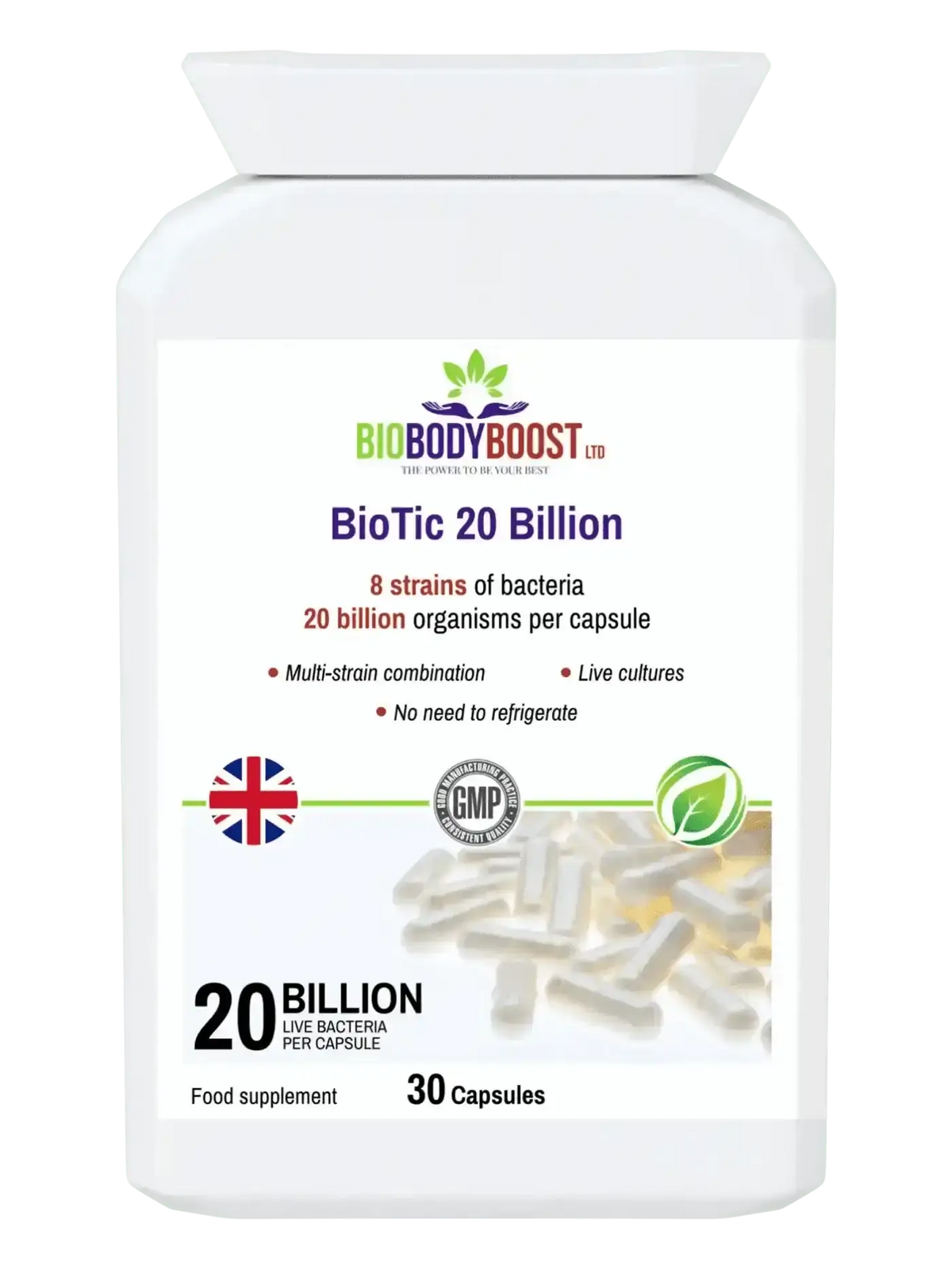
| Bloating builds through the day | Multi-strain probiotic, e.g. BioTic 20 Billion |
| Bloating + irregularity | Gentle fibre, e.g. psyllium husk, built up slowly |
| Bloating + abdominal pain + habit changes | IBS-pattern — see our IBS probiotic strain guide |
Want the full ranking? We compare probiotics, enzymes, peppermint, fibre and the rest by evidence in our complete guide to anti-bloating supplements and tablets UK.
When bloating needs a GP, not a supplement
See your GP if bloating is persistent and new (especially over 50), paired with unexplained weight loss, blood in stool, severe pain, persistent diarrhoea, or symptoms that wake you at night. These are investigation triggers, not supplement territory.
Frequently asked questions
How long do probiotics take to reduce bloating?
Typically 2–4 weeks of daily use for noticeable change, in line with clinical trial durations. If bloating clearly worsens beyond two weeks, stop and reassess.
Does drinking water help bloating?
Yes — particularly when increasing fibre. Fibre without adequate water can worsen bloating rather than relieve it.
Are BioBodyBoost gut products halal?
Yes — the gut range including BioTic 20 Billion and BioSlim psyllium is halal approved and kosher approved, in plant-derived HPMC capsules, UK made.
Explore the full Gut Health UK collection.
Food supplements should not replace a varied diet or healthy lifestyle. This article does not constitute medical advice. Persistent or severe symptoms should be assessed by a GP.