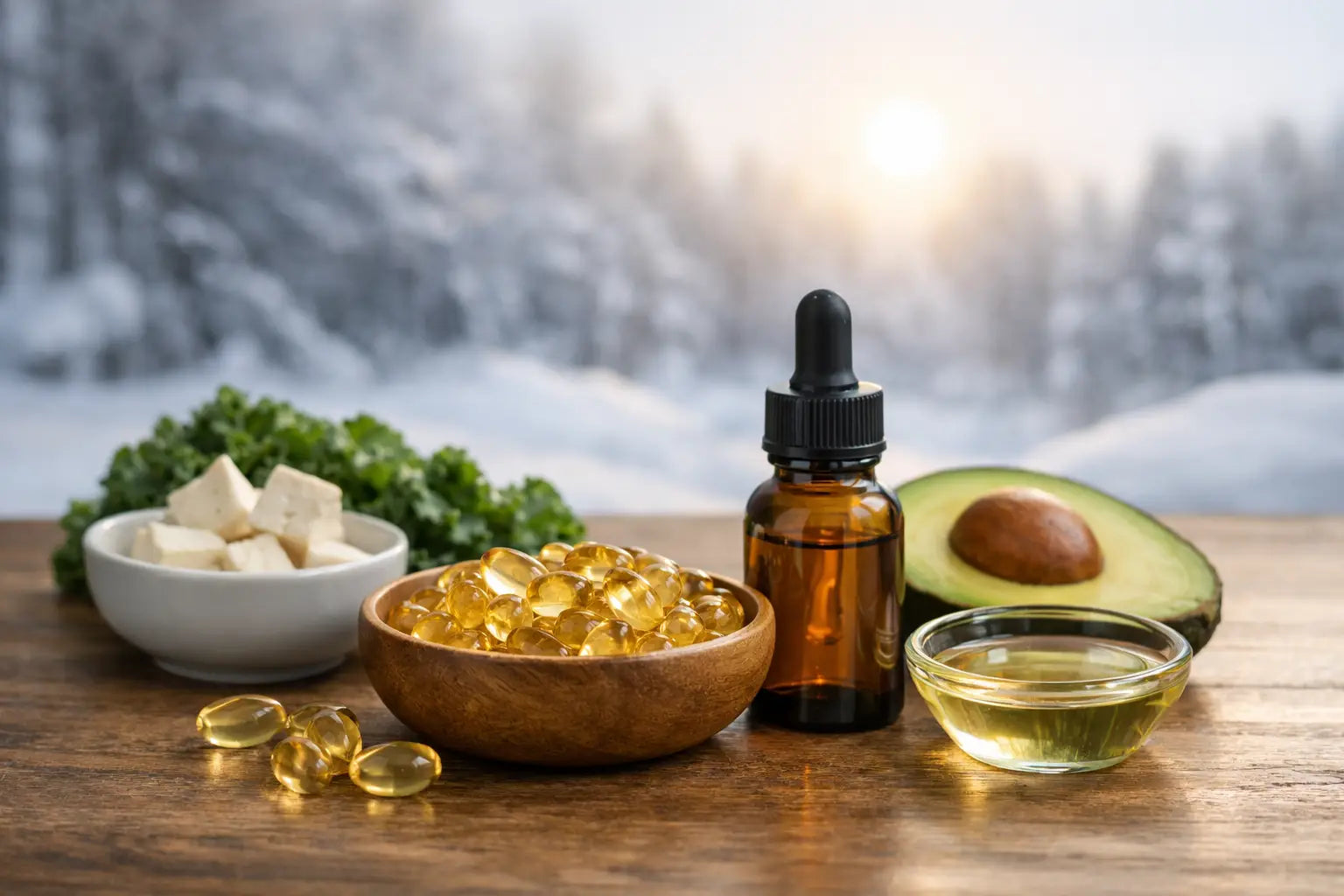
Grey skies by mid-afternoon, less time outdoors, and skin covered up for warmth - winter changes more than your mood. It also changes your vitamin D exposure. If you are looking for a vegan vitamin d supplement for winter months, the goal is not to chase trends. It is to find a clean, effective daily formula that fits your routine, supports immune resilience, and helps you stay consistent when sunlight is doing very little heavy lifting.
Why winter changes your vitamin D needs
Vitamin D is often called the sunshine vitamin because your skin makes it when exposed to UVB light. In winter, especially across the UK, that natural production drops sharply. Shorter days, lower sun angle, indoor working patterns, and cold-weather clothing all add up to one thing - less opportunity to make enough vitamin D naturally.
That matters because vitamin D supports several systems people care about every day. It contributes to normal immune function, helps maintain normal bones and teeth, and supports normal muscle function. If winter leaves you feeling flat, run down, or more aware of aches and low energy, vitamin D may be one piece of the puzzle.
Food alone usually does not close the gap, particularly for vegans. While some fortified foods can help, reliable daily intake is not always easy to achieve through diet alone. That is where a supplement earns its place as a practical winter upgrade.
What makes a good vegan vitamin d supplement for winter months?
The best choice is usually the one you will actually take every day. That sounds obvious, but consistency matters more than fancy marketing. A strong formula should be vegan, clearly labelled, third-party tested where possible, and designed for straightforward daily use.
You also want to look at the form of vitamin D, the dose, and whether the product has been built with absorption in mind. Some people prefer tiny capsules, others want drops, and some like a simple tablet they can keep by the kettle. There is no perfect format for everyone. The better option is the one that fits neatly into your real routine.
Clean-label matters too. If you are choosing plant-based supplements because you care about ingredient quality as well as ethical compatibility, check for unnecessary fillers, hidden animal-derived ingredients, and vague sourcing claims. A research-backed formula should tell you what is in it and why.
Vitamin D2 vs vegan D3
This is one of the most useful distinctions to understand. Vitamin D supplements generally come as D2 or D3. Vitamin D2 is plant-derived and has been used for years, but vegan D3 has become the standout option for many people because it is often considered more effective at raising and maintaining vitamin D levels.
Traditional D3 is commonly sourced from lanolin, which is not vegan. Vegan D3 is different. It is usually sourced from lichen, making it suitable for plant-based diets while offering the same preferred form many people look for in a vitamin D supplement.
If you are comparing labels and wondering which direction to go, vegan D3 is often the stronger all-round choice for winter support. It combines vegan suitability with a form that fits well into a daily long-term routine.
How much vitamin D should you look for?
This depends on your age, lifestyle, existing vitamin D status, and any guidance you have been given by a healthcare professional. In the UK, government advice often points adults and children over one year old towards considering a daily vitamin D supplement during autumn and winter.
For many adults, a moderate daily dose is enough to cover seasonal needs. More is not automatically better. High-strength products can have a place, but they are not always necessary for general daily support. If you rarely get outside, have darker skin, cover most of your skin outdoors, or have specific health considerations, your needs may differ. That is where personalised guidance matters.
A sensible supplement should make dosage clear and easy to follow. No guesswork, no awkward splitting of tablets, no overcomplicated instructions.
What to check on the label
A smart purchase starts with the back of the pack, not the front. First, confirm the source is genuinely vegan. Then check the vitamin D form, the amount per serving, and the number of servings per bottle. Daily value matters, but so does convenience. A product that runs out too quickly or needs multiple capsules per day can become annoying fast.
It is also worth checking for quality cues such as third-party testing, allergen transparency, and clear manufacturing standards. For many shoppers, especially those balancing vegan, halal, kosher, gluten-free, or dairy-free preferences, clean compatibility is not a bonus. It is essential.
Some formulas pair vitamin D with supporting nutrients such as vitamin K2. That can be appealing, but it depends on your wider supplement routine. If you already take a multivitamin or targeted bone support formula, doubling up may not be ideal. Simple can be better when you want precision.
Drops, capsules or tablets?
There is no single winner here. Capsules are popular because they are tidy, portable, and easy to build into a morning habit. Tablets can be cost-effective and simple. Drops are useful for people who dislike swallowing pills or want flexibility with family routines.
Absorption often comes up in this conversation. Because vitamin D is fat-soluble, taking it with a meal that contains some fat may help. That does not need to mean a heavy breakfast. Yoghurt alternatives with nuts, avocado on toast, or even a balanced lunch can do the job.
The practical point is this - choose a format that removes friction. If supplements already pile up on your kitchen counter, a once-daily capsule may feel easier. If your routine changes constantly, drops may be more forgiving.
When a winter vitamin D supplement matters most
For some people, winter supplementation is a nice precaution. For others, it is much closer to essential. If you work indoors most of the day, train early or late when the sun is low, live in a northern area with limited winter sunshine, or follow a strict vegan diet with minimal fortified foods, your vitamin D intake may need closer attention.
Parents also tend to think differently about winter health. When the household is battling school bugs, packed commutes, and low-energy mornings, everyday nutritional support becomes less theoretical. It becomes part of keeping the week moving.
That is one reason a dependable vegan vitamin d supplement for winter months has become such a staple in modern wellness routines. It is not about perfection. It is about covering a predictable seasonal gap with something simple, well-formulated, and easy to trust.
Common mistakes when choosing a supplement
One mistake is focusing only on price. A cheaper supplement is not necessarily poor quality, but ultra-low-cost products can cut corners on sourcing, clarity, or testing. Another is buying a very high dose without understanding whether it suits your actual needs.
There is also the assumption that all vegan vitamin D products are equal. They are not. Source quality, ingredient transparency, and dose design vary a lot. A clean formula with research-backed thinking behind it is usually worth more than flashy packaging or broad wellness claims.
Finally, avoid turning supplementation into a stop-start habit. Taking vitamin D for a week when you remember, then forgetting it for the next three, is not likely to give you the steady support you want. Routine wins.
How to build vitamin D into your daily routine
The easiest habit is to attach it to something you already do. Take it with breakfast, keep it near your toothbrush, or pair it with your first hot drink of the day. The less mental effort it requires, the more likely it is to stick.
If you already use supplements for immune support, energy, digestion, or recovery, think about overlap. A streamlined routine often works better than a crowded one. BioBodyBoost speaks to this well - plant-based support should feel like a daily upgrade, not a complicated protocol.
You can also think seasonally rather than reactively. Instead of waiting until you feel depleted in January, have your winter routine in place before darker mornings become the norm. That small shift tends to make consistency much easier.
The smart choice is the one you will keep taking
Finding the right vegan vitamin d supplement for winter months comes down to a few clear markers - vegan D3 where possible, an appropriate daily dose, clean ingredients, and quality you can trust. From there, the best product is the one that fits your life well enough to become automatic.
Winter health support does not need to be dramatic. A steady, research-backed habit often does more than a cupboard full of half-used bottles. Choose something simple, clean, and consistent, and let that be one less thing to think about when the darker months set in.