That familiar 3pm crash is easy to blame on a busy week, poor sleep or one too many skipped lunches. But when low energy keeps hanging around, a vegan iron supplement for low energy women can be worth a closer look - especially if your diet is plant-based, your periods are heavy, or training leaves you feeling more drained than usual.
Iron is one of those nutrients that quietly affects daily performance. When levels are low, you may notice sluggish mornings, breathlessness on stairs, poor concentration, weaker workouts or that flat, washed-out feeling that coffee never quite fixes. The tricky part is that not every iron supplement suits every woman, and the wrong formula can leave you with digestive upset instead of better energy.
Why iron matters so much for women with low energy
Iron helps your body make haemoglobin, the protein in red blood cells that carries oxygen around the body. If iron intake is too low, or if losses are higher than usual, oxygen delivery can suffer. That can show up as tiredness, reduced stamina, headaches, dizziness and feeling cold more often.
Women are more likely to need extra iron support at certain times. Menstruation is the obvious one, particularly if bleeding is heavy. Pregnancy, postnatal recovery, endurance training and fully plant-based diets can all raise the chances of falling short. This does not mean every tired woman needs iron, but it does mean iron deserves attention when energy feels consistently low.
Plant-based eaters can absolutely meet their iron needs through food, but it takes a bit more strategy. Vegan diets provide non-haem iron, which is less readily absorbed than the haem iron found in animal foods. That is where the right supplement can make a real difference.
What to look for in a vegan iron supplement for low energy women
The label matters more than the marketing. A good formula should be vegan, clearly dosed, easy on digestion and designed with absorption in mind.
Choose a form your body will actually tolerate
Some iron forms are more likely to cause constipation, nausea or stomach discomfort. Ferrous sulphate is common and effective, but many women find it harsh. Gentler forms such as iron bisglycinate are often easier to take consistently because they tend to be better tolerated. That matters, because the best supplement is the one you can stick with daily.
Liquid iron can suit women who struggle with tablets, though taste and convenience can be a trade-off. Capsules are often the simplest option for busy routines. If you already have a sensitive gut, it is worth prioritising a formula known for low digestive disruption rather than chasing the highest dose on the shelf.
Look at the dose, not just the front of the pack
More is not always better. Some women need a therapeutic dose under medical guidance, while others simply need moderate daily support to top up intake. Taking too much iron when you do not need it can cause side effects and is not a smart long-term strategy.
If you suspect deficiency, testing is the sensible first step. A supplement can support you, but it should not replace proper investigation if your energy has changed significantly.
Check for nutrients that support absorption
Vitamin C helps improve the absorption of non-haem iron, so many well-formulated vegan supplements include it. That pairing makes practical sense, especially for women relying mainly on plant-based iron sources.
At the same time, be aware of what can get in the way. Calcium, tea, coffee and high-fibre meals can reduce iron absorption when taken at the same time. If your supplement is excellent on paper but you wash it down with a milky tea, you may not be getting the full benefit.
Keep the formula clean and clearly tested
If you are choosing a daily supplement, quality should be non-negotiable. Third-party testing, transparent ingredients and a clean-label approach all help you avoid unnecessary fillers and give you more confidence in what you are taking. For women who want support without guesswork, research-backed formulation is a stronger signal than flashy claims.
Food first still matters
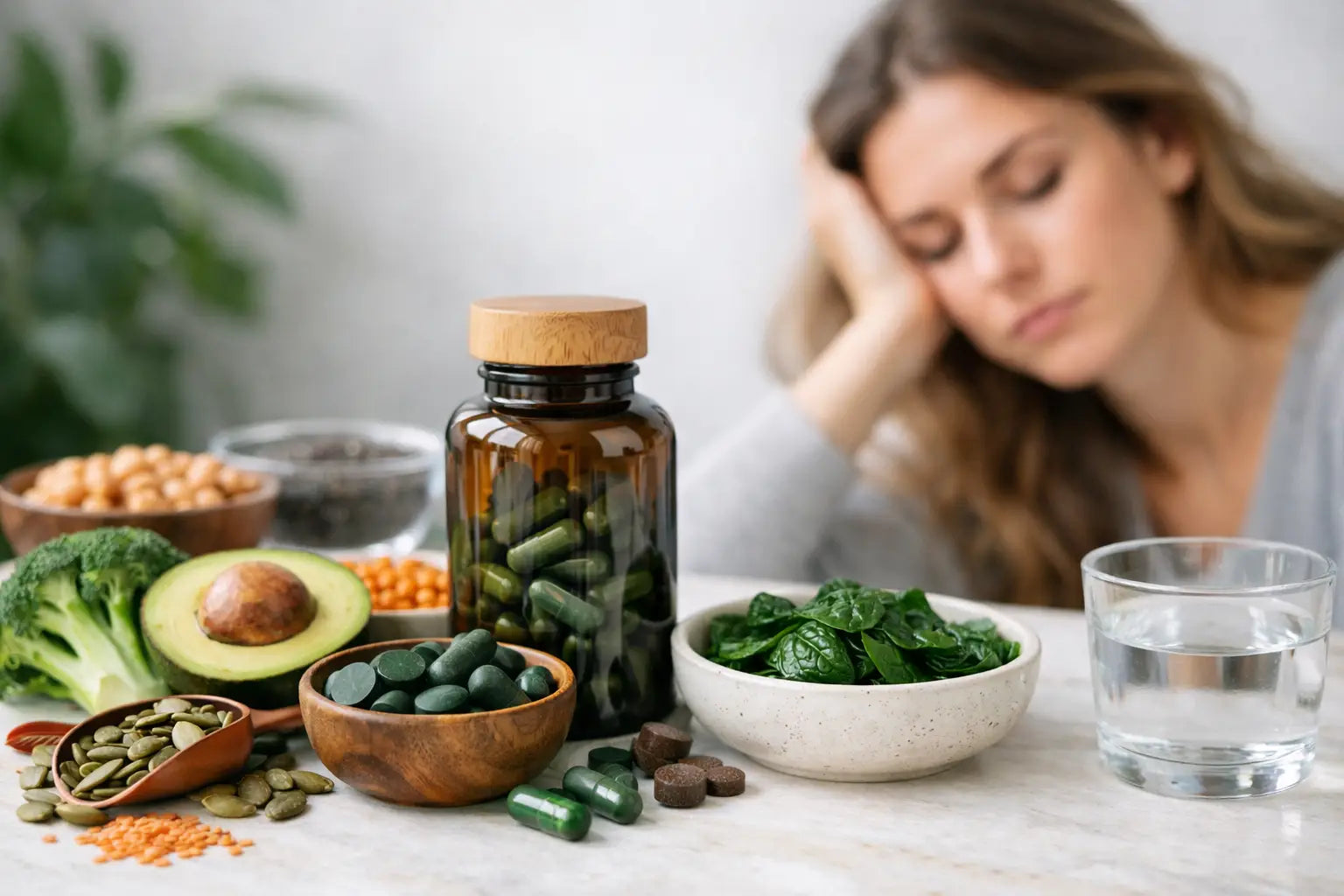
A supplement can help fill a gap, but it works best alongside a diet that supports iron status. Lentils, chickpeas, tofu, tempeh, pumpkin seeds, quinoa, fortified cereals, spinach and dried apricots can all contribute. Pairing these foods with vitamin C-rich options like peppers, berries, kiwi or citrus can improve uptake.
Small habits make a difference. A bean chilli with peppers, porridge with berries, or hummus with tomatoes and lemon can all nudge absorption in the right direction. On the other hand, drinking tea with every meal may quietly work against your efforts.
This is where realistic routines beat perfection. You do not need to build every meal around iron, but if low energy is a recurring issue, a few better combinations each day can add up.
Signs your low energy may be linked to low iron
Tiredness is common, so context matters. Iron-related fatigue often comes with a cluster of symptoms rather than just feeling sleepy. You might notice that your workouts feel harder than they should, your concentration dips by mid-morning, or climbing stairs leaves you more breathless than normal. Some women also notice pale skin, brittle nails, headaches, dizziness or restless legs.
That said, low energy is not always about iron. Thyroid issues, poor sleep, stress, under-eating, low B12 and other factors can all play a part. If symptoms are persistent, blood testing is the fastest way to stop guessing.
How to take iron for better results
Timing can make a genuine difference. Iron is often absorbed best on an empty stomach, but that does not work for everyone. If taking it without food upsets your stomach, it is usually better to take it with a light meal than to skip it altogether.
Try to leave a gap between iron and coffee, tea, calcium supplements or dairy alternatives fortified with calcium. Taking it with vitamin C or alongside a vitamin C-rich snack can help. Consistency matters more than chasing perfect conditions once in a while.
You also need to give it time. If low iron is part of the problem, improvements in energy are rarely instant. Some women feel better within a few weeks, but replenishing stores can take longer. A steady, well-tolerated routine tends to beat a strong start followed by missed doses.
When a higher-strength supplement makes sense
There is a difference between general support and correcting a confirmed deficiency. If blood tests show low ferritin or iron deficiency anaemia, your GP or healthcare professional may recommend a specific dose and duration. In that case, over-the-counter wellness products may not be enough on their own.
This is the key trade-off with iron supplements. Lower-dose daily options can be gentler and easier to maintain, but they may not be appropriate if levels are already significantly depleted. Higher doses can be more effective for correction, yet more likely to trigger digestive issues. The right choice depends on your symptoms, your blood work and how well you tolerate the formula.
What busy women often get wrong
The most common mistake is treating iron like a quick energy fix. If your iron is low, support can be powerful. If it is not, taking random supplements may not shift the needle at all.
The second mistake is choosing on strength alone. A mega-dose that causes nausea or constipation is not better than a moderate, well-absorbed form you can use consistently. The third is ignoring the bigger picture. Sleep, protein intake, overall calories, B12, folate and stress resilience all affect energy too.
For women juggling work, family life and training, the smartest approach is simple. Test when symptoms persist, choose a vegan formula with good absorption and clean ingredients, take it consistently, and support it with iron-aware meals.
Choosing a smarter daily routine
If you are looking for a vegan iron supplement for low energy women, think beyond the headline claim. Focus on the iron form, digestive tolerance, absorption support and ingredient quality. A clean, plant-based formula with sensible dosing and third-party testing is more aligned with long-term health than a harsh tablet you dread taking.
For women who want a practical daily upgrade, that is where trusted wellness brands stand out. BioBodyBoost focuses on plant-based, research-backed supplements designed to fit real routines - with quality, ease and better absorption front of mind.
Low energy can make everything feel heavier than it should. The right iron support will not solve every cause of fatigue, but when iron is part of the picture, it can help you feel more steady, capable and like yourself again.