Standing in front of a page full of omega supplements can feel oddly harder when you already know what you do not want. No fish oil. No murky ingredient lists. No vague promises. If you are figuring out how to choose vegan omega, the smartest move is to ignore flashy front-label claims and focus on what actually drives results - the source, the active fats, the dose, and the quality standards behind it.
Why vegan omega is worth choosing carefully
Omega-3 supplements are not all doing the same job. Some are built around ALA from flaxseed or chia, while others provide the long-chain omega-3s EPA and DHA from algae. That difference matters.
ALA is a plant omega-3, but the body has to convert it into EPA and DHA before it can use it in the same way. The catch is that conversion is limited. For many people, it is not efficient enough to rely on ALA alone if the goal is targeted support for heart health, brain function, eye health, or recovery from training.
That is why algae oil usually makes more sense when you want a vegan omega supplement that delivers more direct benefits. It cuts out the fish and goes straight to the original source of marine omega-3s. Fish get their omega-3 from algae in the first place, so an algae-based formula is simply the cleaner, more direct route.
How to choose vegan omega based on the active ingredients
The first thing to check is not the total oil amount on the front of the pack. It is the amount of EPA and DHA in each serving.
A capsule might say 1000 mg algae oil, but that does not automatically mean 1000 mg of useful omega-3s. The real value is in how much EPA and DHA the formula provides. Those are the forms most often linked with research-backed benefits for cognitive support, heart and circulation, visual health, and inflammatory balance.
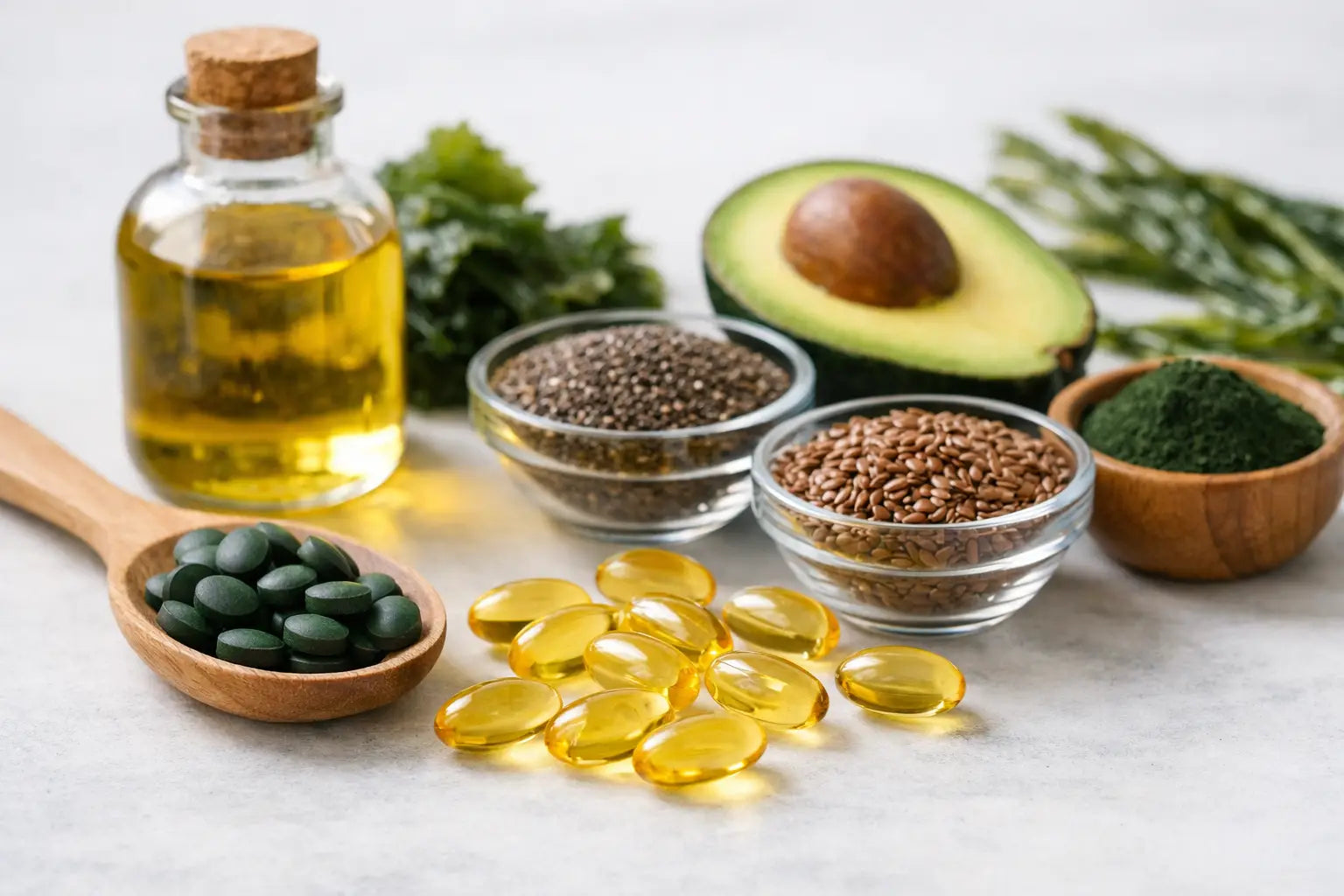
If a supplement only highlights flaxseed oil, hemp oil, or chia oil, you are mainly looking at ALA. That is not useless, but it is a different proposition. For general wellness, that may still appeal. For people looking for more dependable daily support, especially if they eat little or no oily fish, a vegan omega with DHA and ideally EPA is usually the stronger choice.
A good label should make this easy to understand. You want to see the amounts of DHA and EPA clearly stated per serving, not buried in small print or lumped into a general oil blend.
DHA-only or EPA plus DHA?
This depends on your goal. DHA is often prioritised for brain and eye health, and it is commonly included in vegan omega formulas. EPA plus DHA may be more appealing if you want broader everyday support, including heart health and recovery balance.
There is no single perfect ratio for everyone. If you are choosing for general daily wellbeing, a balanced formula with both can be a practical place to start. If you are shopping for a specific life stage or need, the emphasis may shift.
Match the formula to your real-world goal
The fastest way to waste money on supplements is buying a product that sounds healthy but does not match what you actually need.
If your main priority is long-term brain and eye support, look closely at DHA content. If you are focused on heart and circulation, or overall wellness support on a plant-based diet, a product with both EPA and DHA may be the better fit. If you train regularly and want support that fits recovery and performance goals, you will probably want a formula that delivers meaningful active omega-3 levels rather than a token amount added for marketing.
For families, simplicity matters. A formula that is easy to take consistently is more useful than a technically strong product that gets left in the cupboard. Softgels may suit some adults, while liquid formats can work better for people who dislike capsules. The best choice is one you can actually stick with every day.
Purity, testing and clean-label standards matter
Once you know the type of omega-3 you want, the next filter is quality. This is where a lot of products start to separate.
A strong vegan omega should be third-party tested, with clear quality standards around purity and contaminants. Algae is generally seen as a cleaner source than fish oil, but that does not mean every product on the shelf is equally well made. Extraction methods, oxidation control, and manufacturing standards still matter.
Look for brands that are transparent about testing rather than simply using broad words like pure or premium. Clean-label standards also matter if you are trying to avoid unnecessary fillers, artificial colours, gelatine, dairy, or common allergens.
This is especially relevant if you are already choosing plant-based supplements because they fit your wider lifestyle. A vegan omega should not make you decode a list of additives that work against the clean, straightforward approach you were after in the first place.
Watch for freshness, not just potency
Omega oils are sensitive. If they oxidise, quality drops. Freshness is not just a technical detail - it affects both effectiveness and how pleasant the supplement is to take.
A stale omega product may have an unpleasant smell or aftertaste. Vegan omega formulas often avoid the fishy repeat that puts people off traditional options, but freshness still matters. Well-packaged products with sensible storage guidance are a better sign than formulas that say little about stability.
Dose is where many people get caught out
It is easy to assume that more is always better, but with omega-3 the smarter question is whether the dose fits the job.
For general support, a moderate daily amount of EPA and DHA may be enough. For more targeted needs, some people may look for higher levels. The point is to check the actual active content per serving and compare it with how you plan to use it.
Also pay attention to serving size. A label may look impressive until you realise the stated omega-3 content requires taking four or six capsules a day. If that feels unrealistic, it probably is. A product that fits neatly into your routine has a much better chance of becoming a useful daily habit.
Check the full ingredient list, not just the headline claim
This is where clean supplement shopping pays off. A vegan badge is a good start, but it is not the whole story.
Look at the capsule material, added flavours, stabilisers, and carrier oils. If you are choosing supplements to support digestion, energy, recovery, or family wellness without gut disruption, unnecessary extras are worth avoiding. Some people also prefer products free from soy, gluten, or artificial sweeteners, depending on their diet and sensitivities.
The best formulas tend to feel straightforward. They tell you the source, the active omega content, the serving size, and the testing standard without making you work for it.
Practical signs you are choosing well
If you want to make the decision quickly and confidently, there are a few signs that usually point in the right direction. The product uses algae oil rather than relying only on flax or chia. It clearly lists DHA and EPA per serving. It is third-party tested. The ingredient list is clean. The daily serving feels realistic. And the formula matches your goal rather than trying to be everything to everyone.
That combination is often what separates a genuinely useful supplement from one that only looks good in a search result.
Common mistakes when choosing vegan omega
One of the biggest mistakes is assuming all plant-based omega supplements are interchangeable. They are not. A flaxseed oil capsule and an algae-derived EPA and DHA formula may both sit under the umbrella of vegan omega, but they deliver very different things.
Another common issue is buying on total milligrams alone. Big numbers on the front of the label can be misleading if the active omega-3 content is low. The same goes for choosing based only on price. A cheaper supplement that provides minimal EPA and DHA, or needs multiple capsules a day, may not be better value at all.
People also overlook consistency. The best supplement on paper is not the best one for you if it is awkward to take, causes repeat aftertaste, or does not fit your routine. Daily performance comes from products you will genuinely use.
A better way to shop for vegan omega
If you want to cut through the noise, start with purpose. Decide whether you want broad daily support, brain and eye focus, or a more complete EPA and DHA formula for long-term health. Then check the label for algae source, active omega amounts, third-party testing, and a clean ingredient profile.
That is the point where supplement shopping gets easier. You are no longer buying a trend. You are choosing a formula that fits your goals, your values, and your everyday routine - with fewer compromises and a better chance of delivering steady results.
A good vegan omega should feel like a simple upgrade, not a guessing game. Choose the one that is clear, well-made, and easy to stay consistent with, and your future self will thank you for making the label do the hard work now.