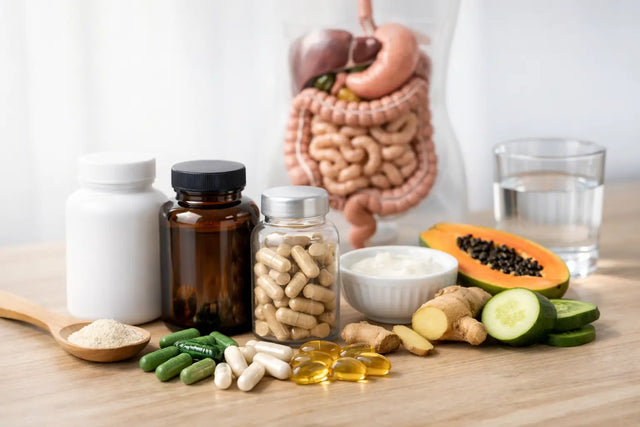

That tight, puffed-up feeling after lunch is not always about overeating. Sometimes it is a rushed meal at your desk, a heavy restaurant dinner, a fibre jump your gut did not love, or a digestive system that needs a bit more support. If you are looking at supplements for bloating after meals, the key is choosing the right kind for the reason behind the discomfort - not simply taking whatever is trending.
Bloating after eating can happen for several reasons. Food may be digesting slowly, certain carbohydrates may be fermenting in the gut, or your microbiome may be out of balance. For some people, it is occasional and linked to specific foods. For others, it shows up most days and starts to affect confidence, comfort, and energy. The good news is that some supplements can genuinely help, especially when they match the pattern of your symptoms.
How supplements for bloating after meals actually work
Not all bloating is the same, so not all supplements work in the same way. Some support breakdown of food in the stomach and small intestine. Others help balance gut bacteria over time. A few are better for cramps and trapped wind than for that heavy, stretched feeling after a large meal.
This is where a more science-backed approach matters. You want support that fits your routine, your diet, and your digestion - without creating more gut disruption. Plant-based, clean-label formulas can be especially useful for people who already know dairy, artificial fillers, or overly aggressive blends do not sit well with them.
Digestive enzymes for heavy, slow meals
Digestive enzymes are often one of the first places to look if bloating tends to come on quickly after eating. Their role is simple - they help break down proteins, fats, and carbohydrates so food is digested more efficiently.
This can be useful if you feel uncomfortably full after meals that are higher in fat or protein, or if you notice bloating after eating larger portions. Enzyme blends may include amylase for carbohydrates, protease for protein, and lipase for fats. Some formulas also include lactase for dairy sugar, which can help if milk-based foods leave you feeling swollen.
The trade-off is that enzymes are not a fix for every type of bloating. If your issue is more linked to long-term gut imbalance or constipation, they may not do much on their own. They also work best when taken around meals, so they suit people who can build them into a consistent routine.
Probiotics for gut balance and daily digestion
If bloating is a regular issue rather than an occasional one, probiotics may be worth considering. These beneficial bacteria can support a healthier microbiome, which in turn may improve fermentation patterns in the gut and reduce gas production over time.
This is not usually an instant result. Probiotics tend to work gradually, and the best response often comes after a few weeks of consistent use. That makes them a strong option for people dealing with recurring post-meal bloating, especially when it comes with irregular digestion, changes in stool pattern, or discomfort linked to certain foods.
Strain choice matters. Different probiotic strains have different effects, so a broad, research-backed formula often makes more sense than a generic one with impressive numbers on the label but little clarity behind it. If you are vegan or have dietary restrictions, checking the capsule and excipients matters too.
Ginger for bloating, nausea and sluggish digestion
Ginger has earned its place in digestive support for good reason. It can help encourage gastric emptying, which means food may move out of the stomach more efficiently. For people who feel full for hours after eating, this can make a real difference.
It is also a practical choice if bloating comes with mild nausea, queasiness, or that heavy, unsettled feeling. Ginger is often well suited to daily use and fits naturally into a plant-based wellness routine.
That said, stronger is not always better. Highly concentrated ginger may not suit everyone, especially if you have reflux or a very sensitive stomach. Dose and form matter, and a balanced formula is usually more useful than a megadose approach.
Which supplements for bloating after meals tend to help most?
The best option depends on what your bloating feels like and when it happens.
If you feel overfull and stretched soon after eating, digestive enzymes or ginger may be more relevant. If your bloating builds through the day and comes with irregular digestion, probiotics may be the smarter long-term choice. If gas and cramping are the main issue, herbs such as peppermint or fennel can also be helpful in some formulas, though they are not right for everyone.
Some people do well with combination products that bring together enzymes, probiotics, and soothing botanicals. That can be convenient, but quality matters. Overloaded blends with long ingredient lists can look impressive while delivering very little of each active. Clean, clearly dosed formulas tend to be a better investment than label-heavy products chasing every trend at once.
Fibre can help - or make bloating worse
Fibre supplements are sometimes suggested for digestion, but this is where context really matters. If your bloating is linked to constipation, the right fibre can help support more regular bowel movements and reduce that backed-up, uncomfortable feeling.
But if you already eat plenty of fibre, or if your gut is sensitive to fermentable fibres, adding more can increase bloating rather than improve it. This is especially true if the dose goes up too quickly or your water intake is low. Fibre is useful for some people, but it is not the universal answer for post-meal bloating.
Activated charcoal is not a daily solution
Activated charcoal sometimes appears in conversations around gas and bloating, but it is not ideal as a regular supplement. While it may reduce gas in some situations, it can also interfere with absorption of medications and other nutrients.
For occasional use, some people find it helpful. For ongoing digestive support, it is usually not the first choice. If bloating happens after meals most days, it makes more sense to focus on digestion, gut balance, and ingredient quality than on a quick fix.
What to look for in a quality supplement
This is one area where label reading pays off. A better supplement is not just about the headline ingredient. You also want to look at whether the formula is third-party tested, whether the doses are meaningful, and whether it avoids unnecessary fillers that may aggravate sensitive digestion.
For many health-conscious shoppers, plant-based and clean-label matter for more than ethical reasons. They often make products easier to fit into real life, especially when you are avoiding dairy, gelatine, gluten, or artificial additives. BioBodyBoost’s approach reflects that shift well - supplements designed to support outcomes like gut balance and daily digestion, without making the routine feel complicated.
Research-backed does not mean dramatic promises. It means realistic support, used consistently, with ingredients that make sense together. That is what tends to deliver the best long-term value.
When supplements are worth trying - and when they are not
Supplements can be genuinely useful when bloating is mild to moderate, happens after certain meals, or forms part of a broader pattern of sluggish digestion. They can also support people who are already making sensible lifestyle changes but still need extra help.
But they are not a substitute for paying attention to the basics. Eating too quickly, gulping fizzy drinks, very large meals, low movement after eating, and sudden changes in fibre intake can all trigger bloating. Even the best formula will struggle if those habits are driving the problem every day.
There is also a point where bloating needs a proper medical conversation rather than a supplement trial. If it is severe, persistent, painful, or comes with weight loss, blood in the stool, vomiting, or major bowel changes, get it checked. Supportive wellness products have their place, but they are not meant to mask red-flag symptoms.
A practical way to choose your next step
If you want immediate support for heavier meals, start with a digestive enzyme or a ginger-based formula and assess the difference over a couple of weeks. If your goal is better gut balance and daily digestion, a targeted probiotic may be the better first move. If your symptoms are mixed, a carefully designed combination supplement can be useful, provided the formula is not trying to do everything at once.
Keep it simple. Add one supplement at a time, take it consistently, and pay attention to patterns rather than judging it after one meal. The goal is not just less puffiness after dinner - it is a digestive routine that feels lighter, calmer, and easier to trust.
A good supplement should help you feel more comfortable in your own body, not leave you second-guessing every meal.