Written by the BioBodyBoost Nutrition Team · Reviewed by a Registered Nutritionist (RNutr) · May 2026

Ashwagandha is now the UK’s most searched adaptogen supplement, and the surge in interest reflects something real rather than a passing trend. Over 70 clinical studies have been published on its effects in humans — making it one of the most evidence-backed herbal supplements available — and new research continues to expand the list of benefits beyond the traditional stress-relief framing.
This guide covers what ashwagandha actually does, which populations benefit most, what the clinical evidence supports, how much to take and why combining it with other adaptogens may produce better outcomes than using it alone.
What is ashwagandha?
Ashwagandha (Withania somnifera) is a small shrub native to India and North Africa, used in Ayurvedic medicine for over 3,000 years as a rejuvenating tonic. Its roots contain a family of compounds called withanolides — steroidal lactones that are responsible for most of the plant’s measurable biological effects. Modern standardised extracts are concentrated to defined withanolide levels (typically 2.5–5%), enabling the consistent dosing required for clinical research.
How it works: the HPA axis and cortisol
Ashwagandha’s primary mechanism involves the hypothalamic-pituitary-adrenal (HPA) axis — the hormonal cascade that produces cortisol in response to stress. Chronic stress causes persistently elevated cortisol, which over time disrupts sleep, suppresses immune function, impairs cognitive performance, promotes fat storage (particularly abdominal) and contributes to anxiety and depression. A double-blind, randomised controlled trial in the Indian Journal of Psychological Medicine found ashwagandha extract significantly reduced serum cortisol levels, with participants also reporting reduced perceived stress and improved general wellbeing after 60 days compared to placebo.
The evidence for stress and anxiety
This is where the evidence is strongest. A 2020 randomised controlled trial found 240mg of ashwagandha extract daily produced significant reductions in anxiety scores and morning cortisol levels over 60 days, with effects becoming notable at 4 weeks. Crucially, this was a high-quality placebo-controlled trial in stressed but otherwise healthy adults — the most relevant population for supplementation.
Evidence rating for stress/anxiety: Strong (multiple RCTs, consistent effect).
The evidence for sleep quality
Ashwagandha’s sleep benefits are distinct from sedative effects. Rather than inducing drowsiness directly, it appears to reduce the cortisol-driven physiological arousal that prevents sleep onset and disrupts sleep architecture. Research in PLOS ONE found ashwagandha significantly improved sleep quality, sleep onset latency and morning alertness in adults with insomnia complaints over 8 weeks.
Evidence rating for sleep: Moderate-Strong.
The evidence for athletic performance and recovery
A randomised trial in the Journal of the International Society of Sports Nutrition found ashwagandha supplementation significantly improved VO2 max, muscle strength and recovery time compared to placebo over 8 weeks in resistance-trained adults. This is thought to involve both cortisol reduction (reducing catabolic signalling) and direct effects on muscle creatine metabolism.
Evidence rating for performance: Moderate (fewer studies than stress/anxiety).
The evidence for thyroid and hormonal function
Ashwagandha has shown effects on thyroid hormones, particularly in subclinical hypothyroidism, where it has been associated with improved T3 and T4 levels. It also appears to support testosterone in men with low levels and stress-related hormonal suppression. These effects are likely downstream of cortisol reduction rather than direct hormonal action. Important: anyone with a diagnosed thyroid condition should consult their GP before supplementing, as ashwagandha can potentiate thyroid medication.
Why adaptogens work better in combination
Adaptogens produce complementary effects through different pathways. Ashwagandha modulates the HPA axis; rhodiola acts via AMPK and serotonin regulation; ginseng supports mitochondrial energy; maca supports hormonal balance; B vitamins are essential cofactors for neurotransmitter synthesis. A well-designed multi-adaptogen formula produces broader stress resilience than any single herb.
Dosage and timing
- Effective dose: 300–600mg of standardised extract daily. Studies use KSM-66 or Sensoril — both standardised for withanolides
- When to take: Morning or evening — both work. Evening dosing may improve sleep benefit specifically
- How long: Effects become meaningful at 4 weeks. Most studies run 60 days. Daily long-term use is well-tolerated
- With food: Take with food to reduce any chance of mild gastric sensitivity
Who should be cautious
Ashwagandha is generally very well tolerated, but avoid or consult a GP if: pregnant or breastfeeding; taking thyroid medication; taking immunosuppressants; scheduled for surgery (it may potentiate anaesthesia); or managing an autoimmune condition. The solanaceous alkaloids in ashwagandha are removed in standardised root extracts but present in leaf extracts — root extract is the appropriate form for supplementation.
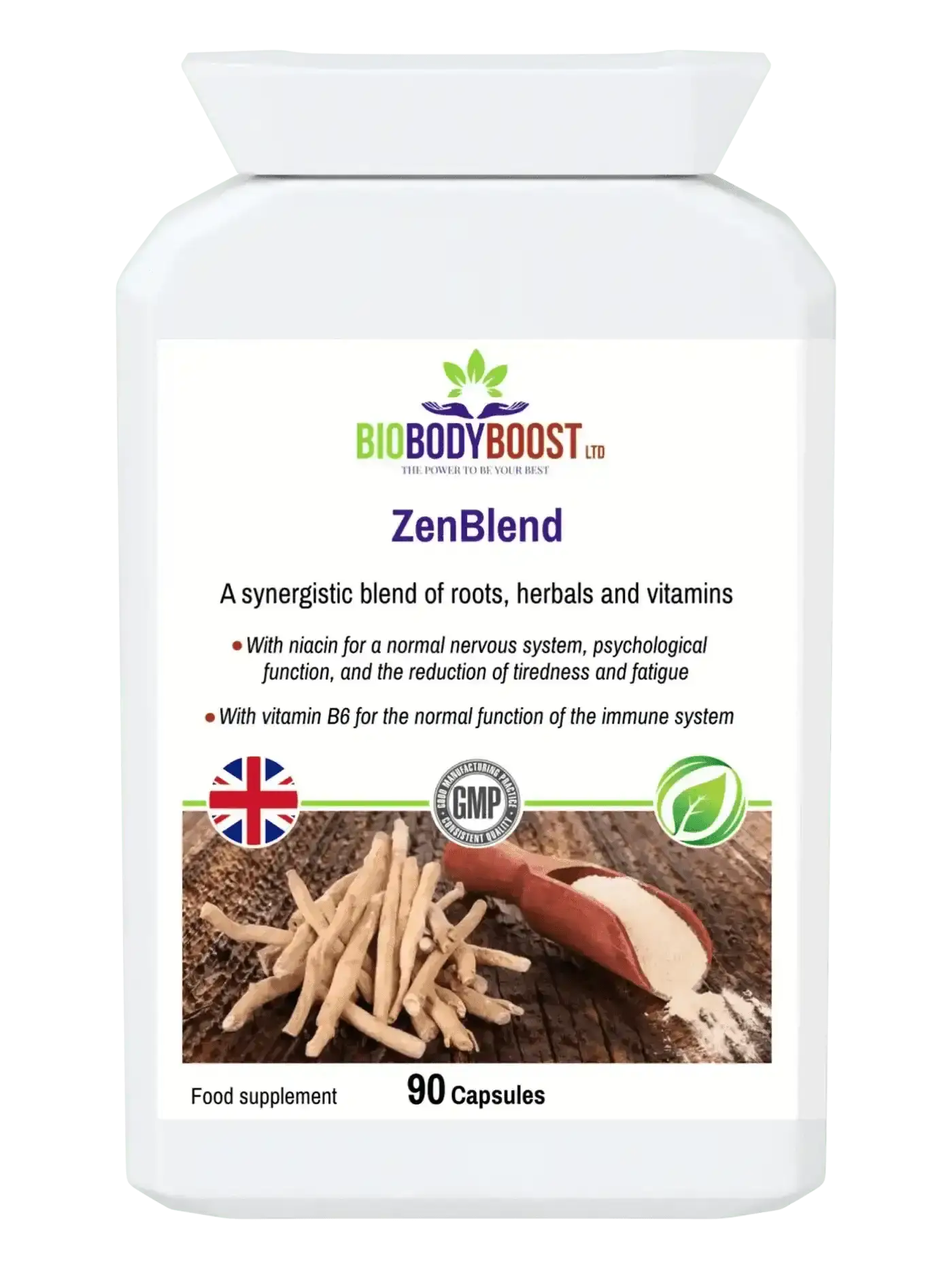
The BioBodyBoost ZenBlend combines ashwagandha with rhodiola, ginseng, maca and B vitamins — halal certified, vegan, UK GMP manufactured. Explore the full Women’s Wellness UK and Immunity & Wellbeing UK collections.
Food supplements should not replace a varied diet. Consult your GP before use if pregnant, breastfeeding, taking thyroid or immunosuppressive medication, or managing an autoimmune condition.