Written by the BioBodyBoost Nutrition Team · Reviewed by a Registered Nutritionist (RNutr) · May 2026

Ashwagandha has become the UK’s best-selling herbal supplement, and for once the hype is not entirely unjustified. Unlike many trending botanicals, ashwagandha (Withania somnifera) has accumulated a substantial body of clinical evidence over the past two decades — most of which holds up to scrutiny. But it is not a cure-all, it works best for specific people in specific situations, and the form and dose matter considerably.
What ashwagandha actually is
Ashwagandha is a root herb classified as an adaptogen — a term with a specific meaning in pharmacognosy: a substance that non-specifically increases resistance to physical, chemical and biological stressors without disturbing normal physiological function. The active compounds are withanolides (steroidal lactones), which modulate the hypothalamic-pituitary-adrenal (HPA) axis, the body’s central stress-regulation system.
What the evidence actually shows
Cortisol and perceived stress
This is where ashwagandha’s evidence base is strongest. A double-blind, randomised controlled trial in the Indian Journal of Psychological Medicine found ashwagandha root extract (300mg KSM-66 twice daily) produced a 27.9% reduction in serum cortisol and significant improvements in all stress and anxiety scales after 60 days. These are substantial effects for a food supplement, and they replicate across multiple independent trials.
Physical performance and recovery
Research in the Journal of the International Society of Sports Nutrition found ashwagandha supplementation produced significant improvements in muscle strength (bench press and leg extension), muscle recovery and cardiorespiratory endurance compared to placebo over 8 weeks. The mechanism appears to involve reduced exercise-induced muscle damage and enhanced testosterone levels in men.
Sleep quality
A placebo-controlled trial in PLOS ONE found ashwagandha root extract significantly improved sleep quality, sleep onset latency, total sleep time and sleep efficiency. This effect is mechanistically consistent with its cortisol-lowering action — high evening cortisol is a primary driver of difficulty falling asleep.
Cognitive function
Emerging evidence suggests ashwagandha improves working memory, attention and processing speed. A 2021 trial found significant improvements in cognitive test scores in healthy adults after 90 days of supplementation, potentially through its neuroprotective effect on acetylcholine pathways.
Who benefits most
- High-stress professionals with chronically elevated cortisol and sleep disruption
- People experiencing adrenal fatigue-type symptoms — wired but tired, difficulty switching off
- Athletes and active individuals wanting better recovery and training adaptation
- Women in perimenopause — ashwagandha has shown benefits for menopausal symptoms through its hormonal modulation effects
- Anyone with low thyroid function — ashwagandha stimulates thyroid hormone production (note: contraindicated in hyperthyroidism)
Dose and form — what the research uses
The most-studied extract is KSM-66 (full-spectrum root extract, minimum 5% withanolides). Most clinical trials use 300–600mg daily. Lower doses (150–200mg) may maintain benefit once established. Ashwagandha is fat-soluble — take with food or a meal containing some fat for better absorption. Results typically emerge after 4–8 weeks of consistent use; this is not an acute supplement.
Why single-herb formulas underperform
Stress, energy and mood are regulated by multiple overlapping systems. Ashwagandha addresses the HPA axis (cortisol), but most adults under chronic stress would also benefit from rhodiola rosea (improves mental performance under stress via dopamine/serotonin pathways), panax ginseng (physical energy and cognitive function) and B vitamins (which the NHS confirms contribute to normal psychological function and reduction of tiredness). A multi-adaptogen formula addresses these systems simultaneously.
Adaptogen comparison
| Adaptogen | Primary action | Best for |
|---|---|---|
| Ashwagandha | HPA axis, cortisol reduction | Stress, sleep, recovery |
| Rhodiola rosea | Dopamine/serotonin, mental fatigue | Focus, mood, burnout |
| Panax ginseng | Mitochondrial energy, immunity | Physical energy, immune function |
| Maca root | Hormonal balance, libido | Hormones, fertility, energy |
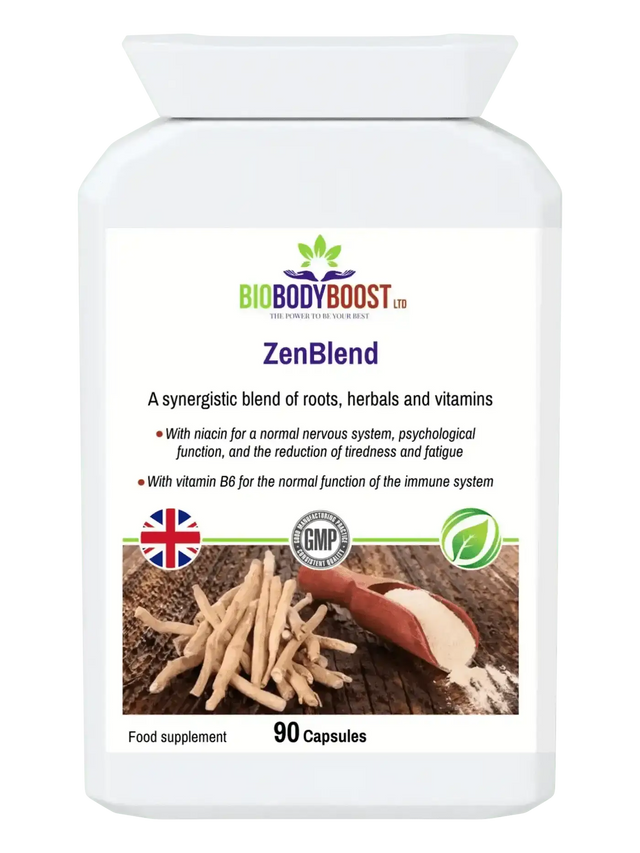
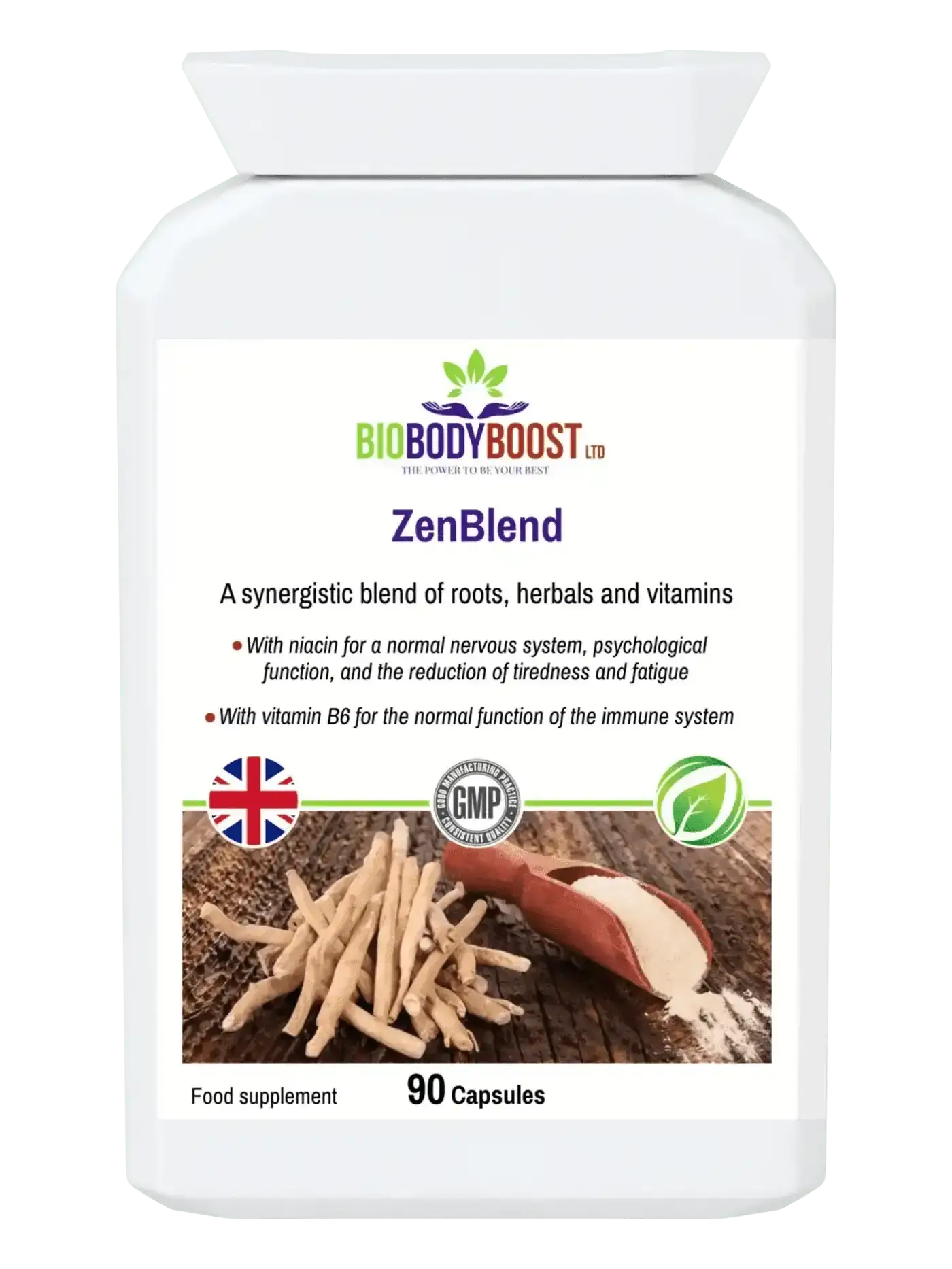
The BioBodyBoost ZenBlend combines ashwagandha, rhodiola, ginseng, maca and L-theanine with niacin, B6 and B12 in a single halal certified, vegan capsule. Explore the full Women’s Wellness UK and Energy & Immunity UK collections.
Food supplements should not replace a varied diet. Ashwagandha is contraindicated in hyperthyroidism, pregnancy and with immunosuppressive or thyroid medication. Consult your GP before use if managing a diagnosed health condition.