Quick answer: probiotics can be halal but require checking at three levels: (1) the growth media used to culture the bacterial strains — can contain porcine or non-halal dairy-derived peptones; (2) the capsule shell — gelatine (often porcine) vs HPMC (always halal); (3) excipients and carrier ingredients. A probiotic supplement that says “vegan” addresses point 1 and 2 partially but does not confirm halal certification of the fermentation process. Third-party halal certification covering all three points is the meaningful standard. BioBodyBoost BioTic range carries full halal certification across all three compliance levels.
The growth media question
Probiotic bacteria (Lactobacillus, Bifidobacterium, Streptococcus thermophilus etc.) are cultured in growth media — nutrient solutions that feed the bacteria during production. Growth media commonly contains peptone: a protein hydrolysate that can be sourced from porcine (most common in industrial fermentation, cheapest), bovine (requires slaughter certification), or plant-derived (soy, casein-free dairy, potato) sources. Without halal certification specifically covering the fermentation process and growth media, it is impossible to verify the peptone source from the label alone.
Products classified as “KOSHER MILKY” on supplier kosher certificates indicate that dairy substrates were involved in culture — this also has halal implications if the dairy source is uncertified.
The capsule question
Many probiotic capsules use standard gelatine — typically porcine. This is separate from the bacteria themselves and is a direct haram concern regardless of the bacterial strain source. HPMC (hydroxypropyl methylcellulose) plant-derived capsules are the halal-compliant alternative. Always check: does the capsule shell disclose its material? Look for “vegetable capsule,” “HPMC,” or “plant-derived capsule” on the label. If it says “gelatine” or does not disclose the shell material, it is likely porcine.
The BioTic difference
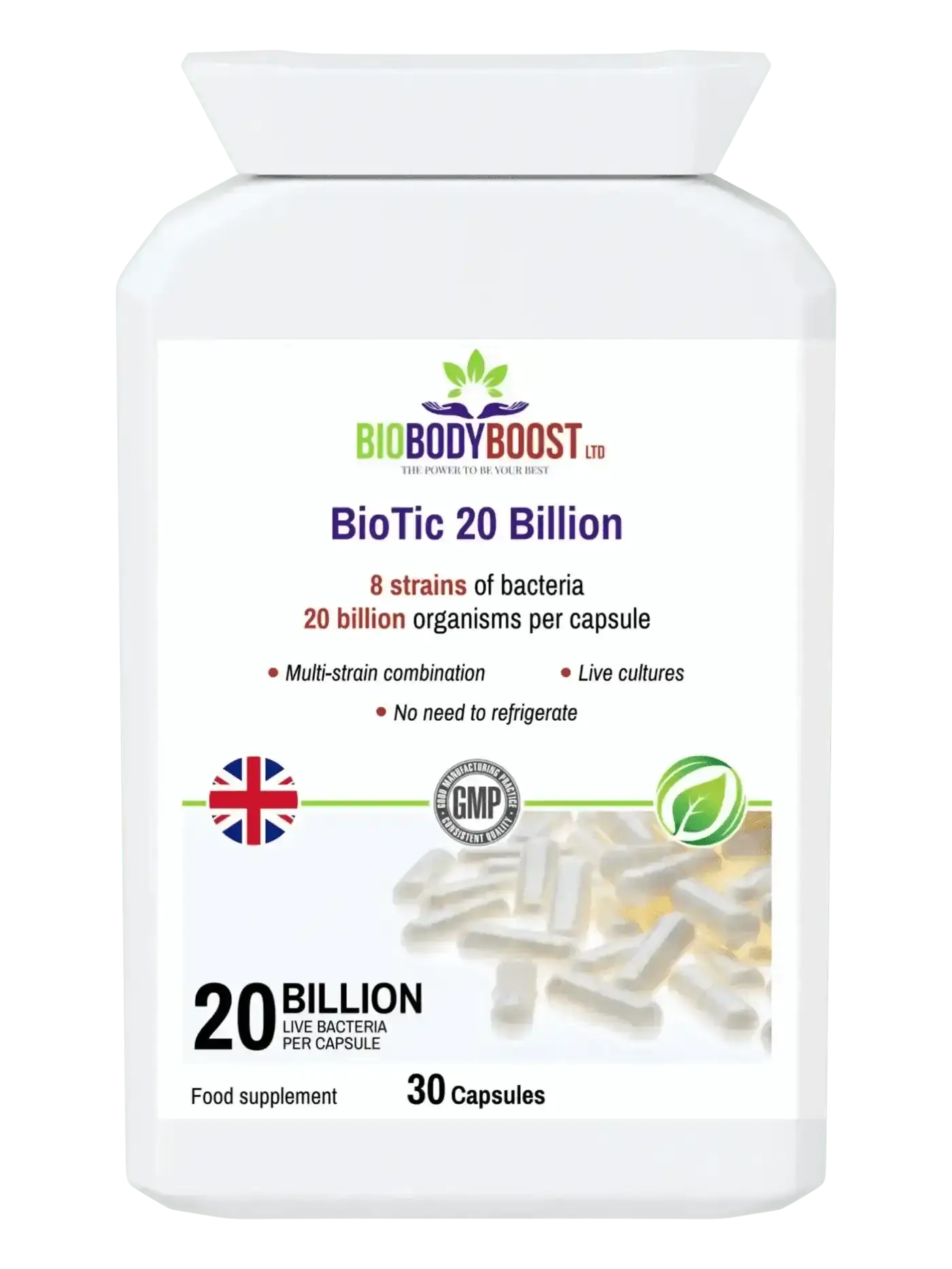
BioTic 20 Billion and BioTic 4 Billion: HPMC capsule, vegan-certified growth media, full third-party halal certification. 20 billion CFU (BioTic 20B) or 4 billion CFU (BioTic 4B), 8 human-derived strains, CFU guaranteed at expiry not manufacture.
Are probiotics halal in Islam?
Probiotics can be halal but require specific verification at three levels: growth media (must not be porcine peptone), capsule shell (HPMC not gelatine), and manufacturing environment (halal-audited facility). A probiotic that is “vegan” addresses some but not all of these concerns. Third-party halal certification specifically covering fermentation process and growth media is the meaningful standard. BioBodyBoost BioTic range carries full third-party halal certification across all compliance levels — one of very few UK probiotic products to do so.
Can I take probiotics during Ramadan?
Probiotics in dry capsule form do not break the fast — dry capsules with no caloric content are generally considered permissible during fasting hours by most scholars. However, this is a question of personal scholarly guidance. Practically, taking probiotics at Suhoor or Iftar avoids the fasting question entirely and allows the capsule to reach the gut at optimal times (with food to buffer stomach acid, improving bacteria survival to the colon).