Written by the BioBodyBoost Nutrition Team · Reviewed by a Registered Nutritionist (RNutr) · May 2026

Apple cider vinegar is one of the most searched wellness ingredients in the UK. But the liquid form — the brown, pungent bottle that has dominated health food shelves for decades — has real problems that capsules largely solve. The question is whether encapsulating ACV loses the active components that make it useful in the first place.
The short answer: no. The longer answer is more nuanced, and understanding it helps you get the actual benefits of ACV without the risks of drinking it neat.
What gives ACV its health effects?
The active component in apple cider vinegar is acetic acid (typically 5–6% in standard ACV), produced when the ethanol in fermented apple juice is converted by acetobacter bacteria. Acetic acid is responsible for the majority of ACV’s studied effects: slowing gastric emptying (which moderates blood glucose spikes), inhibiting certain digestive enzymes (reducing carbohydrate absorption), supporting the growth of beneficial gut bacteria, and producing a modest satiety signal. The “mother” — the cloudy sediment in unfiltered ACV — contains proteins, enzymes and friendly bacteria, though the evidence that it adds significantly to ACV’s effects is limited.
The problem with liquid ACV
Drinking apple cider vinegar undiluted is genuinely harmful to tooth enamel. Research in the Journal of the Academy of General Dentistry found that apple cider vinegar erodes enamel significantly more aggressively than most fruit juices, with even diluted daily consumption producing measurable enamel loss over time. Additionally, the high acidity can irritate the oesophagus, worsen acid reflux and cause gastric discomfort, particularly when taken on an empty stomach.
Most people who “take ACV daily” stop within weeks because the taste and acid sensation become aversive. Compliance is fundamentally the limiting factor of liquid ACV as a supplement.
Do capsules deliver the same active compounds?
Yes, for the acetic acid component. Encapsulated ACV powders are created by spray-drying or freeze-drying liquid ACV, which concentrates the acetic acid and preserves it in stable form. The equivalent dose in capsule form is typically 500mg–1,000mg of ACV powder per capsule, equating to roughly 1–2 teaspoons of liquid ACV. The “mother” is largely lost in the drying process, but given the limited evidence for its specific contribution, this is unlikely to matter clinically.
Capsules also allow combination with complementary ingredients that amplify ACV’s effects — chromium for glucose metabolism, turmeric for metabolic inflammation, green tea for thermogenesis — which liquid ACV cannot provide.
The evidence for ACV’s benefits
Blood sugar and insulin response
A landmark study in Diabetes Care found that consuming vinegar before a carbohydrate-rich meal reduced postprandial blood glucose by up to 34% and improved insulin sensitivity in insulin-resistant subjects. The mechanism is acetic acid slowing gastric emptying and inhibiting disaccharidase enzymes, reducing the speed and extent of carbohydrate digestion. This is well-established and highly relevant for metabolic health.
Weight and appetite
A 12-week randomised trial published in Bioscience, Biotechnology and Biochemistry found daily ACV consumption reduced body weight, abdominal fat and waist circumference significantly compared to placebo. The effects are modest — not dramatic weight loss — but consistent across multiple studies when ACV is combined with a calorie-controlled diet.
Digestive health
ACV supports stomach acid production, which is relevant for people with hypochlorhydria (low stomach acid) — a condition that is more common than typically recognised and which impairs protein digestion and B12 absorption. The acetic acid environment also creates less hospitable conditions for certain pathogenic bacteria.
Capsules vs liquid: direct comparison
| Factor | Liquid ACV | ACV Capsules |
|---|---|---|
| Tooth enamel risk | High ✗ | None ✓ |
| Acid reflux risk | Moderate-High ✗ | Low ✓ |
| Acetic acid delivered | Yes ✓ | Yes (equivalent dose) ✓ |
| Combination with co-factors | Not possible ✗ | Yes (chromium, turmeric, green tea) ✓ |
| Long-term compliance | Poor (taste aversion) ✗ | High ✓ |
How to take ACV capsules effectively
- Take 10–15 minutes before a main meal for maximum impact on post-meal blood glucose and appetite
- With a full glass of water
- Consistency matters more than timing precision — daily use over 8–12 weeks is where results accumulate
- Avoid if you have an active gastric ulcer or are on diabetes medication without GP guidance
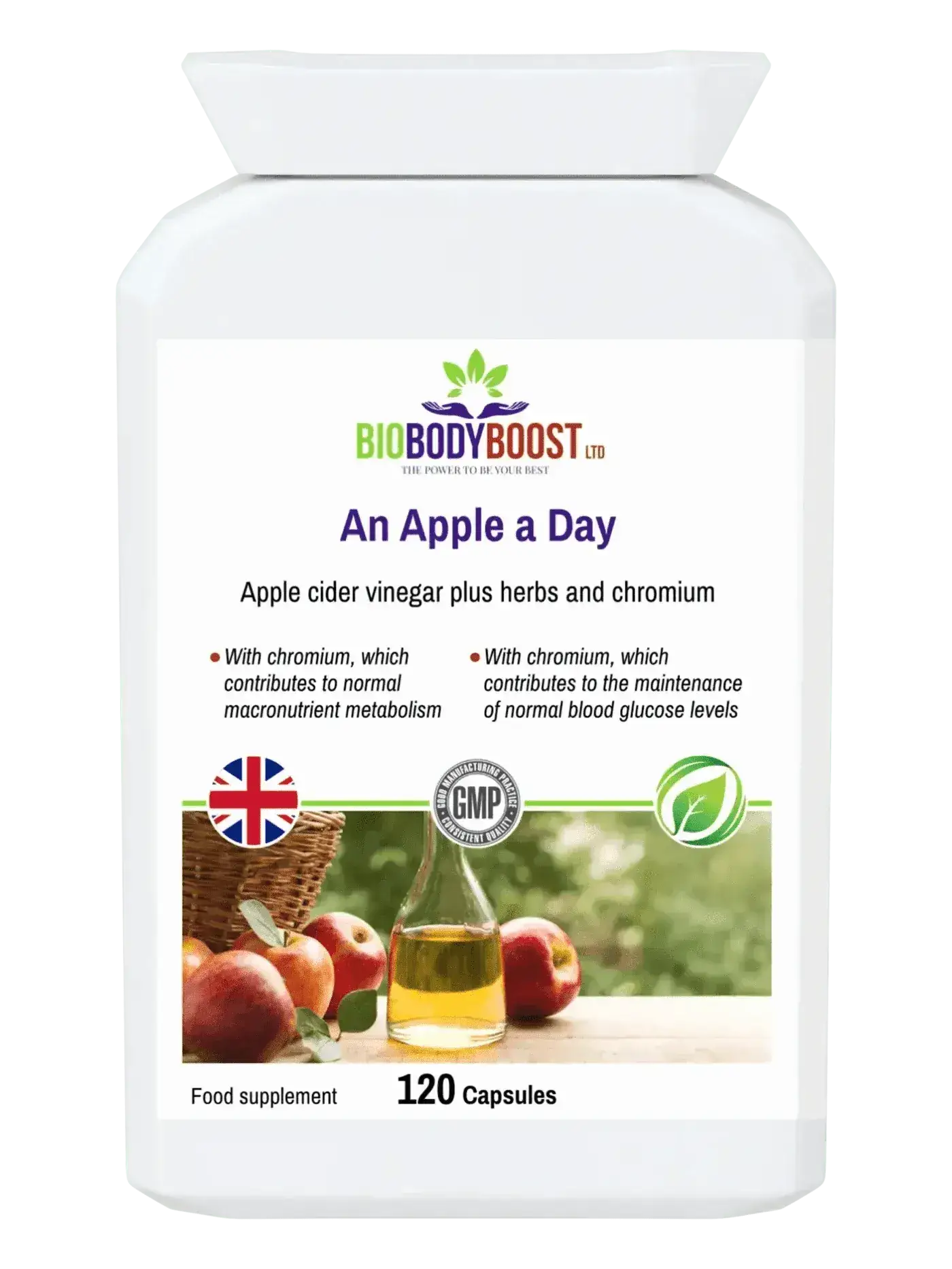
The BioBodyBoost An Apple a Day provides ACV with turmeric, ginger, chromium and green tea — all five with specific evidence for metabolic support — in a halal certified, vegan capsule. Explore the Weight Management UK and Gut Health UK collections.
Food supplements should not replace a varied diet. Those with diabetes, kidney disease or taking blood-sugar-lowering medication should consult their GP before use. Not recommended with active gastric ulcers.