Written by the BioBodyBoost Nutrition Team · Last updated August 2026 · General information, not medical advice.
Every time you get a cold, you reach for vitamin C. Every time winter arrives, you hear about vitamin D. But what do these vitamins actually do for your immune system — and which ones are genuinely worth supplementing? This guide covers the evidence with EU-authorised claims, specific research citations and honest limits.
Vitamin D — the one most UK adults are genuinely low in
Vitamin D is EU-authorised to contribute to the normal function of the immune system. UK NDNS 2019 data shows approximately 1 in 5 UK adults have vitamin D levels below 25 nmol/L — clinical deficiency. From October to March, UV-B intensity at UK latitudes is insufficient to produce meaningful skin synthesis regardless of outdoor time.
What research supports: A 2017 meta-analysis in the BMJ (Martineau et al., 25 RCTs, n=11,321) found vitamin D supplementation significantly reduced the risk of acute respiratory infections, with the largest protective effect in people who were deficient at baseline (OR 0.58, 95% CI 0.40–0.82). People supplementing daily or weekly showed stronger protection than those receiving single large bolus doses. Public Health England recommends 10μg (400 IU) for all UK adults October to March.
Who needs it most: everyone in the UK October to April. Year-round for people with darker skin tones (melanin reduces UV-B synthesis), those who cover up outdoors for personal or religious reasons, and people who work indoors consistently. UK South Asian Muslim communities have disproportionately high deficiency rates for multiple compounding reasons.
Our Lipovita D3+K2 — lichen-derived D3 (unambiguously vegan and halal), liposomal format, halal certified.
Vitamin C — not a cold cure, but genuinely useful
Vitamin C is EU-authorised to contribute to the normal function of the immune system and to protection of cells from oxidative stress. It cannot prevent colds — that is a persistent myth. What it does: supports neutrophil and lymphocyte function during infection, acts as an antioxidant protecting immune tissue from oxidative burst damage, and is a mandatory cofactor for collagen formation in the skin barrier.
What research supports: A 2017 review in Nutrients (Carr and Maggini) comprehensively documented vitamin C’s roles across innate and adaptive immunity. A 2013 Cochrane review (Hemilä and Chalker, 29 trials, n=11,306) found vitamin C supplementation did not prevent colds in the general population, but significantly reduced cold duration (by 8% in adults, 14% in children) and symptom severity. Effects on duration were clearest in people under physical stress (marathon runners, soldiers in subarctic conditions) — a 50% reduction in cold incidence in those groups.
Absorption ceiling: above approximately 200mg per dose, gut transporters saturate and absorption efficiency falls sharply. Liposomal delivery encapsulates vitamin C in phospholipid spheres, bypassing this saturation and producing significantly higher plasma levels than standard tablets at equivalent doses. Our Liposomal Vitamin C — 500mg, halal certified. For sensitive stomachs: Bio-C.
Zinc — the mineral most people underestimate
Zinc is EU-authorised to contribute to the normal function of the immune system. It is essential for the development and function of T-lymphocytes, natural killer cells and neutrophils, and for cytokine production that coordinates the immune response. Zinc deficiency — common in plant-based diets due to phytate competition for absorption — directly impairs immune function.
What research supports: A 2011 Cochrane review (Singh and Das, 16 trials) found zinc lozenges started within 24 hours of cold onset significantly reduced cold duration by approximately 33%. Effect sizes varied by zinc form — zinc acetate and zinc gluconate outperformed zinc oxide. A 2019 systematic review in Open Forum Infectious Diseases confirmed zinc supplementation significantly reduced cold incidence and duration.
Honest limit: zinc at above 25mg/day long-term depletes copper. Do not use zinc lozenges (typically 15–25mg zinc acetate per lozenge) as a daily supplement — they are for acute use within 24 hours of symptoms. The 15mg elemental zinc commonly found in daily supplements or multivitamins is appropriate for maintenance.
Vitamin A — the mucosal barrier vitamin
Vitamin A is EU-authorised to contribute to the normal function of the immune system and to the maintenance of mucous membranes. Mucous membranes lining the respiratory tract, gut and eyes are the body’s first physical barrier against pathogens. Deficiency impairs barrier integrity and reduces antibody production. In the UK, severe deficiency is uncommon but suboptimal status is possible in low-fat or very restricted diets, as vitamin A is fat-soluble.
EU-authorised immune nutrients: the complete picture
The following nutrients all carry the EU-authorised claim “contributes to the normal function of the immune system”: vitamins A, B6, B12, C, D, folate, copper, iron, selenium and zinc. This means each has sufficient evidence for the claim to be substantiated under EU regulatory standards. No food supplement may legally claim to prevent, treat or cure any infection.
| Nutrient | Mechanism | Evidence | Priority for |
|---|---|---|---|
| Vitamin D3 | Innate + adaptive immune regulation | Very strong | Everyone Oct–Apr; year-round for darker skin |
| Vitamin C | Immune cell function, antioxidant protection | Strong | Daily maintenance; acute cold support |
| Zinc | T-cell and NK cell development, cytokines | Strong | Plant-based diets; within 24hr of cold onset |
| Vitamin A | Mucosal barrier integrity, antibody production | Good | Low-fat or restricted diets |
| Selenium | Antioxidant enzyme glutathione peroxidase | Good | UK soils are low in selenium |
| Probiotics | Gut-associated lymphoid tissue (GALT), SCFA | Good | Gut-immune axis, post-antibiotic recovery |
What the evidence does NOT support for immunity
- Echinacea: mixed evidence — some trials show modest cold duration reduction, others show no effect. Variability reflects differences in species, plant part and preparation. Not unreasonable as an add-on; not reliable as a frontline intervention.
- Mega-dose vitamin C above 1–2g/day: no additional immune benefit over well-absorbed lower doses once the saturation ceiling is exceeded. Increases oxalate stone risk long-term in susceptible individuals.
- Elderberry: A 2021 meta-analysis found elderberry supplementation significantly reduced cold duration and severity — the effect is real but modest and trial quality is limited. Reasonable as an addition, not a primary immune strategy.
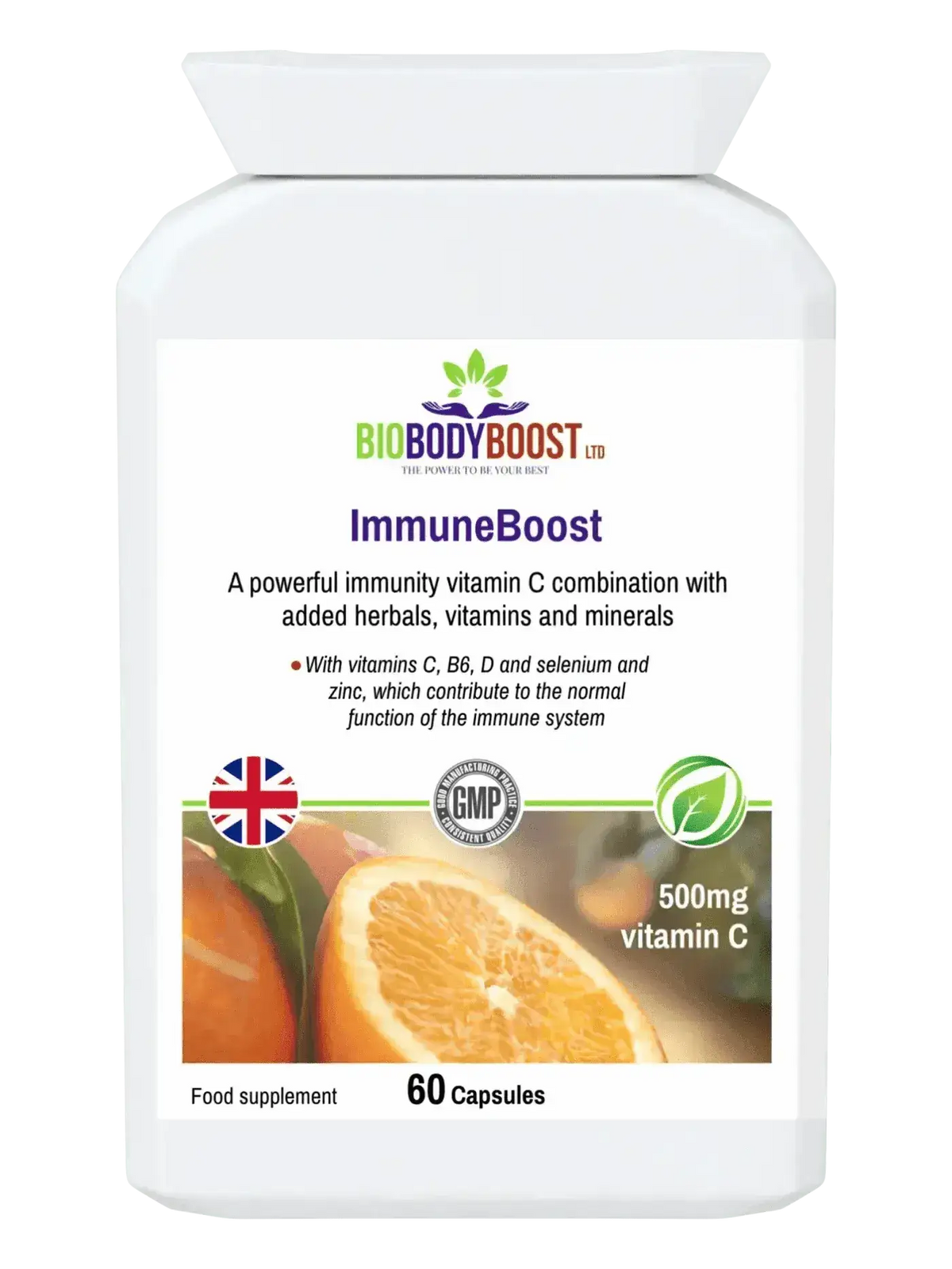
Our ImmuneBoost combines vitamin C, D3, zinc, reishi, elderberry and probiotics in one HPMC capsule — halal certified. Browse the full Immunity UK collection.
Food supplements should not replace a varied diet or healthy lifestyle. Do not take preformed vitamin A supplements during pregnancy. Consult your GP if pregnant, breastfeeding, taking prescription medication, or managing a diagnosed health condition.
Does vitamin D prevent colds and flu?
Vitamin D supplementation is associated with reduced risk of acute respiratory infections in meta-analyses — the 2017 BMJ meta-analysis (25 RCTs, n=11,321) found significant protection, strongest in people with deficiency at baseline. It does not prevent colds or flu in the way a vaccine does. The EU-authorised claim is that vitamin D contributes to the normal function of the immune system — a meaningful regulatory standard, but different from a treatment or prevention claim. If you are deficient (common in UK adults), supplementation is likely to reduce your susceptibility to respiratory infections. If you are already replete, the marginal benefit is smaller.
When should I take zinc for a cold?
Within 24 hours of first symptoms — this is the timing supported by the Cochrane review evidence. Zinc taken after symptoms are established has less clear evidence for duration reduction. Use zinc lozenges (acetate or gluconate form, not oxide) at approximately 15–25mg elemental zinc per lozenge, every 2 hours while awake, for up to 5–7 days. Do not use high-dose zinc lozenges as a daily ongoing supplement — the doses used for cold treatment exceed the safe upper limit for long-term daily use (25mg/day). For daily immune maintenance, 10–15mg elemental zinc from a standard supplement is appropriate.
Are immune supplements halal?
The active immune nutrients (vitamin D3, vitamin C, zinc, vitamin A, selenium) are mineral or synthetically derived with no inherent halal concerns. Vitamin D3 from lanolin (sheep wool) is considered permissible by most UK scholarly bodies but some prefer lichen-derived D3 which is unambiguously plant-origin. The main halal check is the capsule shell (HPMC = plant-derived = halal; standard gelatine requires halal-certified source) and processing aids. All BioBodyBoost immune supplements use HPMC capsules and carry third-party halal certification.
Can I get enough vitamin D from food in the UK?
Extremely difficult during autumn and winter regardless of diet quality. Dietary sources of vitamin D are limited — oily fish, egg yolks, fortified foods — and UK NDNS data shows mean dietary vitamin D intake of approximately 4–5μg/day against the PHE recommendation of 10μg/day. Even eating oily fish daily cannot reliably maintain optimal levels at UK latitudes October to March. Supplementation is not optional for most UK adults during these months — it is the only reliable source.