
Written by the BioBodyBoost Team · Updated May 2026 · Editorial standards →
The UK supplement market for women is enormous — and confusing. Most “women’s supplements” are either underdosed multivitamins with a pink label, or single-ingredient products that address one goal while ignoring five others. This evidence-based guide covers what actually works for UK women in 2026 — by priority, not by marketing spend.
The Foundation: What Almost Every UK Woman Is Deficient In
Vitamin D
NHS data consistently shows vitamin D deficiency affects an estimated 1 in 5 adults in the UK. In darker-skinned populations — including much of the South Asian, African and Middle Eastern community — the rate is significantly higher due to reduced cutaneous synthesis. Vitamin D supports immune function, bone maintenance, muscle function and inflammatory regulation. The NHS recommends supplementation throughout autumn and winter; year-round for those at higher deficiency risk.
Iron
Iron deficiency anaemia affects approximately 25% of women of childbearing age in the UK. Symptoms — fatigue, poor concentration, hair thinning, brittle nails — are often attributed to other causes. Those with heavy menstrual periods, restrictive diets or confirmed low ferritin should consider supplementation with GP guidance.
Folic Acid
The EU-authorised claim for folic acid states that supplemental intake of 400μg for at least one month before and up to three months after conception reduces the risk of neural tube defects in the developing foetus. This requires supplementation before conception is confirmed — making it relevant to all women of childbearing age who are not actively preventing pregnancy.
Daily Supplement Stack for UK Women — By Goal
| Health goal | Key nutrients | BioBodyBoost product | Timing |
|---|---|---|---|
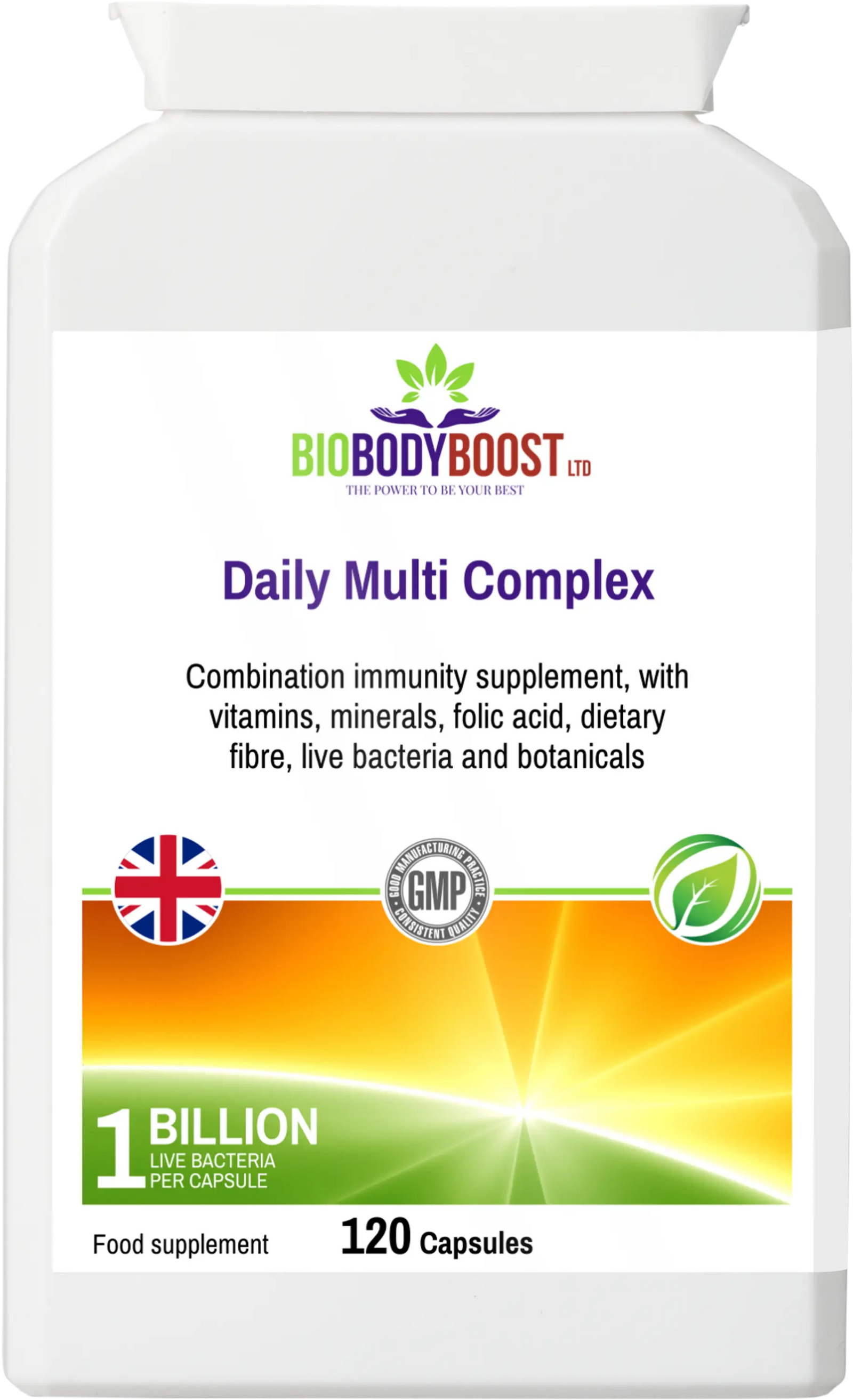
| Foundation (vitamins, minerals, gut, thyroid) | 17 nutrients, probiotics, fibre, bladderwrack, alfalfa, folic acid | Daily Multi Complex | Morning with food |
| Skin, hair, nails, joints | 9g collagen, HA, MSM, vitamin C, biotin, zinc | Marine Collagen Nourish | Morning or post-workout |
| Immune + collagen co-factor | 500mg liposomal vit C, rosehip, bilberry | Liposomal Vitamin C | Morning daily |
| Sleep, stress, energy | Magnesium glycinate, malate, taurate + B6 + zinc | Magnesium 3 Complex | Evening with food |
All four products are halal approved. All contain EU-authorised health claims. None contain artificial fillers.
Supplement Timing Guide for Women
Timing matters for both effectiveness and tolerability. Here’s the evidence-based approach:
With breakfast (morning): Fat-soluble vitamins (D, E, K) and minerals (iron, zinc) absorb better with food. Probiotics survive stomach acid transit better when taken with a meal. Collagen powder mixes into a morning drink. Vitamin C provides daytime antioxidant and immune support.
Post-workout (if active): Collagen peptides taken within two hours post-exercise, alongside vitamin C, supports the collagen synthesis upregulation triggered by mechanical loading. This is the optimal window for skin and joint collagen production specifically.
Evening: Magnesium taken 1–2 hours before sleep allows the glycinate component to begin modulating GABA activity before bed. Avoid iron at the same time as magnesium — they compete for the same absorption pathway.
Consistency over timing perfection: Taking supplements at the same time each day builds compliance. A supplement taken consistently at a suboptimal time produces better outcomes than one taken at the optimal time intermittently.
The Halal Gap in Women’s Supplements
For Muslim women, the UK supplement market has historically provided limited options — particularly for marine collagen (most brands uncertified), multivitamins with probiotics (almost none halal certified with formula depth), and liposomal supplements (most use soy lecithin, not halal certified). The BioBodyBoost full range is halal approved throughout, covering every goal above.
Frequently Asked Questions
What is the most important supplement for women over 30 in the UK?
Vitamin D and magnesium are the two most commonly deficient nutrients in UK women over 30. A complete multivitamin with probiotics and botanicals addresses both alongside 15 other nutrients simultaneously.
Should women take collagen supplements?
The evidence for hydrolysed marine collagen for skin elasticity and moisture is positive — particularly at 8–9g daily with vitamin C as a co-factor. The effect takes 8–12 weeks to be measurable.
Can I take all four supplements together?
Yes. None of the four interact adversely. The only consideration: separate iron (in the Daily Multi Complex) from calcium-rich foods or calcium supplements by 2 hours, as calcium inhibits iron absorption.
Are these supplements safe during pregnancy?
The Daily Multi Complex contains folic acid relevant to pregnancy planning. Consult your GP or midwife before taking any supplement during pregnancy — requirements and safe upper limits shift significantly during each trimester.
Explore the full Women’s Wellness UK and Halal Vitamins UK collections.
Food supplements should not replace a varied diet or healthy lifestyle. Consult your GP before use if pregnant, breastfeeding or managing a diagnosed health condition.