Quick answer: The NHS recommends vitamin D for all children aged 1–4 years at 10mcg (400 IU) daily, and for babies from birth to 1 year at 8.5–10mcg daily unless formula fed. For UK South Asian children, this supplementation is recommended year-round due to significantly reduced cutaneous vitamin D synthesis from higher melanin content. The halal compliance check is the D3 source: most UK children’s vitamin D uses lanolin-derived D3 (from sheep wool) which most scholars classify as halal, but lichen-derived D3 (plant-origin) is the unambiguous choice for families wanting no uncertainty.
Why UK children need vitamin D supplementation
Vitamin D is produced in skin exposed to UVB radiation. In the UK, UVB intensity is sufficient for cutaneous synthesis only between approximately April and September, and only during the hours of 10am–3pm. For the remaining 6–7 months, dietary intake and supplementation are the only sources. UK children’s diets are typically low in vitamin D — oily fish and egg yolk are the primary dietary sources, and neither is consumed in adequate amounts by most children.
Why South Asian children need it year-round: melanin pigment in skin absorbs UVB before it can trigger vitamin D synthesis. South Asian children may need 5–10 times longer sun exposure to produce equivalent vitamin D to a fair-skinned child. Even during UK summer months, meaningful cutaneous synthesis is significantly reduced. Darling et al. (2014, AJCN) found vitamin D deficiency affects approximately 90% of UK South Asian adults — and deficiency in mothers directly affects newborn and infant vitamin D status.
What vitamin D does in children
- Bone development: vitamin D is required for calcium absorption in the gut. Severe vitamin D deficiency causes rickets — a bone softening disease that was considered eradicated but has re-emerged in UK South Asian communities. The NHS identifies South Asian children as a high-risk group for vitamin D deficiency rickets.
- Immune function: EU-authorised claim: vitamin D contributes to the normal function of the immune system. Vitamin D receptors are present on virtually all immune cells and regulate both innate and adaptive immune responses. Children with adequate vitamin D have lower rates of respiratory infections.
- Muscle function: vitamin D receptors in muscle tissue regulate calcium handling and muscle protein synthesis. Deficiency is associated with muscle weakness and delayed motor development.
Recommended doses by age
| Age | NHS recommendation | South Asian note |
|---|---|---|
| Birth to 1 year (breastfed) | 8.5–10mcg (340–400 IU) daily | Year-round |
| Birth to 1 year (formula fed) | Not required if ≥500ml formula daily (fortified) | Discuss with health visitor |
| 1–4 years | 10mcg (400 IU) daily | Year-round |
| 5–17 years | 10mcg (400 IU) Oct–Mar; consider year-round if limited sun | Year-round strongly advisable |
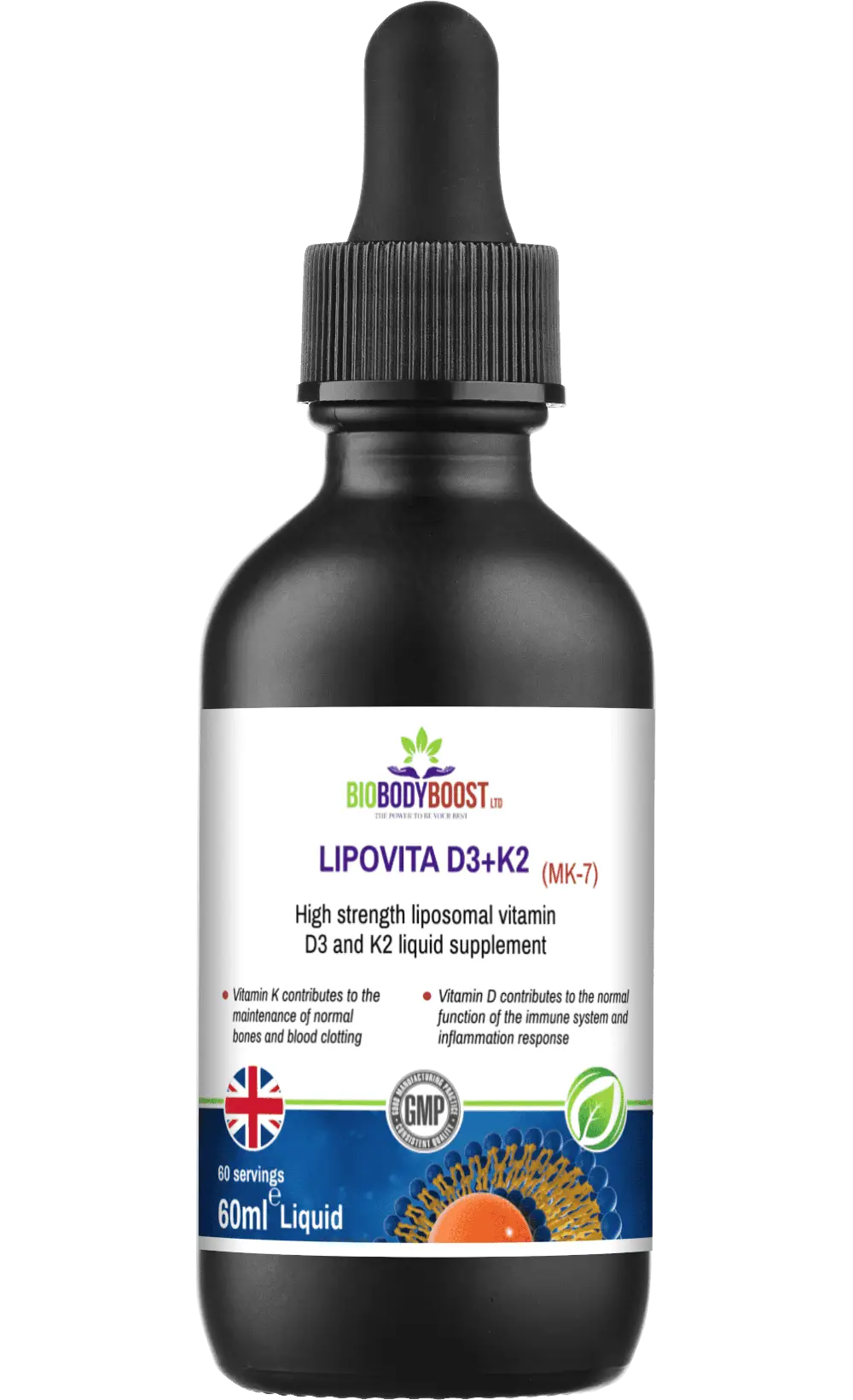
D3 source for halal families: lichen-derived D3 (cholecalciferol from Cladonia lichen) is plant-origin and unambiguously halal. Lanolin-derived D3 (from sheep wool wax) is halal under most scholarly positions — no slaughter involved. For the clearest compliance without scholarly uncertainty, lichen-derived is the choice. Lipovita D3+K2 drops use lichen-derived D3 in liquid drop format — easy to administer to children, dose-adjustable, halal certified, vegan. Discuss appropriate dose with your GP or health visitor for your child’s age and weight.
Does my child need vitamin D in summer UK?
For white-skinned children who spend adequate time outdoors (15–30 minutes daily in sunlight between 10am–3pm, April to September) — cutaneous synthesis may be adequate during UK summer. For South Asian, Black and other children with higher melanin content: year-round supplementation is strongly advisable regardless of season, as cutaneous synthesis is significantly impaired even during summer months. The NHS recommends year-round vitamin D for high-risk groups including those with darker skin tones.
Is children’s vitamin D halal UK?
Vitamin D3 (cholecalciferol) is produced from two sources: lanolin (sheep wool wax, no slaughter, halal under most scholars) and lichen (plant-derived, unambiguously halal and vegan). Most UK children’s vitamin D drops and supplements use lanolin-derived D3 without disclosing this on the label. For halal families wanting the clearest compliance: look for products stating “lichen-derived D3” or “vegan D3.” Lipovita D3+K2 uses lichen-derived cholecalciferol with full halal certification — one of the few UK vitamin D products combining plant-origin D3 with third-party halal certification.