
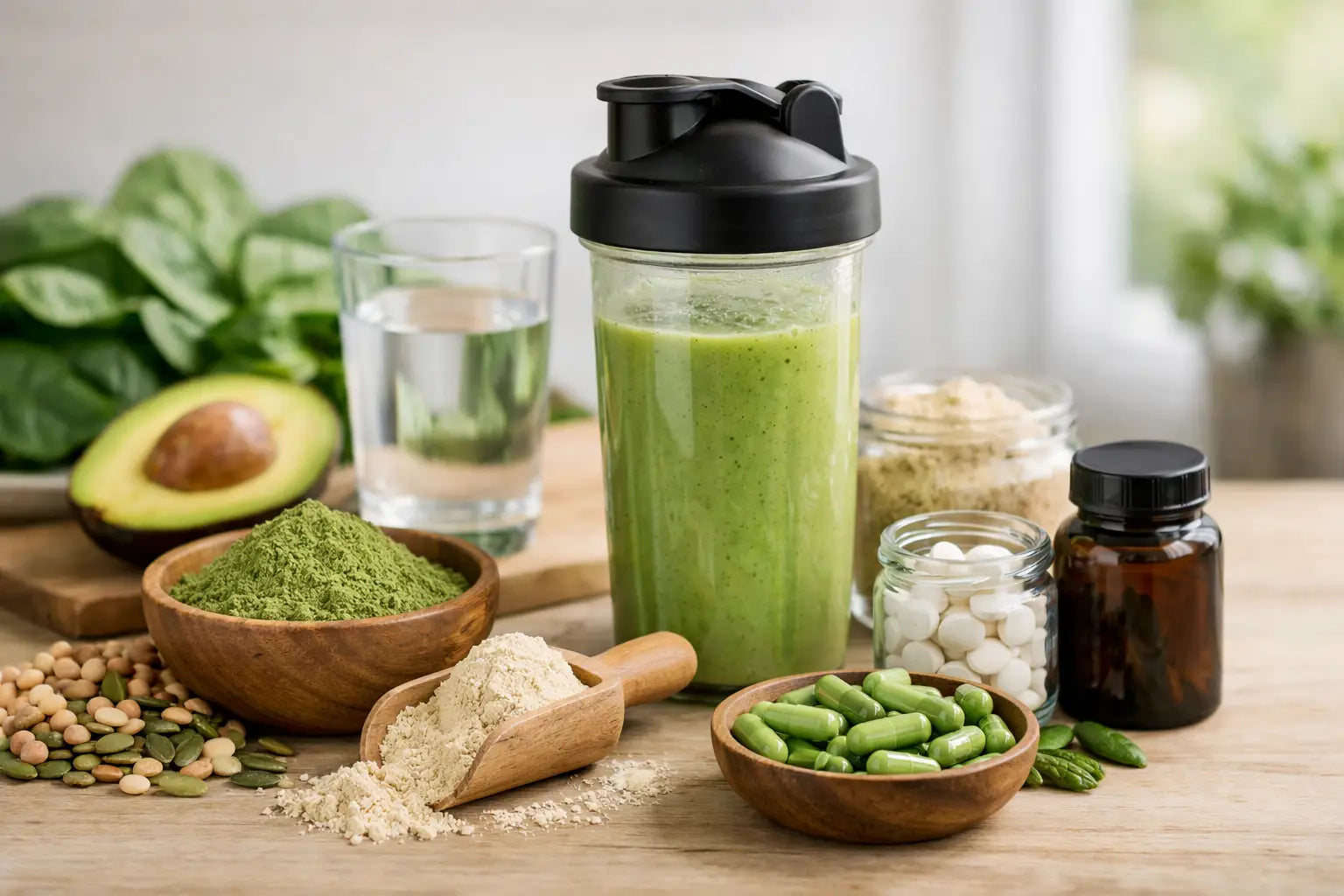
That stiff, heavy feeling the morning after training is not always a badge of honour. Sometimes it is simply a sign that recovery has been underfed, underhydrated, or left to chance.
For anyone eating plant-based, the good news is this - recovery support does not need whey, dairy blends, or chalky formulas loaded with fillers. The better question is not whether vegan options work. It is which post workout recovery supplements vegan athletes and active adults should actually prioritise, and when they are worth using.
What post workout recovery supplements vegan routines really need
Recovery is not one single process. After exercise, your body is trying to repair muscle tissue, restore glycogen, rebalance fluids and electrolytes, and calm some of the inflammation that hard training creates. That is why one supplement rarely does everything well.
If your training is light to moderate, food may cover most of your needs. A solid meal with protein, carbohydrates and fluids often does the job. Supplements become more useful when life is busy, appetite is low after training, sessions are intense, or you are training several times a week and want more consistency.
For most people, the highest-value support comes down to protein, electrolytes, creatine, and in some cases magnesium or omega-3 from algae. The right stack depends on how you train, how often you train, and what tends to hold your recovery back.
Start with protein, because muscle repair comes first
Protein is usually the first place to look because it directly supports muscle repair and adaptation. If you finish a strength session and do not eat for hours, recovery can stall. That does not mean you need a shake after every workout, but it does mean total daily intake matters.
Vegan protein powders have improved massively. The strongest options are usually pea protein, brown rice protein, or blends that combine the two. Pea protein is rich in leucine, which matters for muscle protein synthesis, while rice protein helps round out the amino acid profile. A well-formulated blend often gives you a more complete result than a single source.
Look for a product that gives a meaningful serving of protein rather than lots of flavouring with a small protein hit. Around 20 to 30 grams post workout is a practical target for many adults, though smaller and larger individuals may need slightly less or more. Clean-label formulas also matter here. If a powder leaves you bloated or unsettled, you are less likely to use it consistently.
This is where research-backed, third-party tested plant formulas stand out. You want recovery support that fits your routine, digests well and does not create gut disruption when your system is already under stress from training.
Do you need BCAAs or EAAs?
Usually, not if your protein intake is already strong. BCAAs on their own are often overhyped. Essential amino acids can have a place if you train fasted, struggle to eat enough protein, or want something light around sessions, but they are not a replacement for a complete protein source. For most vegan recovery plans, a quality protein blend gives better value and broader support.
Carbohydrates still matter more than many people think
If your sessions are long, intense, or close together, protein alone is not enough. Your muscles also need carbohydrate to restore glycogen. Without that, you can feel flat, heavy and oddly underpowered in your next session.
This is especially relevant for runners, cyclists, footballers, Hyrox competitors, and anyone mixing cardio with strength work. In those cases, a recovery shake with both protein and carbohydrate can be far more effective than protein by itself. It supports muscle repair, energy restoration and better next-day performance.
If your workout was shorter or lower intensity, normal meals may cover this easily. It depends on training load. Someone lifting weights three times a week has different needs from someone doing back-to-back endurance sessions.
Hydration is recovery, not just performance
A lot of post workout fatigue is really poor fluid and electrolyte replacement. Sweating does not just cost you water. You also lose sodium, and sometimes potassium and magnesium, depending on the session and the individual.
That is why electrolyte formulas can earn their place among post workout recovery supplements vegan users rely on. They are particularly useful after hot gym sessions, endurance work, team sports, or any training where sweat loss is obvious. If you finish a session with a headache, feel drained for hours, or notice a sharp dip in energy later in the day, hydration may be the missing piece.
Not every electrolyte product is well balanced, though. Some contain very little sodium and lean heavily on marketing. Others are packed with sugar when you may not need it. A cleaner option with effective electrolyte levels can support faster rehydration without unnecessary extras.
Creatine is not just for bulking
Creatine is one of the most researched sports nutrition ingredients full stop, and it is especially relevant for vegans. Plant-based diets contain little to no dietary creatine, so baseline stores may be lower than in omnivores.
That makes supplementation useful not only for strength and power but also for recovery between repeated high-intensity efforts. It can support better training output over time, which then improves the results you get from each session.
Creatine monohydrate is still the gold standard. It does not need to be fancy. A daily dose of 3 to 5 grams is enough for most people. Timing is less important than consistency, so taking it post workout is fine if that helps you remember.
Some people expect creatine to reduce soreness directly. That is not really its main job. Its value is more about helping the body perform and adapt better over the long term. If your training includes strength work, sprinting, circuits, or explosive efforts, it is one of the smartest additions to a vegan routine.
Magnesium can help if tension and poor sleep are slowing recovery
Not all recovery problems start in the gym. Sometimes the real issue is that your nervous system never really comes down. You train hard, but your sleep is broken, your muscles stay tight, and you wake up feeling like you have not fully reset.
That is where magnesium may help. It is not a magic fix for muscle soreness, but it can support normal muscle function, relaxation and sleep quality. Those effects matter because recovery largely happens when you rest well.
This is more of a secondary supplement than a core one. If you already sleep well and eat a diet rich in whole plant foods, you may not notice much difference. But if evening tension, cramps or restless sleep are part of the picture, magnesium is worth considering.
Algae omega-3 is a smart longer-term play
Recovery is not just about what happens in the hour after a session. It is also shaped by your baseline nutrition. Omega-3 fats, especially DHA and EPA, can support normal inflammatory balance and overall joint and muscle health.
For vegans, algae oil is the direct alternative to fish oil. It is not the fastest route to immediate post workout relief, so it should not replace protein or hydration support. Still, for people training regularly, dealing with joint stiffness, or looking at recovery from a bigger-picture health angle, it can be a valuable part of the stack.
How to choose the right vegan recovery support
The best supplement is the one that solves your actual recovery gap. If you struggle to hit protein, start there. If you sweat heavily and feel wiped out after training, prioritise electrolytes. If your goal is better gym performance over time, creatine deserves serious attention.
Quality matters as much as ingredient choice. Look for vegan formulas with clear dosing, clean ingredient panels and third-party testing. This is not just about ethics or label appeal. It is about trust, absorption and consistency. A product that is underdosed or loaded with unnecessary additives is not helping your daily performance.
For many active adults, a simple setup works best: a plant protein blend after training, electrolytes when sweat loss is high, and creatine taken daily. Extras like magnesium or algae omega-3 can be layered in based on personal need.
If you want a cleaner, more targeted option, BioBodyBoost focuses on plant-based formulas designed around real health goals rather than complicated protocols. That matters when you want recovery support to feel like an easy daily upgrade, not another fitness chore.
When supplements are not the answer
It is worth saying plainly - if sleep is poor, meals are inconsistent and training load is too high, no supplement can fully patch that up. Recovery products work best when the basics are already in place.
They should support a good routine, not replace one. A shake cannot make up for under-eating all day. Electrolytes will not solve chronic dehydration if you barely drink water outside the gym. Creatine will not rescue a programme with no rest days.
That is not a reason to skip supplements. It is a reason to use them properly. The strongest results usually come from simple, well-chosen products used consistently alongside decent food, enough fluid and realistic recovery time.
If your training matters to you, recovery deserves the same attention as the workout itself. Get that part right and you do not just feel less sore - you train better, more often, and with a lot more to show for the effort.


