
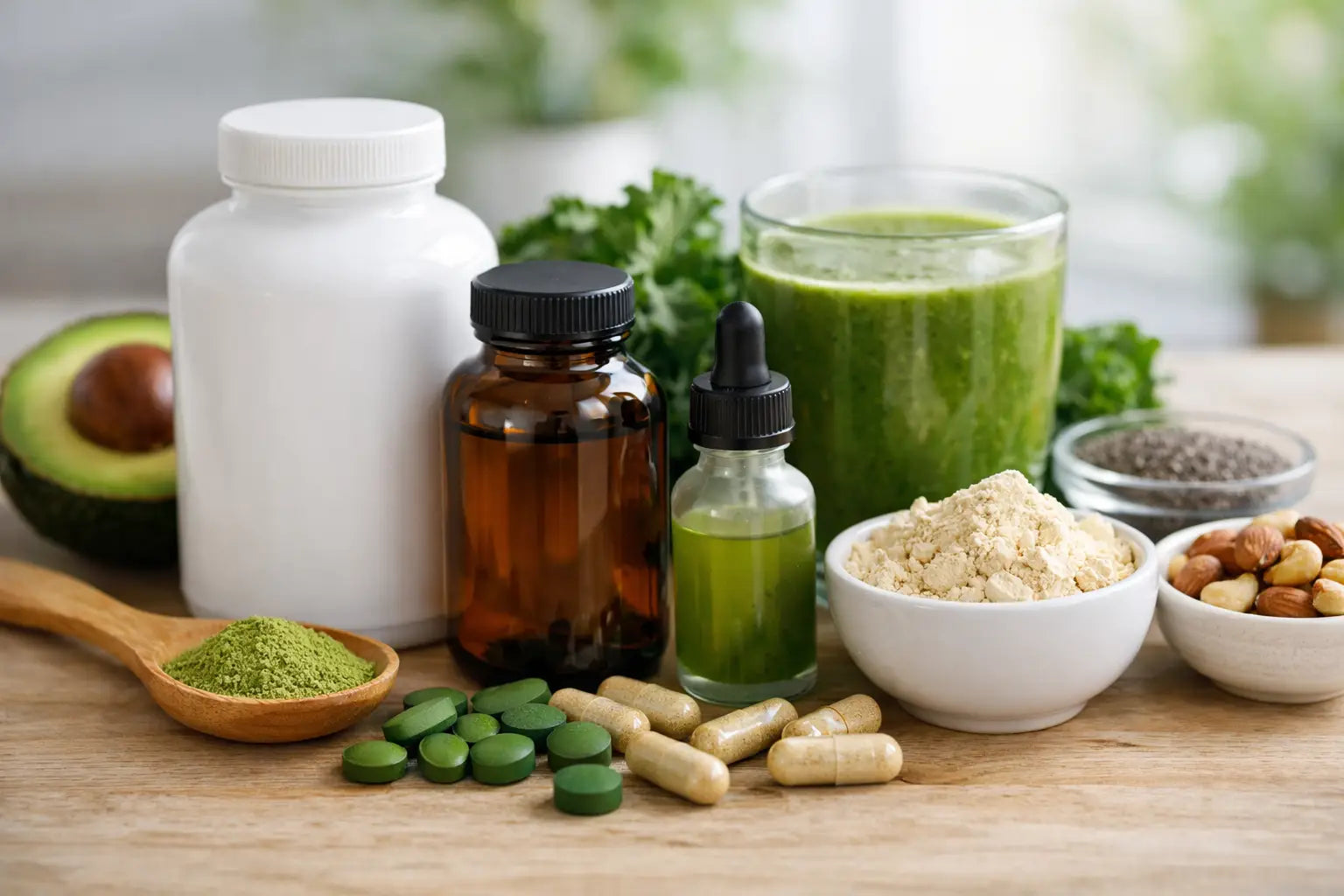
Most people do not need a shelf full of capsules. They need a routine they will actually follow. If you are working out, juggling work, dealing with sluggish mornings, or trying to stay on top of gut balance and immune support, knowing how to build a vegan supplement routine daily comes down to two things: choosing the right essentials and making them easy to take.
A good routine should feel light, not complicated. It should support your real goals, fit around meals and training, and avoid the all-too-common pattern of buying five products, taking them for four days, then forgetting about them for three weeks. The best daily plan is consistent, targeted and grounded in what your body may genuinely need.
How to build a vegan supplement routine daily without overdoing it
The first mistake is starting with too much. A vegan routine can be highly effective, but more is not always better. If you stack every trendy powder, botanical and multivitamin at once, it becomes harder to tell what is helping, what is unnecessary, and what your stomach simply does not enjoy.
Start with your foundation. For most vegan adults, that usually means looking closely at vitamin B12, vitamin D, omega-3, iron in some cases, iodine in some cases, and targeted support such as magnesium, probiotics or protein depending on lifestyle. Your routine should reflect your diet, energy levels, training load, digestion and any known gaps.
Think of it in layers. First, cover nutrients that are harder to get reliably from a vegan diet. Then add goal-based support. That could mean digestive support if meals leave you bloated, muscle recovery if you train hard, or immune support during heavier work periods and winter months.
Start with the nutrients most vegans should check
Vitamin B12 is the non-negotiable one. It supports energy metabolism, nerve health and red blood cell formation, and it is not something most people should try to wing through food alone on a vegan diet. If your daily routine misses B12, the rest of your stack does not matter nearly as much.
Vitamin D is another common gap, especially in the UK where sunlight is not exactly dependable all year. Low vitamin D status can affect mood, immune resilience and overall wellbeing. For many people, this is a daily habit worth keeping consistent rather than taking only when they remember.
Omega-3 also matters. Vegan diets can include ALA from foods like flax and chia, but conversion to the forms your body uses most efficiently can be limited. That is why many plant-based routines include a direct vegan omega-3 source for brain, heart and everyday health support.
Iron is more individual. Some people do well through diet alone, while others, particularly menstruating women, may need extra support. The same goes for iodine. If you are not eating consistent iodine-rich foods, this is a nutrient worth reviewing rather than guessing.
Match your routine to your actual goal
This is where a routine becomes useful rather than generic. If your main issue is poor recovery after training, your supplement plan should not look the same as someone dealing with bloating after lunch or low mood in winter.
For energy and daily performance, a solid base of B12, vitamin D and iron if needed often makes more sense than chasing stimulant-heavy products. If your goal is gut balance and daily digestion, probiotics or digestive support blends may be more relevant than another multivitamin. If you want support for training, muscle maintenance and soreness, then protein, magnesium and recovery-focused nutrients may deserve a place.
There is always a trade-off between a broad routine and a focused one. Broad routines can cover more bases, but they are easier to abandon. Focused routines are easier to stick with, but they need to align with your biggest health priority.
Common goal-based add-ons
If you often feel bloated, irregular or uncomfortable after meals, gut support can be a smart second layer. A well-formulated probiotic or gut-focused blend may help support digestive comfort without disrupting your day.
If you train regularly, a plant-based protein powder can help close the gap between what you eat and what your muscles need for repair and maintenance. Magnesium can also make sense if tight muscles, poor sleep or post-workout fatigue are regular issues.
If your focus is long-term health, think steady support rather than quick fixes. Omega oils, antioxidant-rich greens, and research-backed botanical blends may fit well here, provided they do not replace your core nutrients.
Build your routine around your day, not the other way round
The reason many supplement plans fail is not poor ingredients. It is poor timing. A daily routine should fit into moments that already happen, such as breakfast, your first coffee, lunch, or your evening wind-down.
Morning works well for many people because it ties supplements to an existing habit. B12, vitamin D and multinutrient formulas are often easier to remember with breakfast. If a supplement is best taken with food, the morning meal is a reliable anchor.
Others do better splitting things up. For example, a probiotic may suit a different time than a mineral supplement, and magnesium is often better placed in the evening if relaxation or sleep quality is part of the goal. The point is not to create a perfect timetable. It is to create a repeatable one.
A simple daily rhythm
A practical vegan routine might look like this: foundation nutrients with breakfast, protein around training or between meals if intake is low, and magnesium or evening support later in the day. If digestion is the focus, gut support can be timed according to the product instructions and your normal meal pattern.
That rhythm keeps things manageable. It also reduces the chance of taking everything at once and wondering why your stomach feels off.
Choose clean formulas that support absorption
Not all vegan supplements are equal. Some look good on the front label but fall short on dosage, ingredient quality or digestive tolerance. If you are building a routine for the long term, clean-label quality matters.
Look for formulas that are clearly vegan, third-party tested and transparent about what is inside. This is especially useful if you also need products that fit around halal, kosher, gluten-free or dairy-free preferences. For a daily routine, simplicity counts. You want ingredients that support the goal without unnecessary fillers or a long list of extras that do little apart from complicate things.
Absorption matters too. A supplement is only useful if your body can use it well and if it does not leave you feeling worse. Some people tolerate one format better than another. Capsules may suit one person, powders another. If a product causes digestive discomfort, that is not a sign to force it. It is a sign to reassess the form, dose or timing.
Track what is working for 30 days
You do not need to turn your routine into a science experiment, but you do need a clear read on whether it is helping. Give your plan 30 days of steady use and pay attention to practical markers. Is your energy more stable? Are you less bloated after meals? Is recovery better? Are you sleeping more deeply or feeling less run down?
This is where many people give up too early or keep taking products that are not moving the needle. A routine should earn its place. If something is useful, you will often notice a difference in your day-to-day rhythm, not just in theory.
If you are adding more than one new supplement, do it gradually. That makes it easier to spot what suits you and what does not. It also helps avoid unnecessary digestive disruption.
When personalised support makes more sense
Some people can build a strong daily routine from a few well-chosen essentials. Others have more specific needs. If you have dietary restrictions on top of being vegan, train intensely, struggle with persistent tiredness, or want support tailored to family wellness, a more personalised approach can be the better move.
That is where tailored dietary supplements can add real value. Instead of forcing a generic routine, you shape one around your health goals, dietary compatibility and daily schedule. For busy adults, that often means better consistency and less wasted spend.
A vegan supplement routine should make you feel supported, not buried under bottles. Start with the essentials, build around your real goal, and make the habit easy enough to keep on your busiest days. That is when daily health support starts to feel less like a task and more like a genuine upgrade.


