
Quick answer: the most effective non-caffeinated energy supplements are: iron (if ferritin is low — the most common and most missed cause of fatigue in UK women), vitamin B12 (essential for vegans and often low in over-60s), magnesium (low in approximately 70% of UK adults; addresses the NMDA, ATP and cortisol pathways that all contribute to energy), and ashwagandha KSM-66® (cortisol reduction and HPA axis regulation). Electrolytes address a specific but frequently overlooked cause: dehydration-related fatigue in active people.
Why non-caffeinated energy support works differently
Caffeine inhibits adenosine receptors, blocking the fatigue signal — it doesn’t create energy, it hides tiredness. The result is energy that depletes faster, rebound fatigue when it wears off, and diminishing returns as tolerance develops. Non-caffeinated approaches address root causes: nutrient deficiencies, poor mitochondrial function, HPA axis dysregulation, or poor hydration. The effect is slower to appear but more sustainable.
1. Iron — the most missed cause of fatigue in UK adults
Iron is required for haemoglobin synthesis — without adequate iron, red blood cells carry less oxygen to working muscle and brain tissue, producing the breathlessness, mental fog and persistent tiredness of iron deficiency anaemia. Sub-anaemic iron depletion (low ferritin without full anaemia) is even more prevalent and similarly debilitating.
What research supports: UK NDNS data shows iron deficiency anaemia affects approximately 25% of premenopausal women. A 2019 study in the British Journal of Nutrition found ferritin below 30μg/L (pre-anaemic range) was significantly associated with reduced cognitive performance and fatigue in non-anaemic women. Correcting iron deficiency consistently produces meaningful improvements in energy, exercise tolerance and cognitive function — one of the most reliable fatigue interventions in nutrition research.
Honest limit: get ferritin and full blood count tested before supplementing iron. Excess iron is a pro-oxidant; haemochromatosis (iron overload disorder) affects approximately 1 in 200 people of Northern European descent. Iron supplementation without confirmed deficiency carries real risk. See our guide on how to take iron supplements without nausea.
2. Vitamin B12 — essential for energy metabolism and nerve function
B12 is EU-authorised to contribute to normal energy-yielding metabolism, normal neurological function and reduction of tiredness and fatigue. It is a mandatory cofactor for the enzymatic reactions converting food to ATP. B12 deficiency produces megaloblastic anaemia, peripheral neuropathy and profound fatigue.
What research supports: UK NDNS 2019 shows 6% of adults under 60 have low B12 status, rising to 20%+ in adults over 65. Vegans have near-universal B12 insufficiency without supplementation. Long-term metformin use reduces ileal B12 absorption by up to 30%. Correcting B12 deficiency consistently improves energy in deficient individuals — typically noticeable within 4–8 weeks of adequate supplementation.
Honest limit: B12 supplements will not produce energy improvements in people who are already B12 replete. The benefit is deficiency correction, not augmentation beyond adequacy. If you have been supplementing B12 consistently and still feel fatigued, the issue lies elsewhere. See our methylcobalamin vs cyanocobalamin guide for form comparison.
3. Magnesium — the energy mineral most UK adults are low in
Magnesium is a cofactor in over 300 enzymatic reactions including ATP synthesis (every ATP molecule must be bound to magnesium to be biologically active), the Krebs cycle enzymes, and NMDA receptor regulation (relevant to cognitive energy and mental clarity). It also modulates HPA axis reactivity — low magnesium amplifies the cortisol stress response, contributing to the “wired but tired” state many people describe.
What research supports: UK NDNS 2019 shows approximately 70% of adults consume below the reference nutrient intake for magnesium. A 2012 meta-analysis in Nutritional Neuroscience found magnesium deficiency is independently associated with fatigue and reduced exercise capacity. A 2017 Journal of Sports Science study found magnesium supplementation at 350mg elemental/day significantly reduced fatigue and cramp frequency in cyclists over 4 weeks.
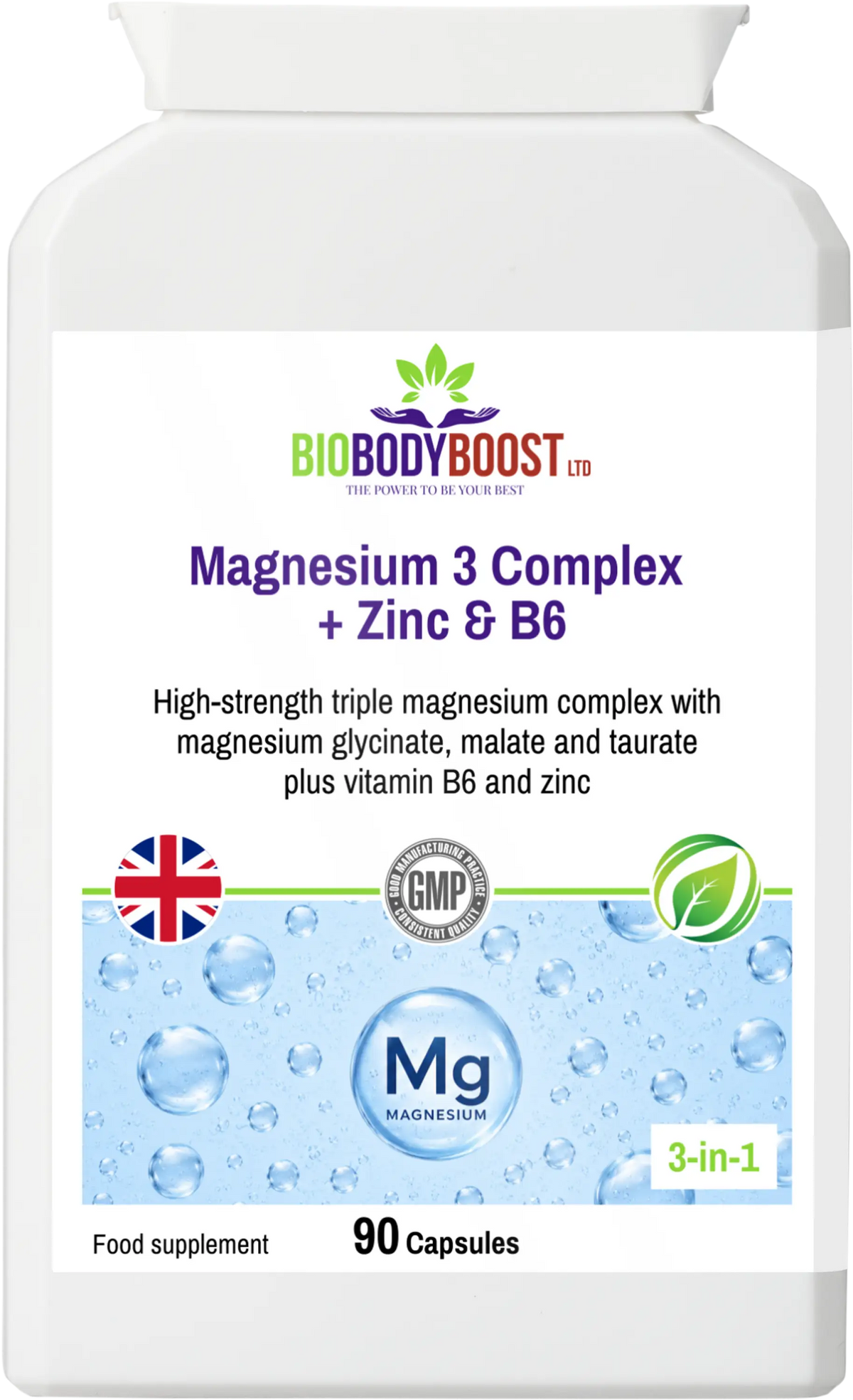
Form matters critically: magnesium oxide (~4% bioavailability) is the most common cheap form and largely ineffective. Glycinate and malate are substantially better absorbed and well tolerated. Our Magnesium 3 Complex — glycinate + malate + taurate, zinc and B6, halal approved.
4. Ashwagandha — for stress-driven energy depletion
If your energy disappears under stress or your fatigue is accompanied by anxiety, poor sleep, and the sense that you have nothing left at the end of the day, the HPA axis is likely dysregulated. Chronic cortisol elevation depletes energy by increasing substrate use, disrupting mitochondrial function, and impairing sleep quality — the main recovery period for cellular energy systems.
What research supports: A 2019 RCT (Langade et al., n=60) found KSM-66® ashwagandha at 240mg/day for 60 days significantly reduced perceived stress, anxiety and cortisol by 23% vs placebo, with significant improvements in sleep quality. A 2015 RCT in the Journal of the International Society of Sports Nutrition (n=57) found ashwagandha at 300mg twice daily for 8 weeks significantly improved VO2 max, time to exhaustion and recovery in trained athletes vs placebo. Our ZenBlend — KSM-66®, rhodiola, L-theanine, niacin, B vitamins, halal approved.
5. CoQ10 — mitochondrial energy, especially relevant on statins
CoQ10 is essential for the mitochondrial electron transport chain. Natural CoQ10 production declines with age and is inhibited by statins. For people experiencing fatigue on statins, CoQ10 at 100–200mg ubiquinol/day addresses a specific mechanistic cause. For older adults with declining CoQ10 production, similar rationale applies. For healthy younger adults without statin use, evidence is less conclusive. Full detail: CoQ10 for heart health guide.
6. Electrolytes — the most overlooked cause of afternoon fatigue
Not all fatigue is biochemical — sometimes it is simply dehydration and electrolyte depletion. Sodium, potassium and magnesium regulate fluid balance, nerve signalling and muscle function. Even mild dehydration (1–2% body weight) significantly impairs cognitive performance, mood and energy — a 2012 study in the Journal of Nutrition found 1.4% dehydration produced significant fatigue, mood deterioration and reduced cognitive function in women at rest. For people who train, work outdoors, sweat heavily, eat low-sodium diets, or consume significant caffeine or alcohol (both diuretics), electrolyte balance is a meaningful energy lever.
Our Electro-Hidr8 — sodium, potassium, chloride with no artificial sweeteners, halal certified.
7. Rhodiola rosea — for mental fatigue and burnout
Rhodiola rosea is an adaptogen with specific evidence for mental fatigue — particularly the type associated with prolonged cognitive work, burnout or overtraining.
What research supports: A 2009 RCT in Planta Medica (n=56) found rhodiola at 576mg/day for 28 days significantly reduced burnout symptoms, fatigue and cognitive performance decline in night-shift physicians. A 2016 non-inferiority trial in Phytomedicine found rhodiola extract (400mg/day) produced equivalent reduction in burnout symptoms to sertraline with a significantly better side effect profile. ZenBlend includes rhodiola alongside ashwagandha for complementary adaptogenic coverage.
Matching supplement to your fatigue type
- Heavy, breathless, pale — possibly iron deficiency: get ferritin and FBC tested before supplementing
- Brain fog, tingling, vegan diet: vitamin B12 — test first, supplement with methylcobalamin or high-dose cyanocobalamin
- Wired but tired, poor sleep, anxious: magnesium glycinate + ashwagandha KSM-66®
- On statins, fatigue and muscle aches: CoQ10 ubiquinol 100–200mg/day — discuss with GP
- Mental fatigue, cognitive burnout, shift work: rhodiola rosea 200–400mg/day
- Post-workout or afternoon slump with adequate sleep: electrolytes + hydration assessment before assuming a supplement issue
What is the best supplement for energy without caffeine?
It depends on the cause. Iron is the most impactful single intervention for women with low ferritin — correcting it produces reliable improvements in energy, exercise tolerance and cognition. For vegans or older adults, vitamin B12 addresses a specific deficiency that causes fatigue. For stress-driven depletion, ashwagandha KSM-66® and magnesium together address the HPA axis and NMDA pathways that both contribute to wired-but-tired energy depletion. For people on statins, CoQ10 addresses statin-induced mitochondrial energy reduction. No single supplement is universally best — matching to the underlying cause is what produces results.
Do B vitamins give you energy?
B vitamins do not produce energy directly — they are cofactors in the metabolic pathways that convert food into usable ATP. If you are deficient, supplementing restores normal energy metabolism and typically produces noticeable improvement in 4–8 weeks. If you are already replete, additional B vitamins provide no further energy benefit regardless of dose. The EU-authorised claim for B vitamins is “contributes to normal energy-yielding metabolism” and “reduction of tiredness and fatigue” — not “gives you energy.” High-dose B-complex supplements will not energise a well-nourished person. They will help a deficient person significantly.
Can ashwagandha help with fatigue?
Yes — for stress-related fatigue specifically. The 2019 Langade RCT (n=60) found KSM-66® at 240mg/day reduced cortisol by 23% and significantly improved sleep quality and perceived energy. The 2015 JISSN RCT (n=57) found ashwagandha significantly improved VO2 max and time to exhaustion in athletes. The mechanism: ashwagandha reduces HPA axis reactivity, lowering chronic cortisol elevation that depletes energy, disrupts sleep and impairs mitochondrial function. It is most effective when fatigue is accompanied by stress, anxiety or poor sleep. For fatigue from deficiency (iron, B12) or acute illness, the mechanism is different and ashwagandha is less relevant.


