Quick answer: a good plant-based meal replacement shake provides 20–25g protein per serving, 25–30% of daily reference intakes for key vitamins and minerals, adequate fibre (3–5g) and a controlled calorie count (300–500 kcal). The main compliance issues for halal consumers are: dairy cross-contamination in facilities (some plant protein shakes are produced alongside whey), flavouring systems that may contain alcohol-based carriers, and gelatine in some formulations. BioBodyBoost ShakeMeUp uses soy protein isolate in a dedicated halal-certified facility with HPMC capsules — no gelatine, no dairy, no compliance concerns.
Why plant-based meal shakes have a place
Meal replacement shakes are most useful in specific, well-defined situations rather than as a permanent dietary strategy. Evidence-supported applications:
- Calorie-controlled weight management: replacing 1–2 meals daily with a controlled-calorie shake while maintaining one normal meal is one of the best-evidenced dietary strategies for weight loss. Heymsfield et al. (2003, International Journal of Obesity, meta-analysis of 6 RCTs) found meal replacement programmes produced significantly greater weight loss than traditional diet advice at 3 months and 1 year.
- Time-constrained nutrition: for people who genuinely cannot prepare nutritionally complete meals during a busy day, a well-formulated shake prevents nutritional gaps from arising.
- Ramadan Suhoor convenience: a complete protein and micronutrient shake at Suhoor ensures nutritional adequacy before the fasting window without requiring food preparation in the pre-dawn meal. Protein at Suhoor also reduces muscle protein breakdown during the fasting window.
- Post-workout recovery: for people who train fasted or near-fasted, a meal replacement with adequate protein (20g+) within 30–60 minutes post-training covers both recovery and caloric needs.
What a good meal replacement actually contains
| Component | Minimum standard | Why it matters |
|---|---|---|
| Protein | 20g+ per serving | Satiety + muscle protein preservation |
| Fibre | 3–5g per serving | Gut health, satiety, blood glucose blunting |
| Vitamins and minerals | 25–33% of RDI for key nutrients | Replaces micronutrients from the skipped meal |
| Calories | 300–500 kcal per serving | Meal equivalent, not a snack |
| Sugar | <10g per serving | High sugar shakes spike glucose and increase hunger later |
Plant protein sources compared
- Soy protein isolate: complete amino acid profile (all essential amino acids in adequate ratios), highest protein percentage of plant sources, best satiety data. Babault et al. (2015, JISSN) found soy protein produced equivalent muscle hypertrophy to whey at matched doses. The primary compliance question is sourcing (non-GMO soy is preferable) and facility (must not be produced alongside porcine or non-halal dairy ingredients).
- Pea protein isolate: high leucine content for muscle protein synthesis, excellent digestibility, no soy allergy concern. Slightly lower lysine than soy.
- Rice protein: low in lysine, best combined with pea protein for a complete amino acid profile. BBB produces PeaPro pea protein and WheyPro for those wanting whey. ShakeMeUp uses soy protein isolate for the complete amino acid profile.
Halal compliance in meal shakes
The compliance risks in plant-based meal replacement shakes:
- Shared facility: most large protein powder manufacturers produce whey alongside plant protein on shared lines. Even if the product itself has no dairy ingredients, cross-contamination from non-halal whey is a compliance concern for strict observance. Dedicated halal-certified facilities address this.
- Flavouring systems: chocolate and vanilla flavourings frequently use alcohol as a carrier. Halal certification confirms permissible flavouring systems.
- Vitamins and minerals: some vitamin forms (e.g., vitamin D3, vitamin B12 from cyanocobalamin vs hydroxocobalamin) have source compliance questions. Halal certification covers the full formula.
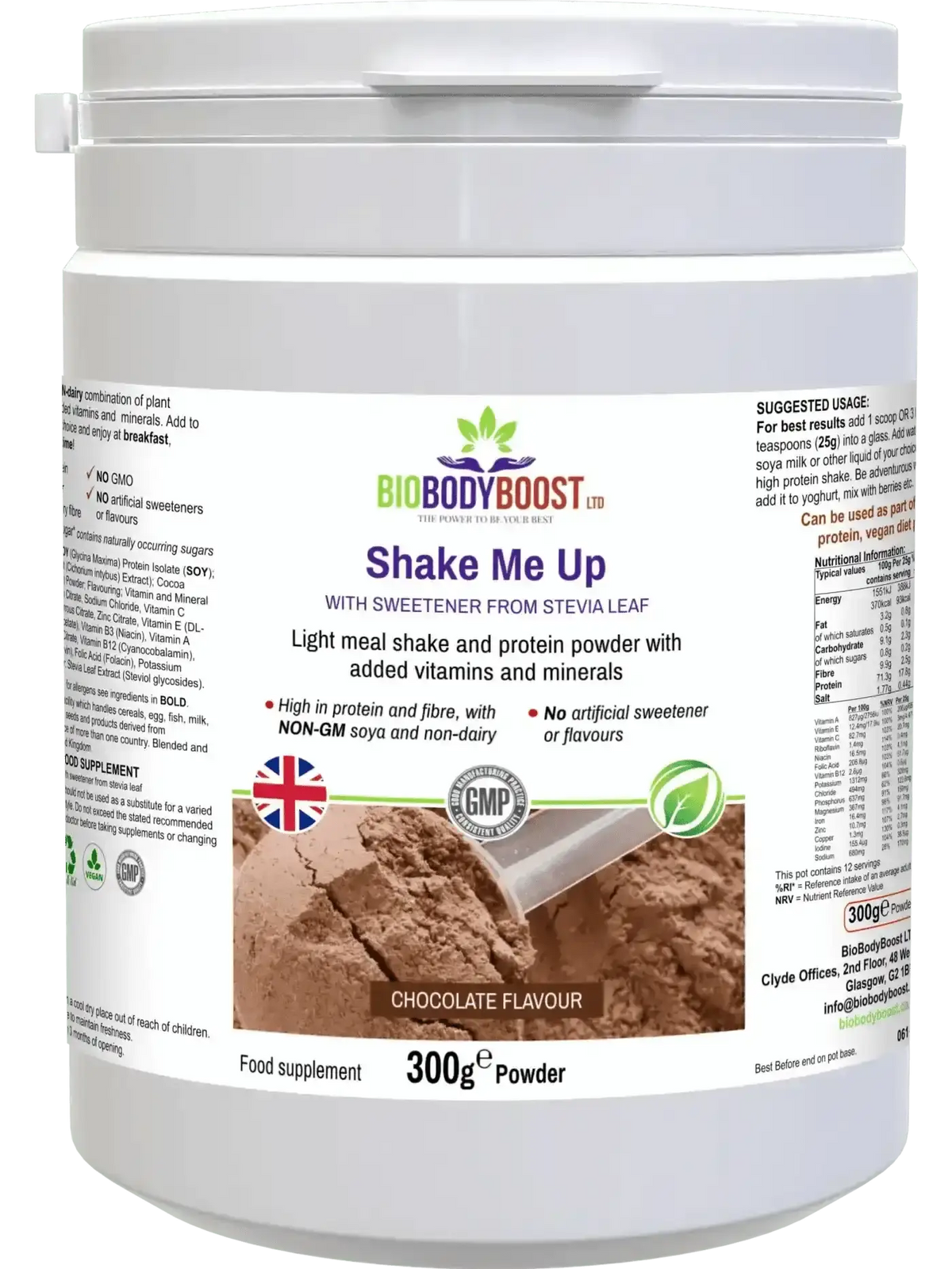
ShakeMeUp Chocolate and ShakeMeUp Vanilla — soy protein isolate, halal approved, vegan, UK GMP manufactured. Mix 30g in 300ml water or plant milk. Browse the Sports Nutrition UK collection.
Are meal replacement shakes good for weight loss?
When used correctly — replacing 1–2 meals daily with a calorie-controlled, nutritionally complete shake while maintaining one balanced whole-food meal — the evidence is positive. Heymsfield et al. 2003 meta-analysis (6 RCTs) found meal replacement programmes produced significantly greater weight loss than traditional diet advice at 3 months and 1 year. The key principle is total daily calorie reduction — the shake must be lower-calorie than the meal it replaces, and the remaining meal must not compensate. Shakes are a tool for adherence to calorie control, not a metabolic intervention in their own right.
Can I have a meal replacement shake during Ramadan?
Yes — at Suhoor (pre-dawn meal) or Iftar (breaking of fast). A meal replacement shake at Suhoor is one of the most practical and nutritionally complete Suhoor options: 20g+ protein reduces muscle breakdown during the fasting window, the micronutrient profile replaces meal nutrients, and the fibre content blunts hunger onset during the day. ShakeMeUp is halal certified and can be prepared quickly — important when Suhoor time is limited. Taking it with water or plant milk is ideal. See the Ramadan training and nutrition guide for the full Suhoor protocol.
Is soy protein halal?
Yes — soy is a legume, entirely plant-origin. The compliance checks for soy protein supplements are: (1) the production facility — soy protein processed in a facility that also handles porcine or non-halal dairy products requires halal certification of the facility, not just the ingredient; (2) flavouring systems added to the soy protein; (3) any non-soy additives. ShakeMeUp’s soy protein isolate is produced in a halal-certified facility with full coverage of flavourings and additives under UHA Certificate Reference 24623. Soy contains phytoestrogens (isoflavones) — at supplement doses the evidence does not show meaningful hormonal effects in adult men or women, and the safety record is excellent at typical dietary and supplemental levels.