Quick answer: omega-3 fatty acids — specifically EPA and DHA — are incorporated into neuronal cell membrane phospholipids and play a direct structural and signalling role in the brain. DHA makes up approximately 40% of polyunsaturated fatty acids in the brain and is concentrated in synaptic membranes. EPA has the stronger evidence for depression and mood specifically, via anti-inflammatory pathways. The clinical evidence for omega-3 and depression is substantial enough that the NICE guidelines on depression include omega-3 as a suggested augmentation alongside antidepressant treatment. For cognitive aging: DHA supplementation is associated with slower cognitive decline. Both are available in halal-certified format.
Why the brain needs omega-3
The brain is approximately 60% fat by dry weight. DHA (docosahexaenoic acid) is uniquely concentrated in the brain compared to any other organ — it makes up approximately 40% of the polyunsaturated fatty acids in neuronal membranes, where it critically determines membrane fluidity. Fluid membranes allow faster signal transmission, more efficient neurotransmitter receptor function and better synaptic plasticity — the cellular basis of learning and memory. The body cannot synthesise DHA efficiently from plant-based ALA (alpha-linolenic acid from flaxseed, walnuts) — conversion efficiency is approximately 0–4%, making direct EPA/DHA supplementation from marine sources more reliably effective.
EPA and depression — the strongest cognitive evidence
EPA has a more consistent anti-inflammatory action than DHA. Depression is increasingly understood as having a significant neuroinflammatory component — elevated cytokines (IL-6, TNF-α) in major depression correspond to reduced neurotransmitter synthesis and synaptic function. EPA reduces neuroinflammation via prostaglandin and leukotriene pathway modulation, providing a plausible anti-depressant mechanism independent of neurotransmitter reuptake.
What research shows: Liao et al. (2019, Translational Psychiatry, meta-analysis of 26 RCTs, n=2,160) found omega-3 supplementation significantly reduced depression symptoms vs placebo, with higher EPA content associated with greater antidepressant effect. A 2016 JAMA Psychiatry meta-analysis confirmed omega-3 significantly improved depression outcomes both as standalone and augmentation treatment.
DHA and cognitive aging
Yurko-Mauro et al. (2010, Alzheimer’s and Dementia, RCT, n=485 healthy older adults) found DHA supplementation at 900mg/day for 24 weeks significantly improved learning and memory scores, with the effect most pronounced in participants with lower baseline DHA. The MIDAS trial (Memory Improvement with DHA Study) remains one of the most rigorous DHA and cognition trials in older adults. A 2021 Nutrients systematic review confirmed DHA supplementation was associated with significantly slower cognitive decline in older adults, particularly in those with low baseline omega-3 status.
EPA vs DHA — which for which application
| Application | EPA | DHA |
|---|---|---|
| Depression and mood | Primary | Secondary |
| Cognitive aging and memory | Secondary | Primary |
| Cardiovascular (triglycerides) | Both | Both |
| Infant brain development | Secondary | Critical |
| Inflammation | Primary | Secondary |
Is omega-3 halal?
Fish oil from fish with fins and scales is halal under all Sunni schools. The compliance checks are the fish species (must have fins and scales — anchovy, sardine, mackerel, salmon all qualify) and the capsule shell (HPMC = halal; gelatine = check source). Full omega-3 halal guide here.
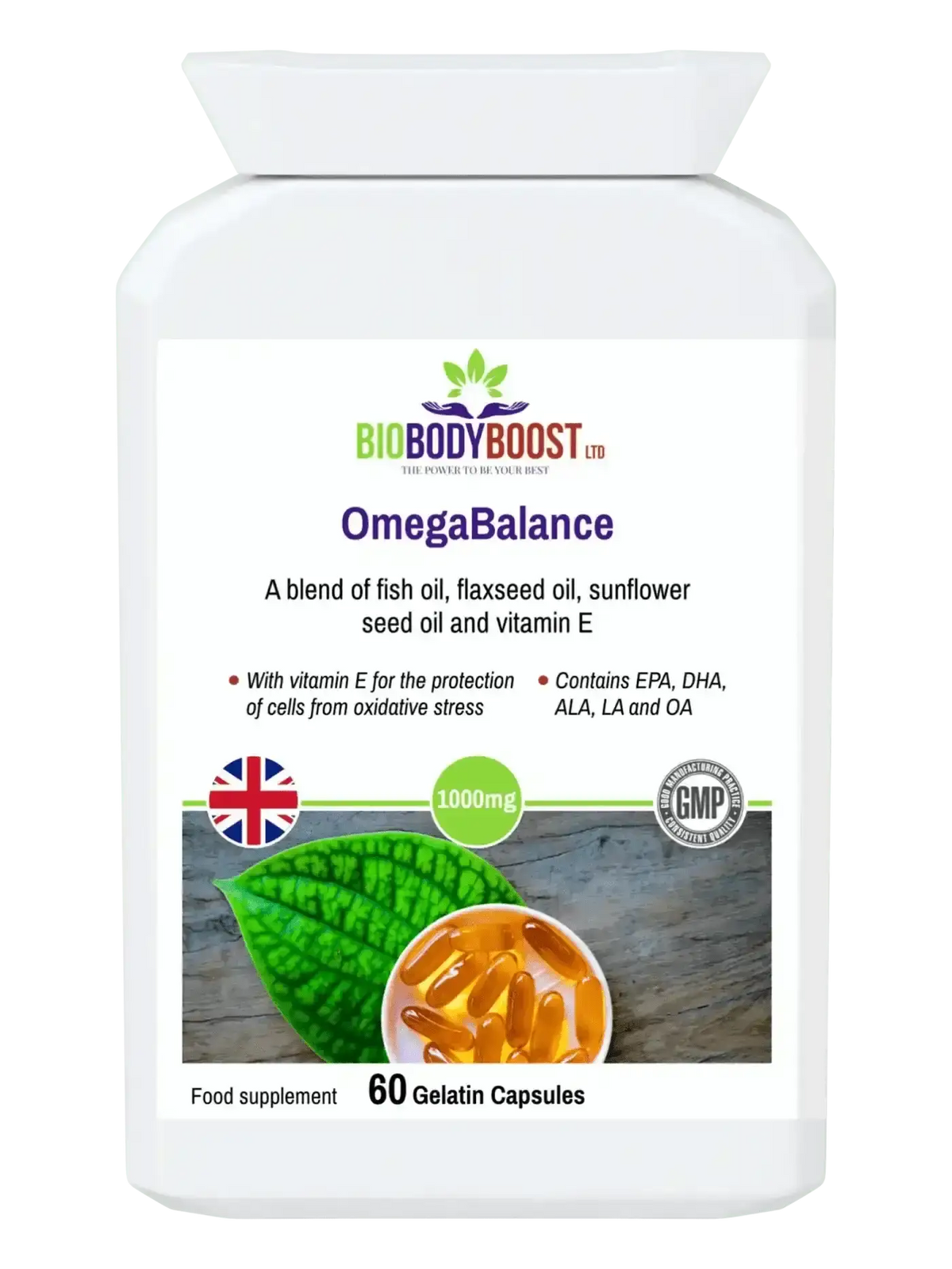
OmegaBalance — 1,000mg omega 3-6-9 (fish oil + flaxseed + evening primrose oil) in HPMC capsules. Halal certified, UK GMP. 2 capsules daily provide EPA and DHA from fish oil alongside omega-6 and omega-9 for the complete fatty acid balance.
Does omega-3 help with depression UK?
The clinical evidence is substantial. Liao et al. 2019 (meta-analysis, 26 RCTs, n=2,160) found omega-3 significantly reduced depression symptoms vs placebo, with EPA content being the key predictor of antidepressant effect. NICE guidelines on depression include omega-3 as a potential augmentation. The mechanism is anti-inflammatory — EPA reduces neuroinflammatory cytokines that impair neurotransmitter synthesis. Omega-3 is a meaningful adjunct to depression management, not a replacement for medical treatment. For moderate-to-severe depression, always work with your GP. The NHS provides guidance on depression treatment options.
How much omega-3 for brain health UK?
For depression support: the positive trials use 1–2g combined EPA+DHA daily, with at least 60% EPA by composition (EPA-dominant formulas). For cognitive aging: the Yurko-Mauro 2010 MIDAS trial used 900mg DHA daily. For general brain health maintenance: 500–1,000mg combined EPA+DHA daily is a reasonable maintenance dose consistent with current dietary guidelines. OmegaBalance at 2 capsules daily provides EPA and DHA from fish oil in the relevant range. Always check the EPA and DHA content on the label specifically — 1,000mg “fish oil” is not the same as 1,000mg EPA+DHA.