
Quick answer: if you want the same omega-3 fatty acids found in fish oil — EPA and DHA — from a vegan source, you need an algae-derived oil supplement, since algae is where fish get their omega-3 from in the first place. Plant sources like flaxseed, chia and hemp only provide ALA, a shorter-chain omega-3 that your body converts to EPA and DHA very inefficiently. We want to be upfront here: BioBodyBoost does not currently stock a dedicated vegan algae oil capsule, so this guide covers what to actually look for if you're buying one elsewhere, plus the ALA-rich options we do carry as a genuine (if partial) alternative.
Why ALA, EPA and DHA are not interchangeable
Omega-3 is a family of fatty acids, not a single compound. The three that matter nutritionally:
- ALA (alpha-linolenic acid): found in flaxseed, chia, hemp and walnuts. The body can convert some ALA into EPA and DHA, but the conversion rate is low — generally cited at around 5-10% for EPA and under 5% for DHA in most adults, and lower still in men than women.
- EPA (eicosapentaenoic acid): involved in inflammatory signalling pathways; the fatty acid most associated with cardiovascular research.
- DHA (docosahexaenoic acid): a major structural component of brain and retinal tissue; the form most associated with cognitive and eye health research.
This matters because a supplement providing only ALA (flaxseed oil, hemp oil) is not nutritionally equivalent to one providing preformed EPA and DHA, however the marketing describes it. If your goal is specifically brain, eye or cardiovascular support via the mechanisms most researched in fish oil trials, you need EPA and DHA directly — not ALA and a hope for good conversion.
Why algae oil is the only genuine vegan EPA/DHA source
Fish do not synthesise omega-3 fatty acids themselves — they accumulate EPA and DHA by eating algae and smaller fish further down the food chain that have themselves eaten algae. Algae oil supplements extract EPA and DHA directly from cultivated microalgae, removing the fish from the middle of that chain entirely. This is the only route to preformed EPA and DHA that doesn't involve an animal source.
What to look for if you buy an algae oil supplement
- Declared mg of EPA and DHA per serving — not just "omega-3 blend" on the front of the pack. A meaningful daily target for general support is around 250–500mg combined EPA and DHA; look for the actual milligram figures on the supplement facts panel.
- Capsule shell material — algae oil capsules should use a plant-derived shell (not gelatine) to remain genuinely vegan; check this is stated explicitly.
- Third-party testing for oxidation — like all omega-3 oils, algae oil can oxidise. A product that discloses peroxide value testing or freshness data is a stronger signal of quality than one that doesn't mention it at all.
- Halal certification, if relevant — algae oil is inherently halal by source, but the capsule shell and any processing aids still need separate verification from a recognised certifying body.
What we do carry: ALA from hemp

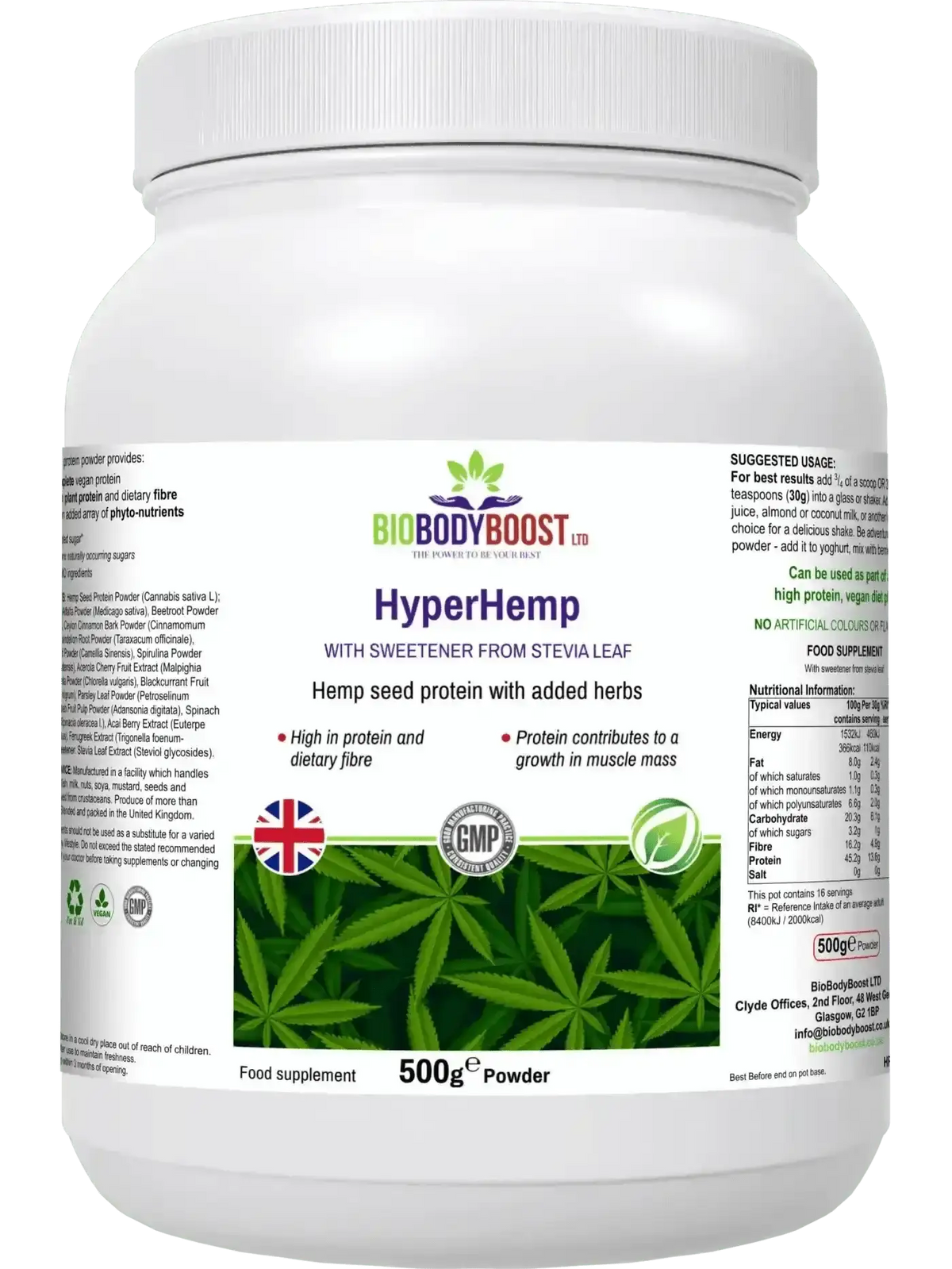
13.6g protein per serving alongside naturally occurring omega fats — an ALA source, not a substitute for algae-derived EPA/DHA.
Hemp seed naturally contains omega-3 (ALA) alongside omega-6 in a favourable ratio compared to many other plant oils. HyperHemp provides this as part of a whole-food protein powder rather than a concentrated oil capsule — useful as a general dietary contribution to omega-3 intake, but it is not a substitute for algae-derived EPA and DHA if that's specifically what you're after. We think it's more honest to say that plainly than to imply otherwise.
Getting more ALA from food in the meantime
If an algae oil supplement isn't part of your routine yet, dietary ALA sources are easy to add: 1 tablespoon of ground flaxseed (~2.4g ALA), a small handful of walnuts (~2.5g ALA per 30g), or a tablespoon of chia seeds (~1.9g ALA). None of these convert efficiently to EPA/DHA, but they contribute meaningfully to overall essential fatty acid intake and support general health independent of the EPA/DHA conversion question.
Frequently Asked Questions
Is flaxseed oil the same as fish oil for vegans?
No. Flaxseed oil provides ALA, which the body converts to EPA and DHA at a very low rate (roughly 5-10% for EPA, under 5% for DHA in most adults). Fish oil provides EPA and DHA directly. For the specific outcomes researched in fish oil trials — cardiovascular and cognitive support in particular — flaxseed oil is not a nutritional equivalent, even though both are commonly labelled "omega-3."
Does BioBodyBoost sell a vegan algae oil supplement?
Not currently. We'd rather say so directly than let an article imply otherwise. If you need preformed EPA and DHA from a vegan source, look for a dedicated algae oil capsule from a supplier that clearly declares EPA/DHA content in milligrams and specifies a plant-derived capsule shell.
Can vegans get enough omega-3 from food alone?
For ALA, yes — flaxseed, chia, hemp and walnuts make this straightforward. For EPA and DHA specifically, food-only vegan sources are essentially limited to algae (as an ingredient, not typically eaten directly) and fortified foods, which makes a concentrated algae oil supplement the more reliable route if EPA/DHA status matters to you specifically.
This article is for general information and does not constitute medical advice. Speak to a healthcare professional before starting any new supplement, particularly if pregnant, breastfeeding, or taking blood-thinning medication.
BioBodyBoost — Halal Certified UK Supplements
Use code HALAL10 for 10% off your first order — halal approved under UHA Certificate Ref. 24623, vegan, UK made. Shop the full range →