
Magnesium is having a moment. With 823,000 monthly searches for magnesium-related supplements and a +22% year-on-year growth trajectory, it has quietly become the most searched mineral supplement in the UK — overtaking even vitamin D in certain demographics. And the reason is not a wellness trend. It is a widespread physiological gap that most people don't realise they have.
Up to 60% of adults may not be getting enough magnesium — a mineral essential for everything from steady nerves and strong bones to muscle recovery and deep sleep. Modern diets high in processed foods and low in leafy greens, nuts, and seeds have created a generation of people running on chronically low magnesium, experiencing symptoms they attribute to stress, poor sleep, or ageing when the underlying cause is nutritional.
This guide covers what magnesium actually does, who is most at risk of deficiency in the UK, which form delivers the best results, and why dose matters far more than most supplement labels admit.
What Does Magnesium Actually Do?
Magnesium is a cofactor in over 300 enzymatic reactions in the human body. It is not a single-function supplement — it is a foundational mineral that underpins multiple systems simultaneously. The clinically significant roles include:
- Nervous system regulation — magnesium acts as a natural calcium channel blocker, preventing overstimulation of nerve cells and regulating the balance between excitatory and inhibitory neurotransmission
- Sleep quality — magnesium supports the production of GABA, a neurotransmitter that encourages relaxation and deep sleep, and plays a direct role in melatonin production
- Muscle function and recovery — magnesium is required for muscle contraction and relaxation; deficiency is one of the most common causes of cramps, spasms, and delayed post-exercise recovery
- Bone density — approximately 60% of the body's magnesium is stored in bone, where it works alongside calcium and vitamin D to maintain structural integrity
- Energy production — magnesium is required to activate ATP, the molecule that powers every cell in the body; low magnesium directly contributes to fatigue and poor physical endurance
- Blood sugar regulation — magnesium plays a role in insulin sensitivity; studies consistently find lower magnesium levels in people with type 2 diabetes and metabolic syndrome
- Digestive health — magnesium draws water into the intestines and supports smooth muscle contractions, making it one of the most effective natural support tools for regularity
Why Are So Many UK Adults Deficient?
The NHS recommends 270mg of elemental magnesium per day for women and 300mg per day for men aged 19–64. In practice, EFSA dietary surveys consistently show that most UK adults fall meaningfully short of these targets through food alone.
Several factors compound this:
- Soil depletion — intensive farming over the past 50 years has reduced the magnesium content of UK soil significantly. The same vegetables that contained adequate magnesium in the 1970s now contain considerably less
- Processed food consumption — refined carbohydrates, which dominate the UK diet, are stripped of the magnesium naturally present in whole grains
- Stress and cortisol — chronic stress accelerates magnesium excretion through the kidneys; the more stressed you are, the faster you deplete your stores
- Alcohol consumption — alcohol inhibits magnesium absorption and increases urinary excretion
- Certain medications — proton pump inhibitors (PPIs), diuretics, and some antibiotics all reduce magnesium absorption or increase excretion
- High-intensity exercise — sweating depletes magnesium rapidly; athletes and regular gym-goers have substantially higher requirements than sedentary individuals
Recognising Magnesium Deficiency: Symptoms Most People Miss
Magnesium deficiency is rarely dramatic. It tends to manifest as a cluster of symptoms that are easy to attribute to other causes:
- Difficulty falling or staying asleep
- Waking feeling unrefreshed despite adequate hours in bed
- Muscle cramps, twitching, or restless legs at night
- Persistent fatigue that does not respond to rest
- Tension headaches and migraines
- Heightened anxiety, irritability, or difficulty managing stress
- Constipation or sluggish digestion
- Heart palpitations
If three or more of these apply to you consistently, low magnesium is a plausible contributing factor worth addressing before attributing everything to stress or lifestyle.
The Form Problem: Why Most Magnesium Supplements Underdeliver
Not all magnesium is equal. The form of magnesium determines how much your body actually absorbs — and the gap between the best and worst forms is enormous.
- Magnesium oxide — the cheapest and most widely used form in budget supplements. Bioavailability is only approximately 4%. Effective as a laxative but ineffective for any other health goal. Always check the form on the label.
- Magnesium citrate — significantly better absorbed than oxide. Well-suited for constipation relief and general supplementation. Mild laxative effect at higher doses.
- Magnesium glycinate — for sleep and anxiety, glycinate is the superior form. The glycine component has its own calming effect in addition to the magnesium, producing a dual-mechanism effect on nervous system regulation.
- Magnesium malate — bound to malic acid, which plays a role in energy production. Often recommended for people with fatigue and muscle pain.
- High-potency elemental magnesium complexes — formulas delivering 400–500mg of elemental magnesium in bioavailable forms address both the deficiency gap and therapeutic goals simultaneously.
The critical number to check on any magnesium supplement is the elemental magnesium content — not the compound weight. A tablet labelled “500mg magnesium oxide” delivers only about 20mg of usable magnesium. A label that clearly states elemental magnesium per serving is the mark of a transparent product.
The Dose Reality: What You Actually Need
The NHS RDA (270–300mg elemental) represents the minimum to avoid deficiency in a healthy adult with no additional stressors. In practice, people with active lifestyles, high stress levels, sleep disruption, or digestive issues require considerably more — typically 350–500mg of elemental magnesium daily from supplementation to produce meaningful clinical benefit.
This is why dose matters as much as form. A 100mg magnesium glycinate capsule taken once daily is a nutritional gesture. A 498mg high-potency magnesium formula taken consistently is therapeutic supplementation.
Magnesium and Sleep: The Science Behind the Calm
Sleep is the use case that has driven magnesium's surge in UK consumer interest. The mechanism is well-established:
Magnesium supports relaxation and sleep by influencing muscle function, hormone production and brain signalling. It plays a role in the production of melatonin, the hormone that helps regulate your sleep-wake cycle, and helps calm the nervous system by regulating key neurotransmitters.
Unlike some sleep aids, magnesium does not cause grogginess, making it a natural choice for those seeking better rest. This distinguishes it clearly from antihistamine-based sleep products and makes it suitable for daily use without tolerance concerns.
The glycine component present in glycinate-form magnesium adds a secondary mechanism: glycine itself has calming effects on the nervous system by decreasing overstimulation and promoting relaxation, which may improve sleep quality and reduce anxiety and stress.
Magnesium and Digestive Health: The Underrated Connection
Beyond sleep and muscle recovery, magnesium plays a critical and often overlooked role in digestive function. As an osmotic mineral, magnesium draws water into the intestines, softening stool and supporting peristalsis — the rhythmic muscle contractions that move food through the digestive tract.
This makes high-potency magnesium one of the most effective and well-tolerated natural tools for:
- Relieving constipation and irregularity
- Supporting healthy bowel transit time
- Reducing bloating associated with sluggish digestion
- Maintaining the smooth muscle function of the intestinal wall
Combining magnesium with dietary fibre amplifies this effect — fibre provides the structural bulk while magnesium provides the hydration and motility support. This combination is increasingly recognised by nutritional practitioners as a more sustainable approach to digestive regularity than stimulant laxatives.
MagneBowel: BioBodyBoost's High-Potency Magnesium Formula
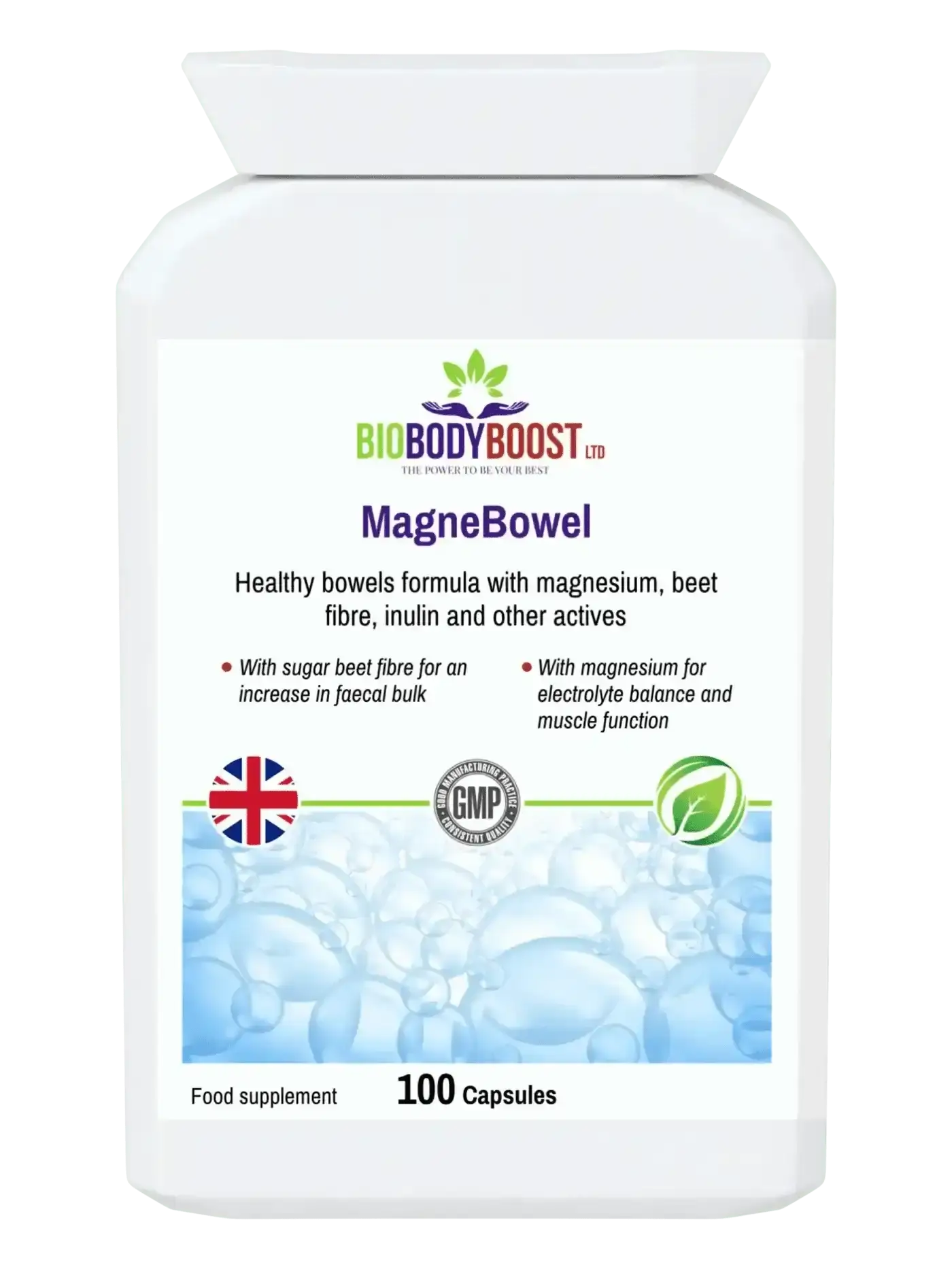
MagneBowel delivers 498mg of high-potency magnesium per serving, formulated with dietary fibre to address both the nutritional deficiency gap and the digestive-muscle-sleep triangle that magnesium deficiency most commonly disrupts.
At nearly twice the NHS recommended daily intake in a single serving, MagneBowel is positioned for people who have tried standard low-dose magnesium tablets and felt little effect — the most common experience when the dose is therapeutic in intention but not in practice.
The formula is:
- ✓ Halal certified — HPMC plant capsules, no pork gelatine
- ✓ Vegan and kosher
- ✓ Gluten-free and dairy-free
- ✓ UK-made in GMP-certified facilities
- ✓ Third-party tested for purity and elemental potency
At £19.99, MagneBowel delivers a clinically relevant dose without the premium pricing of branded glycinate-specific products that often charge £30–40 for equivalent elemental magnesium.
→ Shop MagneBowel — 498mg High-Potency Magnesium UK
Stacking Magnesium for Better Sleep
For those specifically targeting sleep, magnesium works synergistically with herbal compounds that address the psychological side of sleep disruption — the racing mind and cortisol elevation that prevent the body from transitioning into restful sleep even when physically tired.
BioBodyBoost's BioSnooze combines ashwagandha, chamomile, and valerian with magnesium and B6 — addressing both the physiological and psychological components of sleep disruption simultaneously. Explore the full Sleep Supplements UK collection for the complete evening stack.
How to Take Magnesium for Best Results
Timing
For sleep and anxiety: take magnesium 30–60 minutes before bed — this aligns the peak absorption window with the body's natural transition into sleep preparation. For digestive support and muscle recovery: take with your largest meal of the day to maximise absorption alongside dietary fats.
Consistency
Magnesium supplementation works cumulatively. Tissue magnesium levels take 3–4 weeks of consistent daily intake to meaningfully replenish. Most people report noticeable changes in sleep quality and muscle tension within 2–3 weeks, with full benefit realised at 6–8 weeks.
Food Sources to Prioritise Alongside Supplementation
Supplementation fills the gap, but diet remains the foundation. Highest magnesium food sources for UK diets: pumpkin seeds (156mg per 30g), dark chocolate (64mg per 30g), spinach (78mg per 100g cooked), almonds (80mg per 30g), and black beans (60mg per 100g).
Who Should Consider Magnesium Supplementation?
- People with disrupted or poor-quality sleep — particularly those who wake frequently or struggle to switch off
- Anyone experiencing muscle cramps, twitching, or restless legs
- Athletes and regular gym-goers — especially those training more than 4 times per week
- People under chronic stress — stress depletes magnesium; deficiency worsens stress response
- Those with sluggish digestion or constipation
- Older adults — magnesium absorption decreases with age while requirements remain constant
- People taking PPIs, diuretics, or long-term medications known to interfere with magnesium absorption
Frequently Asked Questions
How long does magnesium take to work for sleep?
Most people notice improved sleep quality within 2–3 weeks of consistent nightly supplementation. Full tissue replenishment — and peak benefit — typically occurs at 6–8 weeks. Taking magnesium 30–60 minutes before bed is important: timing matters more for sleep than for other use cases.
Can you take too much magnesium?
The most common side effect of excess magnesium is loose stools or diarrhoea — a useful signal that you've exceeded your body's current absorption capacity. The NHS upper tolerable intake is 400mg per day from supplements. At therapeutic doses above this, start low and increase gradually to assess individual tolerance. Serious toxicity from dietary magnesium is rare in healthy adults as excess is excreted through the kidneys.
Is magnesium halal?
Magnesium mineral itself is halal. However, the capsule shell is where halal compliance is most commonly compromised — many standard supplements use pork-derived gelatine. MagneBowel uses HPMC plant-based capsules and is fully halal certified across the entire formula.
What is the best form of magnesium for sleep?
Magnesium glycinate is widely considered the best form for sleep and anxiety because the glycine component has independent calming effects on the nervous system. High-potency formulas that clearly state elemental magnesium content (not just compound weight) and deliver 300mg+ of elemental magnesium per serving are the most reliable for producing meaningful sleep benefit.
Can I take magnesium with ashwagandha?
Yes, and the combination is particularly effective for sleep. Magnesium addresses the physiological side — muscle relaxation, melatonin production, GABA activity. Ashwagandha addresses the cortisol and stress side — calming the mental activation that keeps many people awake despite physical tiredness. Taken together in the evening, they work on complementary mechanisms. See BioSnooze for a combined ashwagandha and magnesium evening formula.
The Bottom Line
Magnesium is not a trend. It is a foundational mineral that a significant proportion of UK adults are not getting enough of — through a combination of soil depletion, dietary shifts, and the physiological demands of modern life. The symptoms of deficiency are common, consequential, and consistently underdiagnosed.
The solution is not complicated: a high-potency, bioavailable magnesium supplement taken consistently at a clinically relevant dose. The form matters. The dose matters. And the consistency matters more than either.
→ Try MagneBowel — 498mg High-Potency Magnesium with Fibre at £19.99
Always consult your GP or a qualified healthcare professional before starting any new supplement, particularly if you are pregnant, breastfeeding, taking prescription medication, or have a kidney condition.