Key takeaways
- Many popular pre-workouts contain 200 to 300mg of caffeine per scoop, roughly two to three cups of coffee.
- Healthy adults are advised to stay under 400mg a day in total, and under 200mg in pregnancy.
- A low-caffeine pre-workout suits evening training, caffeine-sensitive people and coffee drinkers.
- Look at the rest of the formula, not just the caffeine.
In this guide
How much caffeine is in pre-workout?
It varies hugely. Some “high-stim” products contain 300mg or more per scoop, and a double scoop can take you close to the daily limit in one drink.
| Drink | Caffeine (approx.) |
|---|---|
| High-stim pre-workout, 1 scoop | 200–350mg |
| Mug of instant coffee | 100mg |
| 250ml energy drink | 80mg |
| Mug of tea | 75mg |
| BioBodyBoost pre-workout, 1 serving | 40mg |
Drink figures from the NHS.
Who should choose a low-caffeine pre-workout
- Evening trainers. Caffeine can stay in your system for hours, so a big dose at 7pm can affect your sleep.
- Coffee and tea drinkers. If you already have a few cups a day, a high-stim scoop can push you over the limit.
- Caffeine-sensitive people. If caffeine makes you jittery, anxious or gives you a racing heart, less is better.
- Anyone training in Ramadan. Training after iftar and sleeping before suhoor leaves little room for strong stimulants.
- People who want to avoid tolerance. Regular high doses mean you need more for the same feeling.
Not for everyone: pre-workouts aren't suitable for under-18s, or during pregnancy or breastfeeding. Speak to your GP first if you have a heart condition, high blood pressure or take regular medication.
Count your daily total
The European Food Safety Authority, whose advice the UK Food Standards Agency follows, says healthy adults can have up to 400mg a day, with single doses up to 200mg (EUFIC summary).
Example day: two coffees (200mg) + one energy drink (80mg) + a high-stim pre-workout (250mg) = 530mg. Swapping to a 40mg pre-workout brings that to 320mg.
Our guide to caffeine in supplements shows how to read labels.
What else to look for in a pre-workout
- Every dose on the label. Avoid “proprietary blends” that hide amounts.
- Citrulline and nitrates (such as beetroot), popular for the “pump”.
- Beta-alanine, which causes a harmless tingling in some people.
- Halal and vegan approval of the finished product. See our halal pre-workout guide.
- Made in a tested facility, such as an Informed Manufacturer site, if you compete.


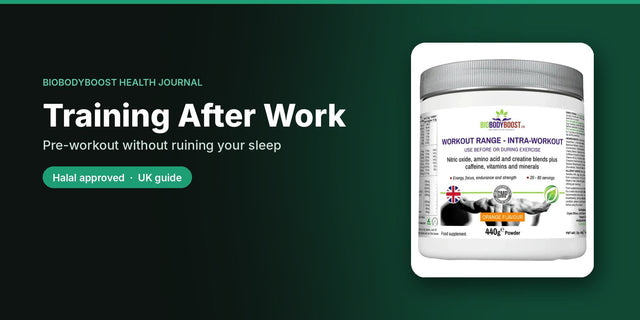
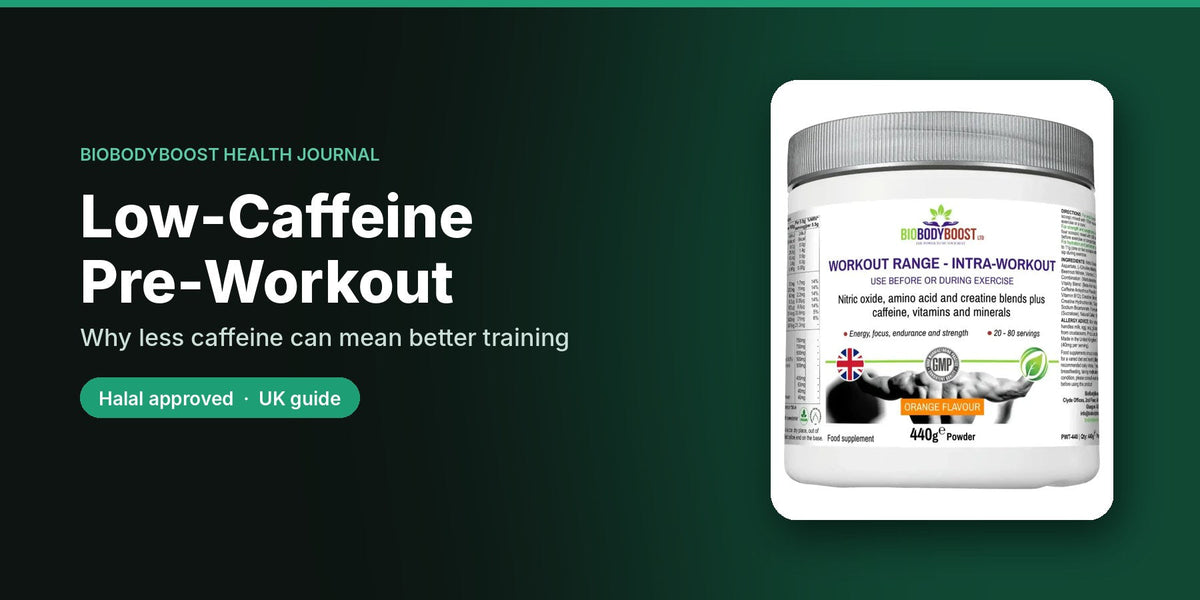
40mg caffeine · halal approved · vegan
Pre & Intra-Workout Drink
- Citrulline malate, arginine and beetroot nitrate
- Vitamin B12, vitamin C and niacin contribute to the reduction of tiredness and fatigue
- Magnesium contributes to normal muscle function
HALAL10 10% off your first order
Shop Pre-Workout →Questions people ask
Is 40mg of caffeine enough for a workout?
It's a light dose, a bit less than a cup of tea. It suits people who want a gentle lift without jitters or sleep problems.
Can I take pre-workout in the evening?
A low-caffeine option is a better choice for evening sessions. High doses late in the day can affect sleep.
Is caffeine-free pre-workout worth it?
Yes, for some people. Stimulant-free products rely on ingredients like citrulline and nitrates instead.
Can I drink coffee and take pre-workout?
You can, but add up your total. Stay under 400mg a day if you're a healthy adult.
Is pre-workout halal?
It depends on the product. Check for halal approval of the finished product, especially for flavourings and amino acid sources.
Sources: EUFIC: EFSA caffeine opinion · NHS: caffeine in drinks · GB NHC register
This article is general information, not medical advice. Food supplements should not replace a varied, balanced diet and healthy lifestyle. Not suitable for children, or during pregnancy or breastfeeding.