Quick answer: liposomal vitamin C encapsulates ascorbic acid in phospholipid liposomes that bypass gut absorption limitations, delivering significantly higher plasma vitamin C than equivalent doses of standard oral vitamin C. Carr et al. (2016, Nutrients) confirmed liposomal vitamin C produced significantly higher plasma vitamin C than non-liposomal oral vitamin C at equivalent doses, approaching the plasma levels typically achievable only by intravenous vitamin C. For skin collagen synthesis specifically, higher plasma vitamin C is directly relevant — vitamin C is the cofactor for the enzymes that build collagen structure.
Why standard vitamin C has a ceiling
Vitamin C absorption from the gut follows saturable active transport via sodium-dependent vitamin C transporter 1 (SVCT1). At doses above approximately 200mg, the transporters saturate and absorption efficiency drops sharply. At 1,000mg single dose, only approximately 50% is absorbed. Above 2,000mg, the excess is excreted and GI side effects (osmotic diarrhoea) occur. The plasma maximum achievable through oral vitamin C regardless of dose is approximately 70–80μmol/L.
Liposomal encapsulation bypasses SVCT1 saturation. Liposomes (phospholipid vesicles of similar structure to cell membranes) are absorbed via endocytosis — a different mechanism not subject to the same saturation ceiling. This allows significantly higher plasma vitamin C at the same or lower doses compared to standard oral forms.
Vitamin C and skin collagen synthesis
Vitamin C is not optional for collagen synthesis — it is a mandatory enzyme cofactor. Prolyl hydroxylase and lysyl hydroxylase (the enzymes that modify proline and lysine residues in procollagen) require vitamin C as an electron donor at each catalytic cycle. Without vitamin C, these enzymes fail, procollagen cannot be properly hydroxylated, the collagen triple helix is unstable, and properly structured collagen cannot form. This is the mechanism of scurvy — extreme vitamin C deficiency producing collagen failure. At subclinical deficiency levels, collagen synthesis is impaired to a degree proportional to deficiency. Ensuring adequate plasma vitamin C is the foundation of any collagen synthesis support strategy. The NHS confirms vitamin C is essential for the maintenance of normal skin.
Is liposomal vitamin C halal?
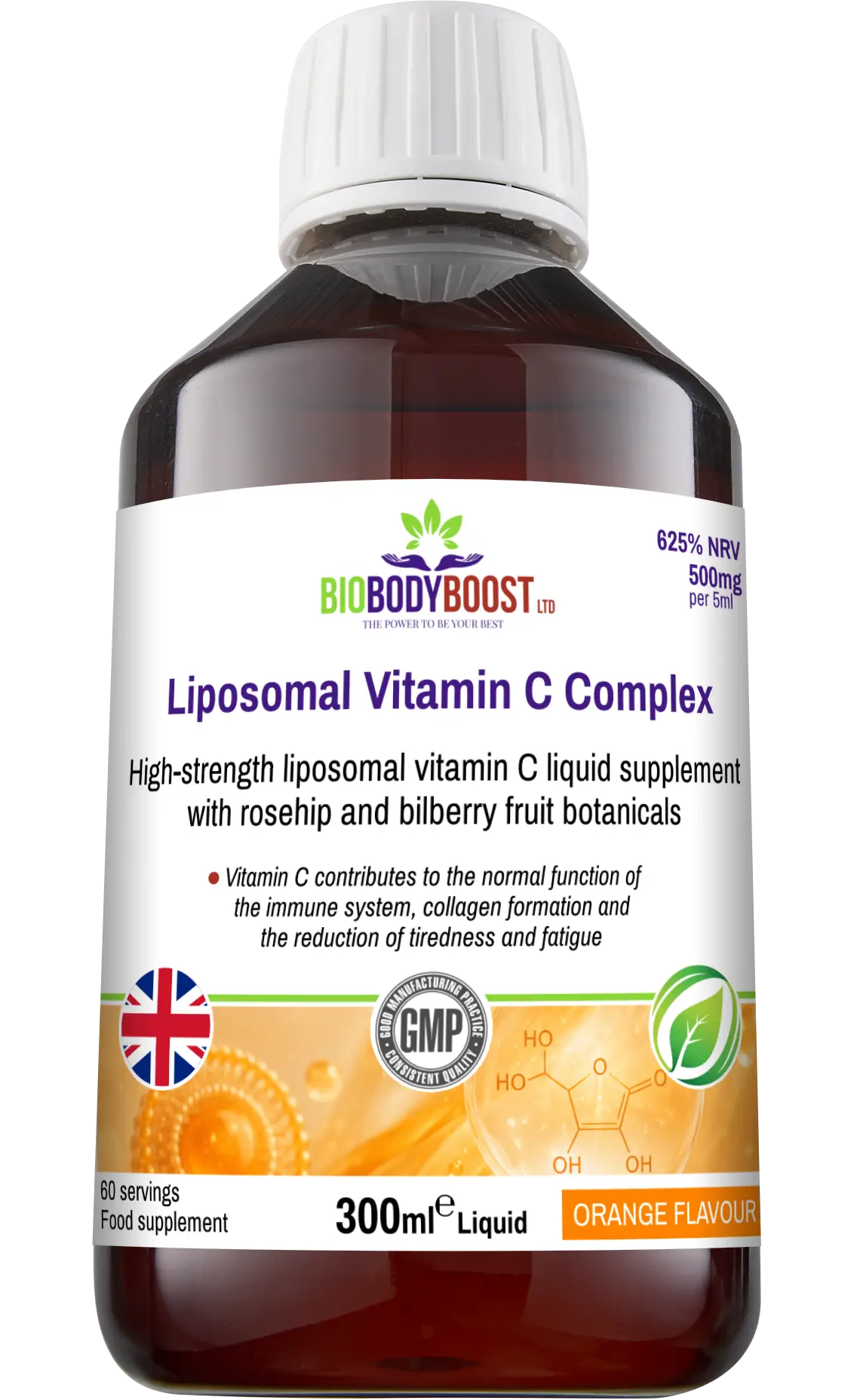
Yes. Ascorbic acid is produced by fermentation from glucose (plant-origin) — no animal involvement. The liposomal phospholipids are typically soy-derived lecithin (plant-origin, halal) or sunflower lecithin (halal). The compliance check is the excipients and manufacturing environment. BioBodyBoost Liposomal Vitamin C Complex uses plant-derived phospholipids and carries full halal certification. Soy allergen declared (phosphatidylcholine from soy). Liposomal Vitamin C Complex — 500mg per 5ml, 300ml liquid, halal certified, vegan. Pair with Marine Collagen Powder (9g per serving, halal certified) for the complete halal skin collagen stack. See the full anti-aging supplements halal UK guide.
Is liposomal vitamin C better than regular vitamin C?
For achieving higher plasma vitamin C levels, yes. Carr et al. 2016 (Nutrients) confirmed liposomal vitamin C produced significantly higher plasma concentration than non-liposomal oral vitamin C at equivalent doses. The mechanism is absorption via endocytosis (bypassing SVCT1 saturation) rather than standard gut transport. For immune function support at standard doses (200–500mg), standard ascorbic acid is effective and far cheaper. For applications requiring genuinely high plasma vitamin C — collagen synthesis support, high oxidative stress conditions, recovery from illness — liposomal form is the meaningful upgrade.