Krill oil has moved from a niche supplement to one of the UK's most discussed omega-3 products. The reason is not simply marketing — krill oil has genuine biochemical advantages over standard fish oil that make it worth understanding. This guide explains what makes krill oil different, what astaxanthin contributes and who would benefit from switching from conventional fish oil.
What Is Krill Oil?
Krill oil is extracted from Antarctic krill (Euphausia superba) — tiny crustaceans that form one of the largest biomasses on Earth. Despite their small size, krill are nutritionally exceptional, providing omega-3 fatty acids (EPA and DHA), phospholipids and astaxanthin — a powerful antioxidant carotenoid that gives krill their distinctive pink colour. Antarctic krill are harvested under strict sustainability quotas by the Commission for the Conservation of Antarctic Marine Living Resources (CCAMLR), making them one of the most sustainably sourced omega-3 options available.
Krill Oil vs Fish Oil — Four Key Differences
1. Phospholipid-Bound Omega-3
The omega-3 fatty acids in standard fish oil are bound to triglycerides — the same form found in dietary fat. The omega-3 in krill oil is predominantly bound to phospholipids — the same molecular structure as cell membranes. This phospholipid form is absorbed more efficiently and is transported directly to tissues via the lymphatic system, while triglyceride-bound omega-3 requires additional enzymatic processing before cellular uptake. Studies comparing equivalent EPA and DHA doses show krill oil produces higher tissue omega-3 levels despite lower capsule dose.
2. Astaxanthin
Astaxanthin is a carotenoid antioxidant that gives krill (and flamingos, and salmon) their pink colour. It is one of the most potent antioxidants measured — approximately 6,000 times more powerful than vitamin C in singlet oxygen quenching, and 550 times more potent than vitamin E. Unlike many antioxidants, astaxanthin is both water and fat-soluble, allowing it to protect cells throughout the entire lipid bilayer rather than just the water-soluble or fat-soluble compartment. It also crosses the blood-brain barrier, supporting brain and eye health in a way most carotenoids cannot.
Standard fish oil contains no astaxanthin. This is not a minor omission — astaxanthin in krill oil actively protects the omega-3 fatty acids from oxidation both in the capsule and after absorption, meaning krill oil's omega-3 arrives in tissues in a less oxidised, more bioactive state.
3. Choline
Krill oil contains phosphatidylcholine — a source of dietary choline, an essential nutrient that most people do not consume in adequate amounts. Choline is critical for liver function, cell membrane integrity and the production of acetylcholine — the neurotransmitter central to memory and muscle control. Standard fish oil provides no choline.
4. No Fishy Aftertaste
The phospholipid structure of krill oil means it is far less prone to oxidation than triglyceride fish oil, and the astaxanthin provides additional antioxidant protection. The result is a product with significantly less fishy odour and aftertaste — a practical benefit that meaningfully improves compliance.
Who Benefits Most from Krill Oil?
Krill oil is particularly valuable for people who have tried fish oil but experienced fishy burps or compliance issues, those specifically seeking astaxanthin and choline alongside omega-3, older adults for whom phospholipid-bound EPA and DHA shows particular tissue uptake advantages, and anyone interested in joint health — krill oil's phospholipid-bound omega-3 shows specific evidence for cartilage and joint inflammation reduction.
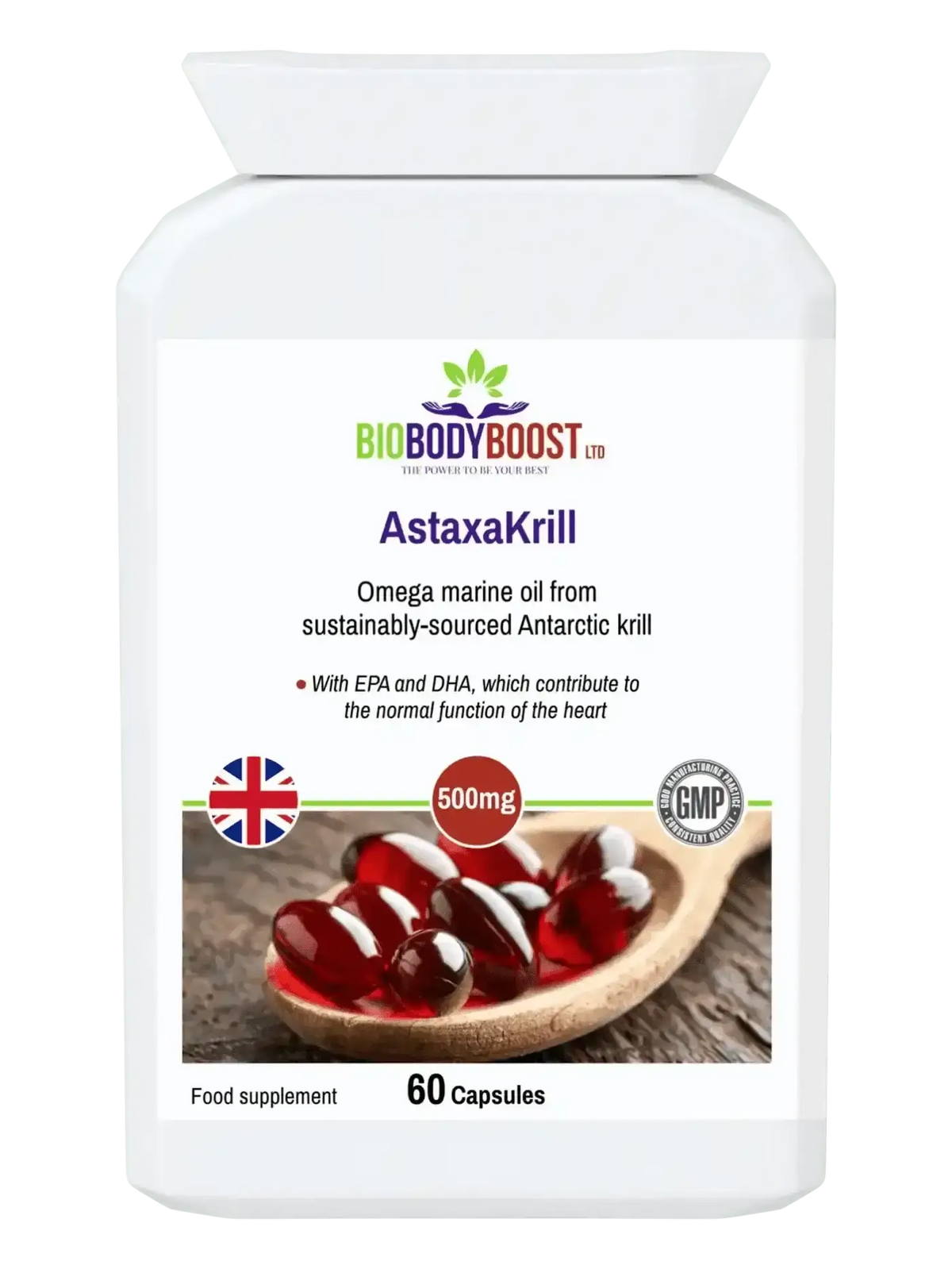
AstaxaKrill Antarctic Krill Oil — BioBodyBoost
AstaxaKrill provides 500mg of Antarctic krill oil per capsule with naturally occurring astaxanthin, EPA, DHA and phosphatidylcholine — in a sustainably sourced, halal certified and UK-made formula. Two capsules daily with food provides a full therapeutic dose.
Pair with Bio Mushroom Boost for combined immune, cognitive and anti-inflammatory support. Explore the full Joint and Flexibility collection for complementary products.