

Quick answer: sea moss (Irish moss, Chondrus crispus) is a red algae and is halal by source — there's no animal-derived material involved in growing or processing it. The genuine question isn't halal status, it's safety: like other seaweeds, sea moss naturally contains iodine at levels that vary enormously between batches, and daily "sea moss gel" use popularised on TikTok can push iodine intake well past safe limits without anyone realising, particularly for people with existing thyroid conditions. This is the caution almost no viral sea moss content mentions.
What sea moss actually is
Sea moss is a type of red algae that grows on rocky Atlantic coastlines, traditionally used in Caribbean and Irish cuisine for centuries (it's the original thickening agent in traditional blancmange, among other uses). The current wave of popularity is recent and almost entirely social-media driven — "sea moss gel" recipes and pre-made tubs have become one of the most searched wellness trends of the past two years, typically marketed for immunity, skin, energy and "68 minerals" claims.
Nutritionally, sea moss contains a genuinely broad spread of minerals in small amounts — but the "68 minerals" figure widely repeated in marketing overstates what's present in meaningful, bioactive quantities. The mineral actually present at a level worth discussing is iodine.
Is sea moss halal?
Yes, straightforwardly. Sea moss is a plant-kingdom organism (algae), harvested from the sea, with no slaughter question, no animal-derived processing aids in raw or dried form, and no alcohol involved in typical preparation (water-blended gel). The halal compliance checks that matter are the same as any other food-grade botanical: if buying a flavoured or capsule product rather than raw dried sea moss, check the capsule shell (HPMC vs gelatine) and any added flavouring carriers.
The iodine problem nobody mentions in the trend content
This is the same underlying issue we've covered with bladderwrack seaweed: sea moss iodine content is naturally very high and highly variable — it can range enormously between harvests depending on the specific water source and processing method, with no standardisation across the "sea moss gel" tubs sold by small producers and social sellers. A daily tablespoon of gel from one batch might provide a modest iodine dose; the same amount from a different batch could deliver several times the UK's safe upper intake level, and there is generally no way to know which you're getting from an unregulated small-batch product.
The NHS sets the UK reference nutrient intake for iodine at 140 micrograms a day for adults, with a recognised upper safe limit considerably higher but still finite. Excess iodine intake can trigger or worsen thyroid dysfunction — both hyperthyroidism and hypothyroidism have been documented in case reports linked to high-dose seaweed or kelp supplementation, precisely because the thyroid gland is exquisitely sensitive to iodine excess as well as deficiency.
Who should be genuinely cautious
- Anyone with a diagnosed thyroid condition (hypothyroidism, Hashimoto's, Graves' disease, or a nodule under monitoring) — excess iodine is a recognised trigger for thyroid dysfunction and should be discussed with your GP or endocrinologist before regular sea moss use.
- Daily, unmeasured "gel" users — a tablespoon a day, every day, from an unstandardised product is precisely the pattern most likely to produce cumulative excess intake without anyone noticing symptoms until they're established.
- Pregnant and breastfeeding women — thyroid function is particularly important during pregnancy, and unregulated iodine intake from an unstandardised source isn't something to introduce without medical guidance.
What a more cautious approach looks like
If you want the trace mineral profile sea moss is marketed for without the iodine dosing uncertainty, a standardised, dose-declared iodine supplement gives you a known, controlled quantity rather than a variable one. This is the same reasoning behind choosing a measured iodine supplement over raw seaweed for anyone who actually needs iodine repletion, rather than an ingredient trending for reasons unrelated to its dose.
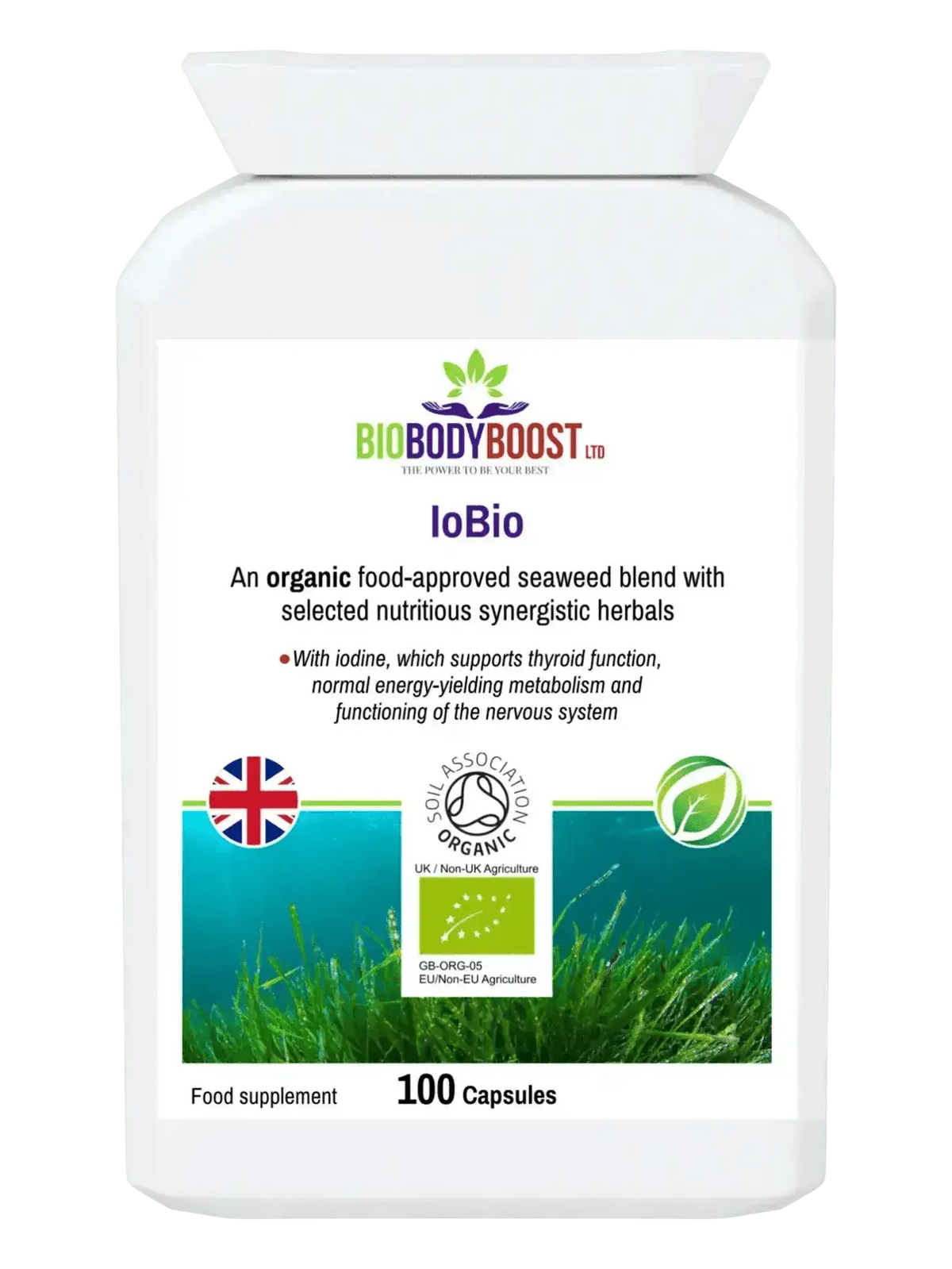
IoBio provides iodine from certified organic seaweed at a declared, standardised dose (192mcg) rather than the variable amount in an unregulated gel — halal approved, vegan. If your interest in sea moss is specifically about iodine or thyroid support, this removes the batch-to-batch guesswork entirely.
Frequently Asked Questions
Is sea moss halal?
Yes — sea moss is a red algae with no animal involvement in sourcing or typical preparation. The compliance checks that remain are standard ones for any processed product: capsule shell material if buying capsules, and any added flavourings if buying a prepared gel or drink.
Is sea moss safe to take every day?
Not necessarily, and the main concern is iodine rather than any other component. Sea moss iodine content varies significantly between sources and isn't standardised in most small-batch "gel" products sold online and on social media, making daily long-term intake harder to judge safely than with a dose-declared supplement. Anyone with a thyroid condition should discuss regular sea moss use with their GP first.
Can sea moss cause thyroid problems?
Excess iodine intake — from any source, including seaweed — is a recognised trigger for both hyperthyroidism and hypothyroidism in susceptible individuals, since the thyroid gland requires iodine within a specific range rather than simply "more is better." Case reports linking high-dose seaweed or kelp supplementation to thyroid dysfunction exist in the medical literature. This risk is higher with unstandardised, variable-iodine products like homemade or small-batch sea moss gel than with a dose-declared supplement.
What's a safer alternative if I want the mineral benefits of sea moss?
A standardised, dose-declared iodine supplement from certified organic seaweed gives you a known quantity rather than the variable amount in an unregulated gel, removing the main safety concern while still addressing the iodine-related interest behind the sea moss trend.
This article is for general information and does not constitute medical advice. If you have a thyroid condition or are pregnant or breastfeeding, speak to your GP before regularly consuming sea moss or any iodine-containing supplement.
BioBodyBoost — Halal Approved UK Supplements
Use code HALAL10 for 10% off your first order — halal approved under UHA Certificate Ref. 24623, vegan, UK made. Shop the full range →


