Key takeaways
- Garcinia cambogia is a fruit, so the ingredient itself is generally considered halal.
- The real halal risks are the capsule shell (often gelatine), added CLA and flavourings.
- Garcinia has no authorised health claim in the UK. Chromium and glucomannan do.
- Halal is not the same as vegan: some halal formulas contain milk-derived CLA.
In this guide
Garcinia cambogia is one of the best-known names in weight-management supplements. It appears in dozens of UK formulas.
If you eat halal, the word on the front of the tub tells you very little. Here is what to check, in under a minute.
What is garcinia cambogia?
Garcinia cambogia, now classified as Garcinia gummi-gutta, is a small pumpkin-shaped fruit from South and Southeast Asia.
In parts of India it is called kudampuli or Malabar tamarind, and its sour rind goes into fish curries. Supplements use the whole fruit powder or an extract standardised to hydroxycitric acid (HCA).
Because it is a fruit, nothing in garcinia itself raises a halal concern, and it is vegan in its raw form.
Where the halal risks actually are
| Ingredient | Why it matters | Look for |
|---|---|---|
| Capsule shell | Budget capsules are often gelatine from pork or non-halal beef | HPMC (plant cellulose) |
| CLA | Made from safflower oil or derived from milk | Source declared |
| Flavourings | Can use alcohol as a carrier | Alcohol-free or halal approved |
| Magnesium stearate, glazes | Can be animal or plant derived | Vegetable source |
More detail: are gelatine capsules halal? and is magnesium stearate halal?
Does garcinia cambogia work?
Honest answer: there is no authorised health claim for garcinia cambogia in the UK or EU. Studies on HCA show mixed, generally modest results.
No brand can lawfully say garcinia burns fat or suppresses appetite. You can check permitted claims on the GB nutrition and health claims register.
What does carry a claim: chromium contributes to the maintenance of normal blood glucose levels and normal macronutrient metabolism. Glucomannan, at 3g a day with water as part of an energy-restricted diet, contributes to weight loss.

Halal is not the same as vegan
Some halal approved garcinia formulas are not vegan, because they contain milk-derived CLA.
Milk is halal, so this is not a halal problem. It matters if you are vegan or have a dairy allergy, so check the allergen box as well as the halal logo.
Label checklist
- Independent halal approval of the finished product
- HPMC capsules, not gelatine
- Every ingredient dose published, no proprietary blend
- Source of CLA and flavourings declared
- Caffeine stated if green coffee or guarana is included
- Claims limited to chromium or glucomannan, not garcinia
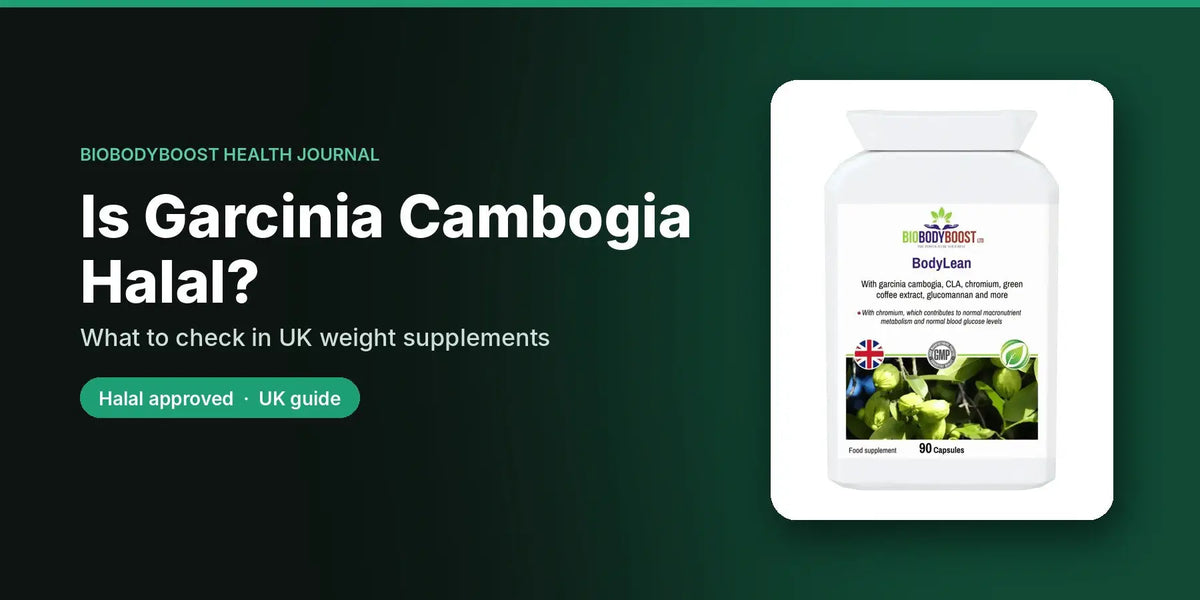
A halal approved garcinia complex

Halal & kosher approved · Vegetarian
BodyLean Garcinia Cambogia Complex
- Garcinia whole fruit 260mg, green coffee 1500mg, glucomannan, cinnamon
- Chromium 100µg (250% NRV) carries the authorised claim
- Contains milk (CLA) and sulphites · 1.5mg caffeine per capsule
HALAL10 10% off your first order
Shop BodyLean →Take it as part of a calorie-controlled diet. Need vegan? An Apple a Day also contains chromium, and BioBurn provides glucomannan.
Questions people ask
Is garcinia cambogia haram?
No. It is a fruit and generally considered halal. A supplement can still be unsuitable if it uses gelatine capsules or non-halal additives.
Is garcinia cambogia vegan?
The fruit is vegan. Milk-derived CLA or gelatine capsules make some finished products not vegan.
Is BodyLean halal?
Yes, halal and kosher approved. It is vegetarian but not vegan, because the CLA is milk-derived.
Does garcinia cambogia contain caffeine?
Garcinia does not, but many formulas add green coffee or guarana. BodyLean contains 1.5mg per capsule.
Can I take garcinia during Ramadan?
Take supplements between iftar and suhoor. Speak to your GP first if you have diabetes or take medication.
Sources: GB nutrition and health claims register · NHS: vitamins and minerals
General information, not a religious ruling or medical advice. Food supplements should not replace a varied diet and healthy lifestyle. Not recommended for children or during pregnancy. Speak to your GP if you are breastfeeding, have a medical condition or take medication.