Bloating after a healthy lunch, irregular digestion during a busy week, or that heavy feeling that shows up for no obvious reason - this is usually when people start asking how to choose vegan probiotics without wasting money on the wrong formula. The label might look clean, the claims might sound impressive, but probiotic quality is not just about a big number on the front of the tub. If you want better gut balance and daily digestion, the real win is choosing a formula that matches your needs, your routine and your standards.
Why choosing the right vegan probiotic matters
Not all probiotics do the same job. Different strains support different outcomes, and two products with the same CFU count can perform very differently depending on the bacteria used, the capsule design and how well the product has been made.
That matters even more if you follow a plant-based lifestyle or simply want a cleaner supplement routine. A probiotic may contain live cultures, but still include hidden animal-derived ingredients in the capsule shell, dairy-based growth media, or unnecessary fillers that do not fit your standards. A good vegan probiotic should support your gut without compromising your values or causing extra confusion.
There is also the question of expectations. Probiotics can support gut comfort, regularity and resilience, but they are not a magic fix for every digestive issue overnight. The best results usually come from consistent daily use, sensible strain selection and a formula you can actually stick with.
How to choose vegan probiotics based on your goal
Start with the reason you want one. This sounds obvious, but many people buy probiotics by brand aesthetic or headline claim instead of by outcome.
If your main issue is everyday bloating or sluggish digestion, look for strains commonly used for digestive comfort and balance. If you want broader support during periods of stress, travel or dietary disruption, a multi-strain formula may make more sense. If you are focused on immune support, some strains have stronger evidence in that area than others.
The key point is simple: match the formula to the job. A product designed for post-antibiotic support may not be the best fit for someone who just wants steadier digestion after meals. Bigger claims are not always better claims.
Check the strain names, not just the word probiotic
A quality label should list the full strain identity, not just a vague mention of Lactobacillus or Bifidobacterium. You want to see names that go beyond the genus and species, because probiotic benefits are strain-specific.
For example, two bacteria from the same family can behave differently in the body. If a brand only tells you the broad type but not the actual strain, it is harder to judge whether the formula is research-backed or simply dressed up to look scientific.
This is where a lot of shoppers get stuck. The science can look technical, but the takeaway is straightforward. The more precise and transparent the label, the easier it is to trust what you are buying.
CFU count matters, but context matters more
CFU stands for colony-forming units - the amount of live bacteria in each serving. Many shoppers assume more is always better, but that is not how probiotic quality works.
A high CFU count can be useful, especially in targeted formulas, yet it does not guarantee better results. A lower-dose product with well-studied strains and good survivability may outperform a very high-dose product with poor strain selection. It also depends on your tolerance. Some people do well starting with a moderate strength before moving higher.
Look for a sensible CFU range that fits the formula’s purpose rather than chasing the biggest number on the shelf.
What makes a probiotic truly vegan
This is the part many labels gloss over. If you want a probiotic that is genuinely aligned with a vegan routine, check beyond the front-of-pack claim.
Start with the capsule. Softgels and some capsule shells may use gelatine, which is animal-derived. A vegan probiotic should use a plant-based capsule such as cellulose.
Next, look at the culture medium and added ingredients. Some probiotic strains are grown using dairy-based media, even if the final product appears plant-based. For strict vegans or anyone avoiding dairy completely, this matters. Brands that are clear about vegan suitability and allergen status tend to be easier to trust.
It is also worth checking for extras like milk powder, lactose, honey or other non-vegan additives. A clean-label formula should be direct, not cluttered.
Look for third-party testing and quality controls
A probiotic is only useful if the live cultures are still viable when you take it. That is why manufacturing standards matter.
Choose formulas that mention third-party testing, quality assurance or research-backed development. These are not just nice phrases. They signal that the product has been checked for identity, purity and consistency.
Probiotics are sensitive to heat, moisture and time. A well-made supplement should be formulated to stay stable through storage and normal use. Some products use delayed-release capsules or protective technology to help the bacteria survive stomach acid. That can make a meaningful difference, especially if you are relying on the product for daily support.
For a brand like BioBodyBoost, where clean-label positioning and third-party testing are part of the trust signal, this kind of transparency is exactly what health-conscious buyers should expect.
Shelf-stable or refrigerated?
People often assume refrigerated probiotics are automatically better. Sometimes they are excellent, but refrigeration alone is not a marker of quality.
Many modern formulas are shelf-stable and designed to maintain potency at room temperature. That can be a better fit for everyday convenience, especially if you travel, commute or simply want a supplement that is easy to keep in your routine.
What matters more is whether the storage guidance is clear and whether the brand states potency through the expiry date rather than just at the time of manufacture. That detail tells you more than a chilled shelf ever will.
Don’t ignore allergens and digestive triggers
If you are shopping for gut support, the last thing you want is a formula that creates more irritation than it solves.
Check for common triggers such as dairy, gluten, soya and artificial sweeteners if you are sensitive to them. Some probiotic blends also include prebiotics such as inulin or FOS. These can be helpful because they feed beneficial bacteria, but they are not ideal for everyone. If you already deal with bloating or a sensitive gut, a strong prebiotic blend may feel too much at first.
This is one of those it-depends moments. A synbiotic formula that combines probiotics and prebiotics can be brilliant for one person and uncomfortable for another. If your digestion is reactive, a simpler formula may be the smarter place to start.
Should you choose a single-strain or multi-strain product?
There is no universal winner here. Single-strain products can be more targeted and easier to assess if you are trying to support one specific outcome. Multi-strain formulas can offer broader everyday support and may suit people looking for all-round gut balance.
The trade-off is clarity versus coverage. A single-strain product may be easier to evaluate against research, while a multi-strain product may support a wider range of digestive functions. If your goal is general wellbeing rather than a very specific issue, a balanced multi-strain formula often makes practical sense.
Read the serving size and routine fit
The best probiotic is the one you will actually take consistently. That means the serving size matters more than many people think.
If a product requires multiple capsules a day, strict timing around meals, or special handling that does not suit your schedule, adherence drops fast. Busy professionals, parents and anyone juggling training, work and family life usually do better with a simple once-daily option.
Also look at whether the capsule size is manageable and whether the label gives clear guidance on when to take it. Good supplements should reduce friction, not add to it.
Red flags to watch for
When working out how to choose vegan probiotics, a few warning signs are worth keeping in mind. Be cautious with labels that rely on vague marketing without listing strains, products that make sweeping health claims without proof, or formulas packed with unnecessary fillers and flavourings.
Be wary too of flashy CFU numbers with no explanation of survivability or testing. If the science sounds loud but the details are missing, step back.
A strong probiotic should feel transparent from every angle - vegan suitability, strain identity, potency, storage and quality standards.
Quick answers to common questions
How do I choose a vegan probiotic for a sensitive stomach?
Start simple. Pick a moderate CFU count (1–4 billion rather than 50 billion), avoid formulas with strong prebiotic blends like inulin or FOS at first, and look for a delayed-release cellulose capsule. Introduce it gradually — every other day for the first week — and increase only once your gut is comfortable. A gentler multi-strain option like BioTic 4 Billion is a sensible starting point (check the product page for current dietary and allergen status).
Which vegan probiotic strains are clinically backed?
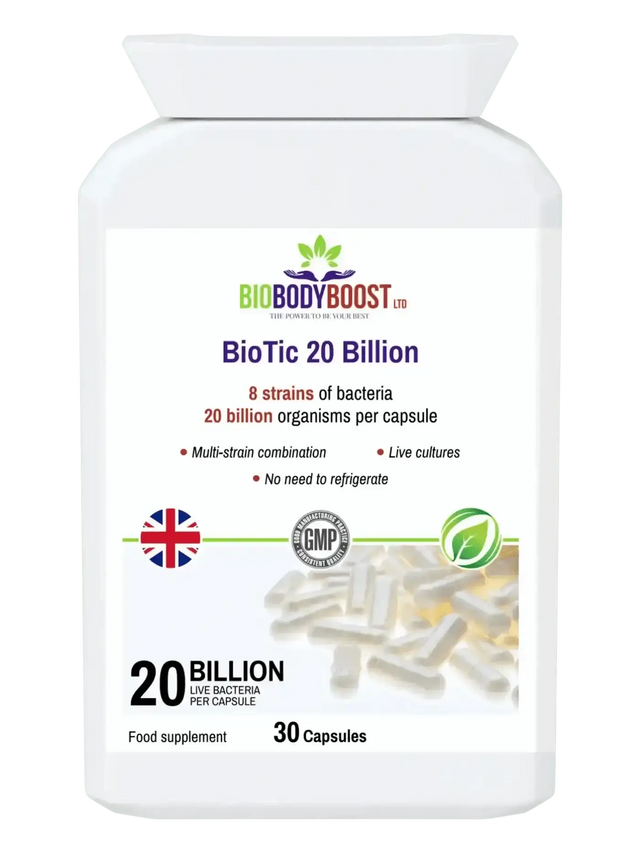
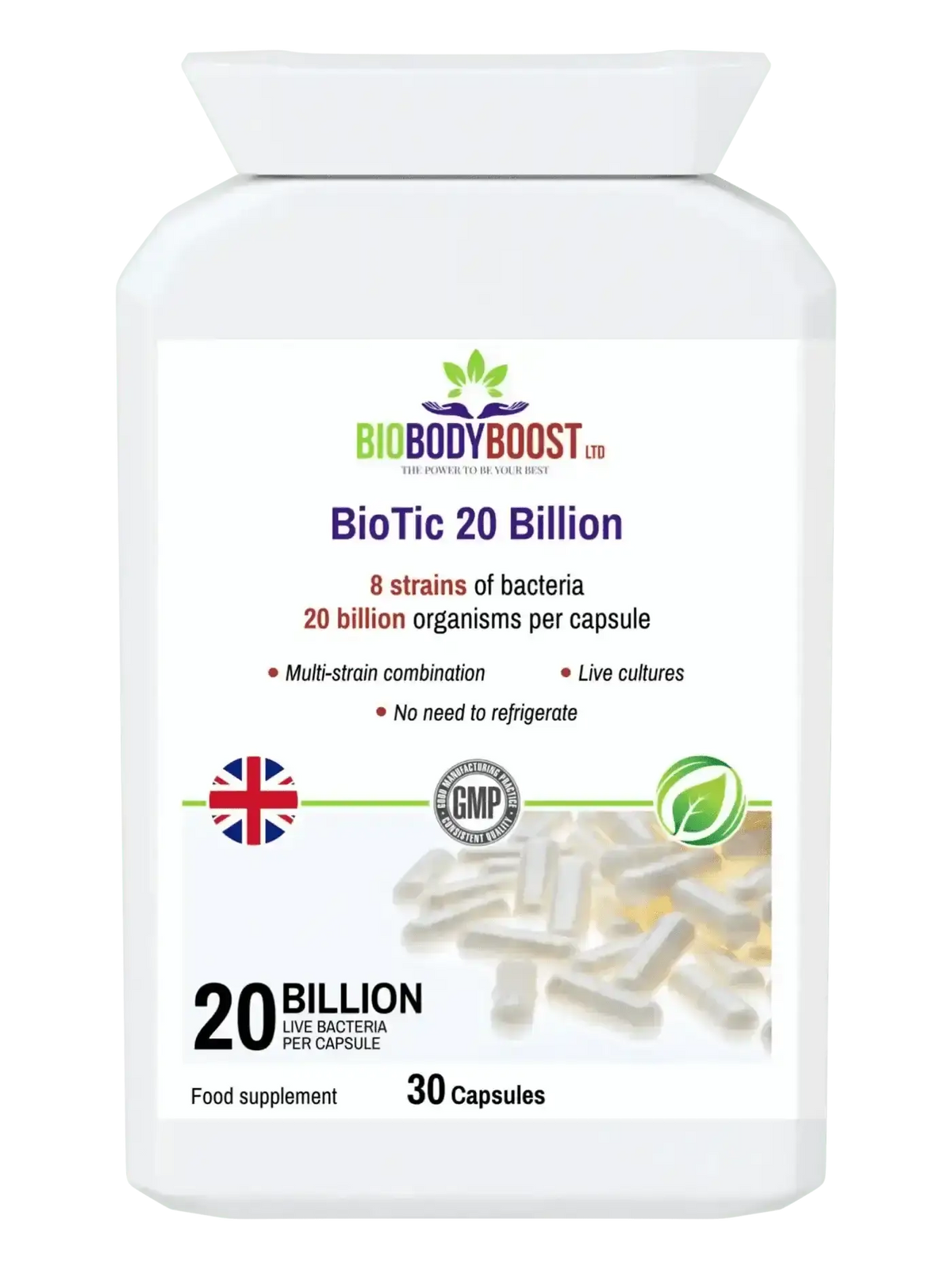
Lactobacillus acidophilus and Bifidobacterium lactis are the two most studied strains for everyday digestive comfort and immune support. The key is that the label names the exact strain rather than just the genus — benefits are strain-specific, and transparent labelling is the clearest sign a formula is research-led. A higher-strength option like BioTic 20 Billion suits established routines (check the product page for current dietary and allergen status).
How do I choose between vegan probiotic drink types and capsules?
Probiotic drinks are convenient but often carry added sugar, need refrigeration, and can lose potency faster than a well-made capsule. Capsules give you a precise CFU dose, longer shelf stability and a clearer label. If you prefer a drink format, check the sugar content, the stated CFU at end of shelf life (not at manufacture), and that the cultures were not grown on dairy media.
What a smart final check looks like
Before you buy, ask five quick questions. Is it genuinely vegan in capsule and formulation? Does it list the exact strains? Is the CFU count sensible for your goal? Is there evidence of testing or quality control? And can you see yourself taking it every day without hassle?
If the answer is yes across the board, you are probably looking at a supplement built for results rather than shelf appeal.
Your gut does not need hype. It needs consistency, clean formulation and a probiotic that fits your body and your routine. Choose with that mindset, and you are far more likely to feel the difference where it counts - lighter digestion, steadier comfort and better daily balance. For the wider picture, browse the Gut Health UK collection or read our guide on whether probiotics are vegan.