Choosing a protein powder sounds simple until you’re staring at a label packed with blends, amino acid claims, sweeteners and serving sizes that tell very different stories. A good guide to plant based protein powders should make that easier - not more confusing. If your goal is better recovery, steadier energy, muscle support or a more convenient way to hit your daily protein target, the right powder can be a smart daily upgrade.
Plant-based protein has moved well beyond the old stereotype of chalky shakes and weak nutrition. The best formulas now combine clean ingredients, strong amino acid profiles and better digestibility, making them a practical option for gym-goers, busy professionals and anyone who wants nutrition that fits a dairy-free or vegan routine. But not every powder is built the same, and the differences matter.
What this guide to plant based protein powders should help you answer
The real question is not whether plant protein works. It does. The better question is which type works best for your body, routine and outcome. Someone training four times a week and chasing recovery needs a different formula from someone using a shake as a quick breakfast or adding protein to support healthy ageing.
That is why smart choosing starts with context. You are not just buying grams of protein. You are buying convenience, satiety, digestion, taste, ingredient quality and consistency. If a powder looks impressive on paper but leaves you bloated, hungry or avoiding it after three days, it is not the right fit.
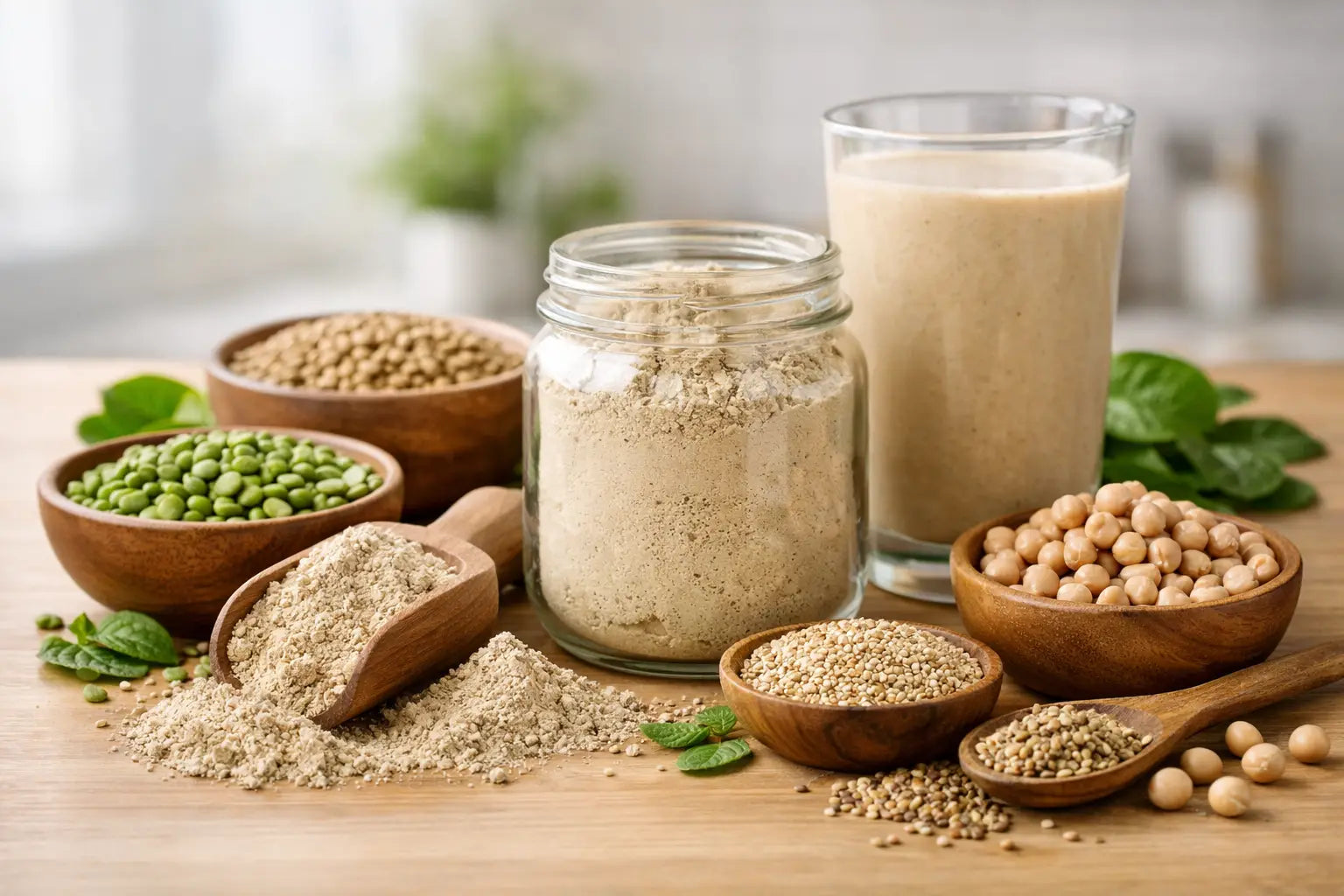
The main types of plant protein
Pea protein is one of the most common choices, and for good reason. It usually delivers a solid protein content, a decent amount of branched-chain amino acids and a texture that works well in shakes. It is especially useful for muscle support and post-workout recovery, although some people find the taste a little earthy on its own.
Brown rice protein is another common option. It can be lighter in texture, but it is often lower in lysine, which means it may be stronger when combined with another source rather than used alone. This is why many well-formulated products pair rice and pea together - they complement each other and improve the overall amino acid profile.
Soy protein is nutritionally complete and performs well for muscle support, but it is not everyone’s first choice. Some shoppers avoid soy for dietary or personal reasons, while others are perfectly happy with it. This is one of those areas where it depends on your preferences and how your body responds.
Hemp protein tends to appeal to people who want a more natural, less processed feel. It contains fibre and healthy fats, which can support fullness, but it is often lower in protein per serving and has a more noticeable flavour. That makes it better for some smoothies than for those wanting a clean, high-protein shake after training.
You may also see pumpkin seed, sunflower seed or blends built around multiple plant sources. These can be useful, particularly when the brand is trying to balance amino acids, taste and digestion rather than relying on one hero ingredient.
Protein quality matters, but so does the full formula
It is easy to focus only on the protein number on the front of the pack. That number matters, but it is not the full story. A powder with 20 to 25 grams of protein per serving is often a strong starting point for adults who want meaningful support for satiety and recovery, yet the rest of the ingredient list still deserves attention.
Look at how the protein is sourced. A single-source powder can be great if it suits you, but a blend often gives a more rounded amino acid profile. Then check what else is included. Some formulas add digestive enzymes, greens, fibre or functional extras. These can be helpful, though they should support the product rather than distract from weak protein quality.
There is also a trade-off here. A cleaner, shorter ingredient list may appeal if you want minimal processing and fewer additives. A more functional blend may suit you better if digestion or convenience is the bigger issue. Neither is automatically better. It depends on what you need the powder to do every day.
How much protein do you actually need?
For many people, the issue is not severe protein deficiency. It is inconsistency. Breakfast is light, lunch is rushed, dinner comes late, and recovery nutrition gets missed. That is where protein powder earns its place. It helps fill the gap without requiring a full meal prep routine.
Your needs depend on age, body size, training load and goals. Someone using protein to support general wellness may only need a modest boost. Someone training regularly, trying to maintain lean mass or recovering from intense sessions will usually need more. In practice, a quality shake can help you hit your target with less effort, especially on busy days.
If you already eat plenty of protein from whole foods, powder should complement your diet rather than replace it. It works best as a convenient addition, not as the whole plan.
Guide to plant based protein powders for digestion and tolerance
A protein powder can look perfect until your stomach disagrees. Digestibility is one of the most overlooked parts of choosing well. Plant-based products are often easier for people who struggle with dairy, but that does not mean every formula will feel light.
Some people tolerate pea blends brilliantly. Others do better with rice-heavy or seed-based options. Sweeteners, gums and thickeners can also affect how a shake sits. If you often deal with bloating after meals, it makes sense to choose a cleaner formula and introduce it gradually rather than going straight for the densest blend available.
Added digestive enzymes can be useful for some users, particularly if you are increasing protein intake quickly. Fibre is another area to watch. A little can support fullness and gut balance, but too much in one serving may feel heavy, especially around training. For a post-workout shake, lighter is often better.
Taste, texture and daily consistency
This part gets dismissed far too often. If the taste is poor or the texture is gritty, you will not use it consistently. And consistency is where results come from.
Some plant proteins have a naturally thicker texture than whey, particularly in water. That is not always a flaw. In fact, it can make a shake feel more filling, which is useful if you are using it between meals or as part of a weight management routine. But if you want something quick after the gym, a smoother, lighter formula may be easier to stick with.
Flavour matters too, but so does sweetness level. Very sweet powders can become tiring fast. Unsweetened or lightly flavoured options give you more flexibility if you like adding fruit, oats or nut butter to a smoothie. If you want speed and simplicity, a ready-to-mix flavour you enjoy on its own is usually the better call.
What to check on the label
The label should give you confidence, not homework. Start with protein per serving, then look at serving size. A big scoop can make protein numbers look better than they really are, so compare like for like.
Next, check the ingredient order. If protein sources are at the front and the rest is clean and purposeful, that is usually a good sign. If sugars, fillers or long strings of additives dominate, the formula may be doing more marketing than nutritional heavy lifting.
It is also worth checking for third-party testing and clear allergen information. For many health-conscious shoppers, that level of transparency matters just as much as taste. Clean-label standards, ethical dietary compatibility and research-backed formulation are not small details - they are often the difference between buying on impulse and buying with trust.
Matching the powder to your goal
If your priority is muscle and recovery, aim for a higher-protein formula with a strong amino acid profile and no unnecessary heaviness. If your main goal is satiety and weight support, a slightly thicker blend with some fibre may help you feel fuller for longer. If mornings are chaotic and breakfast is usually an afterthought, a balanced protein powder that mixes quickly can steady energy without dragging your routine off course.
For people with sensitive digestion, simpler often wins. For those who care most about natural ingredients, a shorter ingredient list may feel better aligned. At BioBodyBoost, that clean-label, plant-first approach is what many customers are really looking for - nutrition that supports performance and everyday health without gut disruption or ingredient overload.
A protein powder should fit your life as it is now, not the version of you with endless time, perfect meal prep and zero stress. The best choice is the one you will actually use, absorb well and feel good taking. Start there, and your daily routine gets stronger with very little friction.
The smartest supplement choices are rarely the flashiest ones. They are the ones that quietly make mornings easier, workouts easier to recover from and nutrition easier to stay on top of when life gets busy.