You can have a cupboard full of good intentions and still feel stuck at the supplement shelf. The multivitamin versus greens powder question comes up for a reason: both promise daily support, both look convenient, and both seem like smart insurance when meals are rushed, energy dips by 3pm, or your veg intake is more hopeful than consistent.
The catch is that they are not doing exactly the same job. If you want better results, less guesswork and a routine that actually fits real life, it helps to know where each one shines - and where it falls short.
Multivitamin versus greens powder: what is the actual difference?
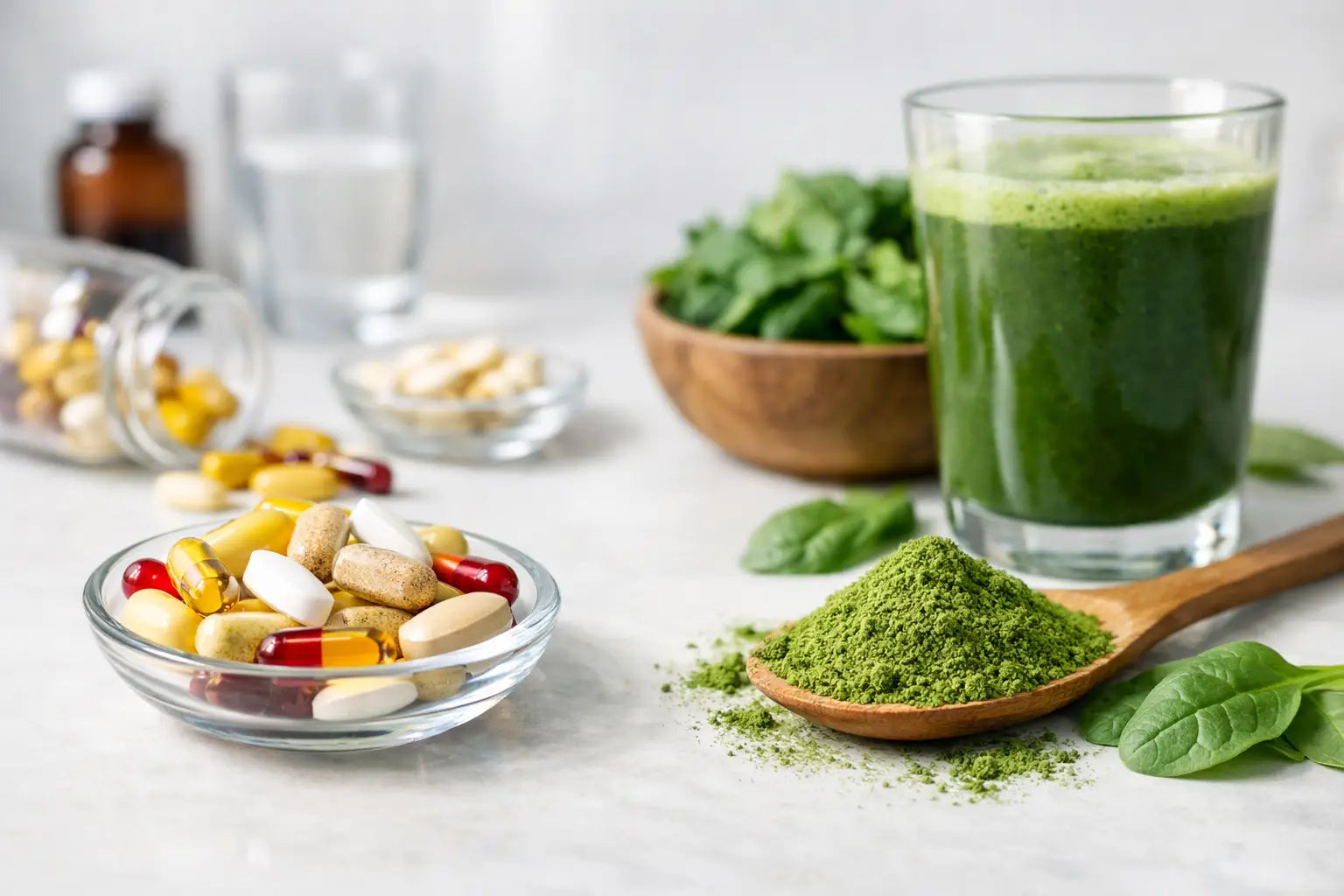
A multivitamin is built to deliver specific vitamins and minerals in measured amounts. Think of it as targeted nutritional coverage. Depending on the formula, it may help top up nutrients such as vitamin D, B vitamins, iron, zinc, magnesium or selenium - nutrients that can be harder to hit consistently, especially with restricted diets, busy schedules or seasonal changes.
A greens powder is usually a broader blend made from powdered vegetables, grasses, algae, fruits, herbs and sometimes added digestive support such as probiotics or enzymes. It is less about delivering one clearly defined nutrient profile and more about giving you a concentrated mix of plant compounds, phytonutrients and wholefood-derived support in one scoop.
That difference matters. A multivitamin is usually better when your goal is precision. A greens powder is often better when your goal is daily wellness support with a food-first feel.
When a multivitamin makes more sense
If your diet is inconsistent, a multivitamin can be the more reliable option. You know what you are getting, the serving is easy to follow, and the nutrients are usually listed with exact amounts. That can be useful if you are trying to support immune function, energy metabolism, bone health or general nutritional intake without adding another complicated habit to your day.
This is especially relevant for plant-based lifestyles. Vegan and vegetarian diets can be rich in fibre, colour and antioxidants, but they can also leave gaps if not carefully planned. Nutrients such as vitamin B12, vitamin D, iodine, iron and zinc deserve attention. A well-formulated multivitamin can help cover those bases in a straightforward way.
It can also suit people who want structure. If you are someone who likes consistency, clear dosages and a no-fuss capsule or tablet with breakfast, a multivitamin often feels more practical than mixing a daily drink.
That said, more is not always better. Some multivitamins pack in high levels across the board, even when you may not need them. Others use forms that are harder to absorb or tougher on the stomach. Quality matters, and so does choosing a formula that fits your age, diet and routine rather than assuming any multivitamin will do.
When a greens powder makes more sense
Greens powders tend to appeal to people who want a bigger daily wellness ritual, not just a nutrient top-up. They can be useful if your meals are low in variety, your veg intake is patchy, or you want support that feels closer to wholefood nutrition.
Many greens blends include ingredients linked with gut balance, antioxidant protection and everyday vitality. That can make them feel more rounded for people dealing with sluggish mornings, bloating after meals, travel disruption or the sense that their diet is technically fine but not especially vibrant.
They also fit well for people who struggle with tablets. A scoop in water, a smoothie or a post-gym shake can be easier to stick with than swallowing pills every day.
But greens powders have their own trade-offs. They are not always strong sources of key micronutrients in meaningful amounts. Some are heavy on marketing language and light on transparency. You may see long ingredient lists full of trendy plants, but without clear dosages it is hard to know how much support you are really getting. And while they can complement your fruit and veg intake, they do not replace eating actual vegetables.
Multivitamin versus greens powder for energy, digestion and immunity
This is where context matters more than hype.
For energy, a multivitamin often has the edge if your tiredness is linked to low intake of nutrients involved in energy metabolism, such as B vitamins, iron or magnesium. Greens powders may help you feel more refreshed if they improve overall dietary quality or digestive comfort, but they are usually less precise for nutrient-based fatigue.
For digestion, a greens powder can be more appealing, especially if it includes fibre, digestive enzymes or probiotics. Some people feel lighter and more regular with a good greens blend. Others, especially those with sensitive stomachs, may find certain ingredients too intense. A multivitamin is less likely to support digestion directly, although some formulas are gentler than others.
For immunity, both can play a role. A multivitamin may provide dependable levels of vitamin C, vitamin D, zinc and selenium, all commonly associated with immune support. A greens powder may bring in antioxidant-rich plant ingredients that support overall resilience. If your immune support plan needs to be specific and measurable, the multivitamin usually wins. If you want broader lifestyle support alongside a balanced diet, greens can be a strong add-on.
Which one is better for a plant-based lifestyle?
For many plant-based adults, the answer is not purely one or the other. It depends on whether you need nutrient certainty or broader green nutrition.
If you are concerned about common gaps in vegan or vegetarian diets, a multivitamin is usually the more dependable foundation. Nutrients such as B12 and vitamin D are too important to leave to chance, and greens powders are not always designed to provide them at effective levels.
If your diet is already well planned but daily life gets hectic, a greens powder can help keep your routine on track. It can be a useful bridge on the days when your lunch is beige, dinner is late, and your body is asking for something fresher.
For many people, the best approach is functional rather than ideological. Start with what you actually need, not what sounds the most natural or the most comprehensive.
How to choose without wasting money
The best supplement is the one that solves a real gap and fits your routine long term. That means looking past front-of-pack claims.
With a multivitamin, check whether it includes the nutrients most relevant to your diet and lifestyle. Look at forms and dosages, not just the number of ingredients. If you train hard, eat plant-based, work long hours indoors or want steady immune support through winter, those details matter.
With a greens powder, focus on transparency and purpose. Does it contain recognisable wholefood ingredients? Are there meaningful amounts, or just a long list for label appeal? Is it designed for gut balance, daily vitality or general nutritional support? A clean, research-backed formula will usually do more for you than a flashy blend trying to be everything at once.
Third-party testing is another trust signal worth taking seriously. If you are using supplements every day, quality control should not be an afterthought.
Can you take both?
Yes, sometimes - but not automatically.
Taking both can make sense if your multivitamin covers essential nutrient gaps and your greens powder adds plant compounds, digestive support or a convenient daily habit. This can work well for busy professionals, active people and anyone who wants stronger nutritional coverage without overcomplicating meals.
The key is overlap. Some greens powders include added vitamins and minerals, which means combining them with a multivitamin could push certain nutrients higher than necessary. That is not always harmful, but it is not always helpful either. More product does not equal better outcomes.
If you are combining the two, choose intentionally. A focused multivitamin plus a clean-label greens powder can be a smart pairing. Two kitchen-sink formulas with overlapping doses usually just create confusion.
The smarter question to ask
Instead of asking which is better in general, ask which one is better for your current bottleneck.
If your meals are rushed and you want reliable baseline support, a multivitamin is often the smarter first step. If your routine lacks colour, fibre and plant diversity, a greens powder may feel more supportive day to day. If you want both certainty and wholefood-style coverage, the right combination can work well.
At BioBodyBoost, that is the mindset worth keeping: choose supplements that support real outcomes, fit your values, and make daily health feel easier rather than more complicated.
Your body does not need a trend. It needs consistent support you will actually use - and that starts with picking the supplement that matches your life, not just your shopping basket.