
Quick answer: "functional mushrooms" get talked about as one trend, but shiitake, chaga, reishi, maitake and lion's mane are five biologically distinct fungi with different compounds and different research bases — grouping them together as one thing obscures more than it explains. Worth being upfront too: under UK and EU law, mushrooms and botanicals carry no authorised health claims, so no product page can legally tell you what any of these species "does" for you. What we can do here, as an editorial piece rather than product marketing, is walk through what the actual research has looked at for each one.
Why "mushroom supplements" isn't really one category
The functional mushroom trend on social media tends to flatten five distinct organisms with different bioactive compound profiles into a single vague promise of "immune support" or "brain health." Each species below has been studied for different mechanisms, with very different levels of evidence depth behind them.
Shiitake (Lentinula edodes)
Shiitake is the most extensively consumed mushroom species worldwide and the one with the deepest culinary and research history. Its most studied compound is lentinan, a beta-glucan polysaccharide that has been investigated for immune cell activity, particularly in Japanese research on macrophage and natural killer cell function. Shiitake is also one of the few natural food sources of vitamin D2, produced when the mushroom is exposed to UV light during growing.
Chaga (Inonotus obliquus)
Chaga grows on birch trees and has one of the highest measured antioxidant capacities of any natural substance tested using ORAC assays, largely attributed to its melanin and polyphenol content. Traditional use in Siberian and Eastern European folk medicine long predates the current wellness trend. Human clinical research remains limited compared to the antioxidant-capacity data, which is itself an in-vitro measure rather than a direct clinical outcome.
Reishi (Ganoderma lucidum)
Reishi has arguably the longest documented history of use in East Asian traditional medicine of any mushroom on this list, traditionally associated with calm and longevity. Its most studied compounds are triterpenes (specifically ganoderic acids) and polysaccharides. Research has explored reishi's effects on immune modulation and sleep quality, with several small human trials examining fatigue and sleep parameters, though sample sizes in this research area are generally modest.
Maitake (Grifola frondosa)
Maitake ("hen of the woods") is studied primarily for a specific polysaccharide fraction called D-fraction, investigated in Japanese research for immune cell activation. It has a longer history as a culinary mushroom in Japan than as a concentrated supplement ingredient, and the supplement-specific research base is smaller than shiitake's.
Lion's mane (Hericium erinaceus)
Lion's mane is currently the most talked-about species specifically for cognitive effects, and deserves its own deeper look — see our dedicated article on the nerve growth factor research, since the mechanism here is genuinely distinct from the other four species and the current trend deserves a proper explanation rather than a paragraph.
Why fruiting body vs mycelium matters

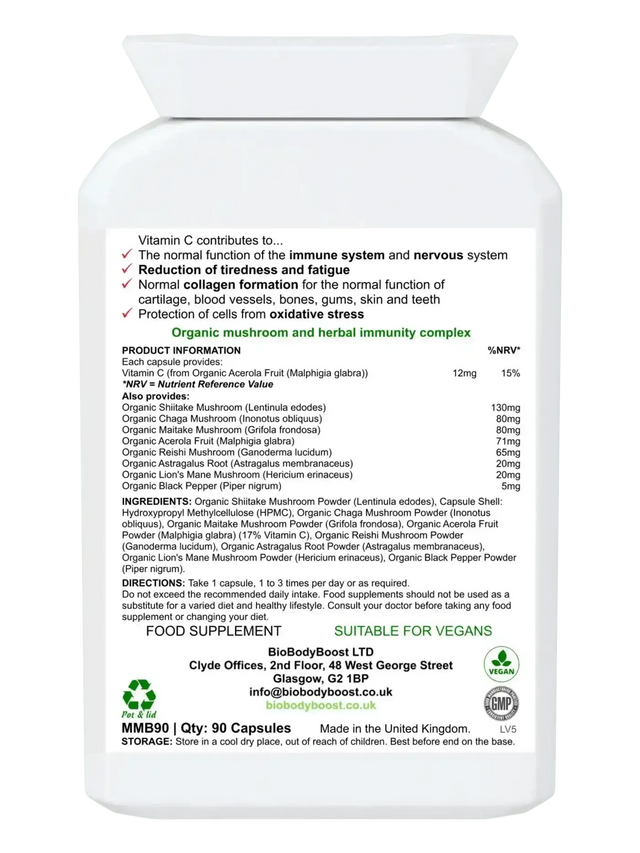
Every species declared as fruiting body with its exact dose — the detail most blends leave off the label.
A detail the wellness trend rarely explains: mushroom supplements can be made from the fruiting body (the mushroom itself) or from mycelium grown on grain substrate, then including the grain in the final product without always disclosing it clearly. Fruiting body is generally considered the more concentrated, relevant form for the bioactive compounds discussed above — mycelium-on-grain products can carry a substantial proportion of starch rather than mushroom material, diluting the actual dose.
What we'd actually check before buying any mushroom product
- Fruiting body vs mycelium — stated clearly, not buried
- Individual species doses declared — not just a proprietary blend total
- Organic certification — mushrooms take up compounds from their growing substrate, making this more relevant than for most crops
- Halal/kosher certification — genuinely rare in this specific category; several well-known UK mushroom brands carry neither
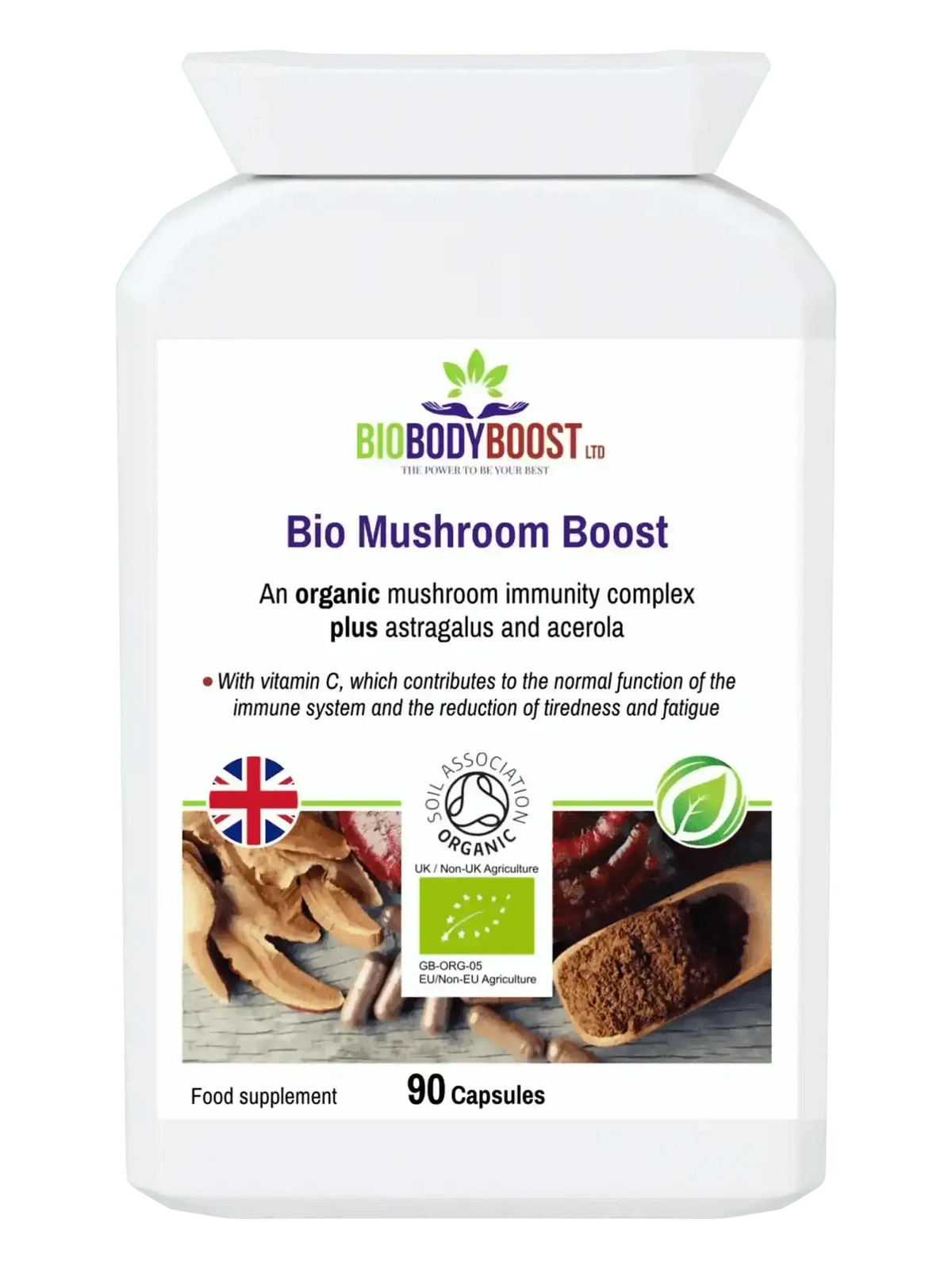
Our Bio Mushroom Boost declares every dose (shiitake 130mg, chaga and maitake 80mg each, reishi 65mg, lion's mane 20mg) as fruiting body, Soil Association organic certified, halal and kosher approved.
Frequently Asked Questions
Can supplement companies legally say what mushrooms do for your health?
No specific health claim for mushrooms or most botanicals is currently authorised under UK and EU law. Any product page or advert claiming a specific mushroom "boosts immunity" or "improves focus" is making an unauthorised claim. This is why genuinely compliant product pages can only state doses, species and certifications rather than benefits.
Which mushroom has the strongest evidence base?
Shiitake has the longest and deepest research history, partly because of its status as a major food crop globally rather than solely a supplement ingredient. Reishi has the longest traditional-use history. Lion's mane has a genuinely distinct, actively researched mechanism (nerve growth factor) that's driving most of the current trend specifically.
Is mycelium-grown mushroom powder as good as fruiting body?
Fruiting body is generally considered more concentrated in the compounds studied for these mushrooms. Mycelium grown on grain substrate can retain a significant proportion of starch from that substrate in the final product, which isn't always clearly disclosed — worth checking specifically on any product you're considering.
This article is for general information and does not constitute medical advice. Speak to a healthcare professional before starting any new supplement, particularly if pregnant, breastfeeding, immunosuppressed, or managing a diagnosed health condition.
BioBodyBoost — Halal Certified UK Supplements
Use code HALAL10 for 10% off your first order — halal approved under UHA Certificate Ref. 24623, vegan, UK made. Shop Immunity UK →