Bladderwrack, kelp, Ascophyllum nodosum, Fucus vesiculosus — seaweed appears across UK supplements as a "natural" source of iodine, marketed as a gentler alternative to synthetic potassium iodide. What almost no product page tells you is a detail that genuinely matters if you're relying on it: seaweed iodine content varies naturally and significantly, batch to batch, with no way to know the actual dose from the label alone.
Why Seaweed Iodine Isn't a Fixed Number
Unlike a synthetic ingredient made to a precise specification, seaweed is a wild-harvested (or farmed) plant, and its iodine content reflects the water it grew in. Species, geographic location, season, and even depth all affect how much iodine a given batch of bladderwrack or kelp actually contains. Two bottles labelled identically — "500mg bladderwrack" — can deliver meaningfully different actual iodine doses, because 500mg of plant material isn't the same as 500mg of iodine; it's 500mg of a plant whose iodine concentration moves around.
This is precisely why an iodine-focused product that actually declares its iodine content in micrograms (µg), separately from the seaweed weight, is doing something most competitors skip.
Why This Matters More Than It Sounds
Iodine is essential — it contributes to normal thyroid hormone production, normal thyroid function, normal energy-yielding metabolism and normal cognitive function, all EU-authorised claims. But the thyroid is also unusually sensitive to both too little and too much iodine. Excess iodine intake, particularly from unpredictable seaweed sources, has been associated in research with thyroid dysfunction in susceptible people — the opposite of the wellness effect the product is marketed for.
The UK NRV for iodine is 150µg. The EU-set tolerable upper intake level sits considerably higher, but seaweed-based supplements have, in documented cases, delivered iodine intakes far above expected label amounts due to this natural variability — which is the entire reason this caution exists.
Who Should Be Especially Careful
- Anyone with a diagnosed thyroid condition (hypothyroidism, hyperthyroidism, Hashimoto's, Graves') — iodine supplementation should only be adjusted under medical guidance in these cases.
- Anyone on thyroid medication (levothyroxine and similar) — seaweed iodine can interact with dosing.
- Pregnant and breastfeeding women — iodine needs shift, and both insufficient and excessive intake carry real considerations; this is a GP conversation, not a self-directed one.
- Anyone taking multiple iodine-containing products at once — a seaweed supplement plus an iodine-fortified multivitamin plus dietary sources (dairy, iodised salt, fish) can stack higher than any single label suggests.
What a Responsibly Formulated Product Looks Like
Look for: the actual iodine content stated in micrograms as a percentage of NRV, not just the seaweed weight; a named species (Ascophyllum nodosum, Fucus vesiculosus) rather than vague "kelp blend"; and a clear thyroid caution on the label — its absence is itself a red flag, not a reassurance.
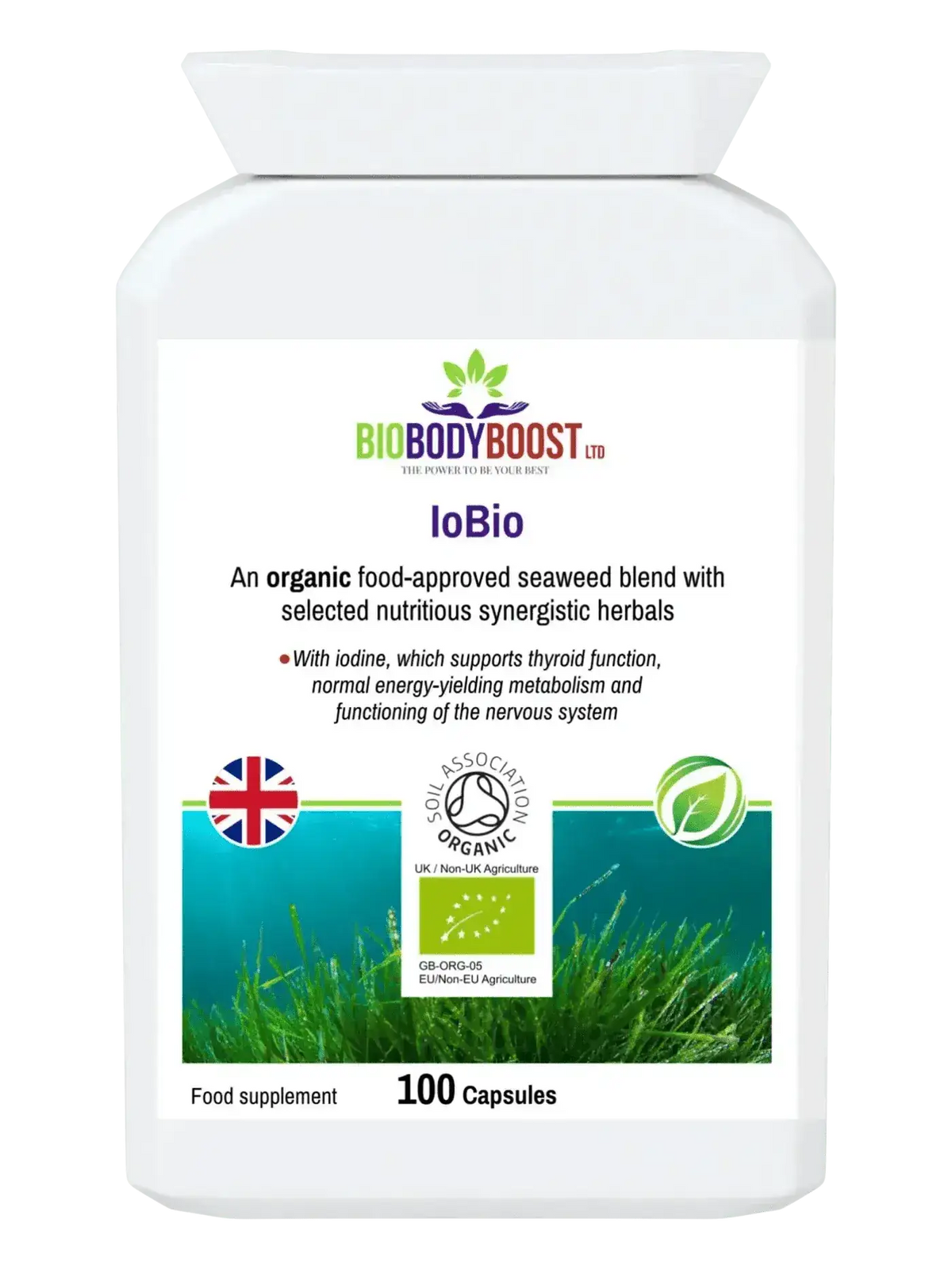
IoBio combines Ascophyllum nodosum and Fucus vesiculosus with supporting botanicals, and we state plainly: consult your GP before use if you have a thyroid condition, are pregnant or breastfeeding, or take thyroid medication. We'd rather you knew that before buying than found out after.
FAQs
Is bladderwrack safe for the thyroid?
For most healthy adults without thyroid conditions, moderate seaweed-based iodine intake is generally well tolerated. For anyone with a diagnosed thyroid condition or on thyroid medication, it needs a GP conversation first — the variability in content makes self-dosing riskier than it looks.
How much iodine is in bladderwrack supplements?
It varies by batch, species, and harvest conditions — which is exactly the point of this article. Check whether the label states actual iodine content in micrograms rather than just seaweed weight in milligrams.
Can too much iodine from seaweed cause thyroid problems?
Yes — both very low and very high iodine intake can affect thyroid function, and seaweed's natural variability makes consistently accurate dosing harder than with synthetic iodine sources.
Should I take bladderwrack if I'm on thyroid medication?
Not without checking with your GP or pharmacist first — additional iodine from any source can affect thyroid medication dosing.
Browse the full Halal Vitamins UK collection.
Food supplements should not replace a varied diet. Consult your GP before use if you have a thyroid condition, are pregnant or breastfeeding, are taking thyroid medication, or are managing a diagnosed condition.