Search "best vegan probiotics UK" and most results just check whether the capsule shell is HPMC instead of gelatine, call it a day, and move on. That's only half the question. The bacteria themselves have to come from somewhere too — and that's the part almost nobody checks.
Why "Vegan Capsule" Isn't the Whole Story
A vegan capsule shell (HPMC rather than gelatine) is the easy, visible part of vegan probiotic sourcing — and the part every brand advertises. What's much less visible is the growth medium: the substance bacterial strains are cultured on before they're freeze-dried into your capsule. Many commercial probiotic strains are traditionally cultured on dairy-derived media, because that's historically the cheapest and most effective growth substrate for these bacteria. A plant-based capsule around a dairy-cultured strain is not, strictly, a vegan product — even though the label often implies otherwise.
What to Actually Check
- Capsule shell material — HPMC or "vegetable capsule," not gelatine. The easy check.
- Culture/growth medium — ask the brand directly if it isn't stated. Dairy-free growth media exist and are increasingly used, but they're not universal, and few labels volunteer this detail unprompted.
- An explicit vegan claim — a brand that has verified its full supply chain, not just the capsule, will usually say "vegan" plainly rather than "vegetarian capsule" or staying silent on the point.
- No animal-derived prebiotics or fillers — some formulas add ingredients like lactose as a filler or stabiliser, which isn't vegan regardless of the bacterial strain's own sourcing.
Our Two Options
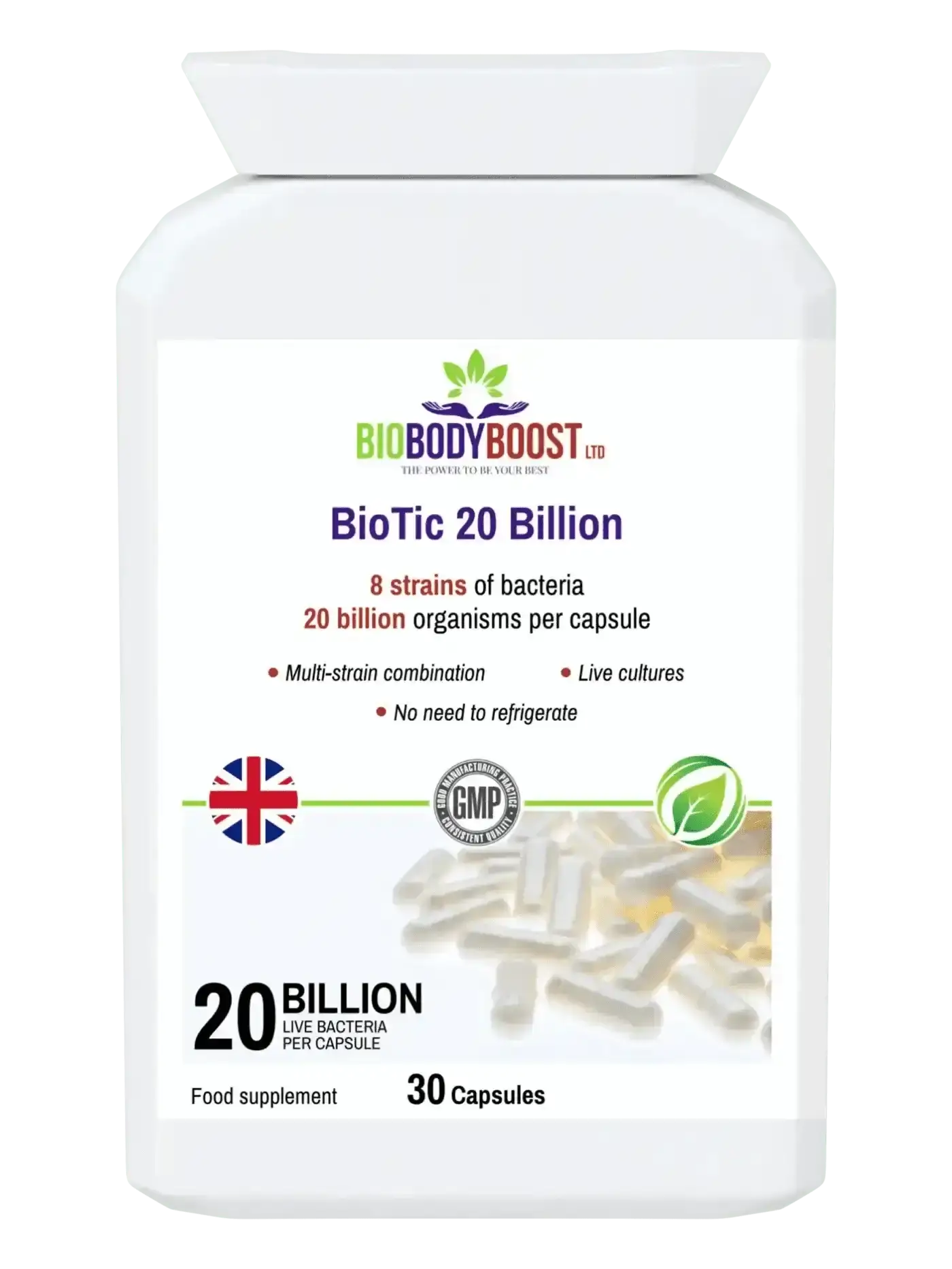
BioTic 20 Billion is our high-strength option: 8 strains at 20 billion CFU, verified vegan, halal approved, shelf-stable — no refrigeration needed. For a gentler introduction or sensitive users building up gradually, BioTic 4 Billion provides the same 8-strain spread at a lower daily dose. Both use HPMC capsules and dairy-free sourcing throughout, not just at the capsule stage.
Dairy-Free vs Vegan — Not Always the Same Claim
Worth knowing: "dairy-free" and "vegan" aren't automatically interchangeable on a probiotic label. A product can be free of dairy as a finished-product allergen statement while still having used a dairy-based growth medium earlier in production, if trace dairy proteins were fully removed during processing. True vegan certification checks the entire production chain, not just the final allergen panel — which is why a specific vegan claim, not just "dairy-free," is what to look for if that's your requirement.
Strain Count vs Strain Quality
Vegan sourcing aside, more strains isn't automatically better — a well-studied 4-8 strain formula at an adequate CFU count generally outperforms an unfocused 15-strain blend at token doses per strain. Check the CFU count is stated per strain or clearly for the total blend, not hidden behind a vague "billions of live cultures."
FAQs
Are all probiotics with vegetarian capsules vegan?
No. The capsule shell is only one part of the sourcing chain — the bacterial growth medium is the part most labels don't disclose, and it's often dairy-based even when the capsule itself is plant-derived.
Is dairy-free the same as vegan for probiotics?
Not necessarily. A finished product can be labelled dairy-free based on the final allergen panel while having used dairy-derived growth media earlier in production. Look for an explicit vegan claim if that distinction matters to you.
How many strains should a vegan probiotic have?
There's no fixed ideal number — a focused, well-dosed 4-8 strain formula is generally a stronger choice than an unfocused blend spread thin across many strains. CFU count and strain quality matter more than strain count alone.
Do vegan probiotics need refrigeration?
Not necessarily — shelf-stable strains exist regardless of vegan status. Check the specific product rather than assuming either way.
Browse the full Gut Health UK collection.
Food supplements should not replace a varied diet. Consult your GP before use if pregnant, breastfeeding, taking medication, or managing a diagnosed condition.