Quick answer: adaptogens are herbs and roots that help the body resist physical and psychological stress without producing stimulant or sedative effects — they modulate rather than override the stress response. The three most clinically evidenced are ashwagandha (chronic stress, sleep, cortisol, testosterone in stressed men), rhodiola (acute mental fatigue, burnout, rapid-onset cognitive performance), and Korean Panax ginseng (sustained energy, cognitive function, libido). They have different mechanisms and different best-fit applications — combining them addresses more stress pathways simultaneously than any single one alone. All three are halal: all are plant roots with no animal involvement.
What makes something an adaptogen
The term “adaptogen” was coined by Soviet pharmacologist Nikolai Lazarev in 1947 and refined by his colleague Israel Brekhman. An adaptogen must: (1) be non-toxic at normal doses; (2) produce a non-specific stress resistance that raises resistance to a wide range of stressors; (3) normalise bodily functions regardless of the direction of stress (it can raise or lower cortisol as needed, rather than just suppressing it). Most adaptogens work via the HPA (hypothalamic-pituitary-adrenal) axis and sympathoadrenal system — the two primary stress response pathways. The NHS identifies chronic stress as a significant risk factor for multiple health conditions — adaptogens address the physiological stress response rather than the psychological trigger.
Ashwagandha (Withania somnifera) KSM-66 — best for chronic stress, sleep and testosterone
Mechanism: withanolides (the active steroidal lactones) modulate cortisol release via HPA axis normalisation. They also have GABA-mimetic activity (explaining the sleep benefit) and stimulate testosterone synthesis by reducing cortisol’s suppression of the HPG axis.
What research shows:
- Langade et al. (2019, Medicine, RCT, n=60): KSM-66 600mg/day for 8 weeks significantly reduced cortisol by 23% vs placebo, significantly improved sleep quality, sleep onset latency and total sleep time.
- Wankhede et al. (2015, JISSN, RCT, n=57 male resistance trainers): KSM-66 significantly increased testosterone, muscle recovery and strength vs placebo.
- Choudhary 2017 JDS (n=64): significant reduction in anxiety and perceived stress on PSS scale vs placebo.
Best for: chronic stress and burnout, poor sleep, wired-but-tired pattern, testosterone support in stressed men, HPA axis dysregulation. Onset: 4–8 weeks for full effect. Halal: plant root, no intoxicant properties.
Rhodiola rosea (Golden Root) — best for acute mental fatigue and burnout
Mechanism: salidroside and rosavins (the active compounds) inhibit monoamine oxidase (MAO), reducing breakdown of dopamine, serotonin and norepinephrine. They also modulate the stress-activated protein kinase JNK. The anti-fatigue effect appears rapidly — faster than ashwagandha — making rhodiola the adaptogen of choice when fast relief is needed.
What research shows:
- Olsson et al. (2009, Planta Medica, RCT, n=60 stressed adults): rhodiola significantly improved burnout symptoms, fatigue, cognitive function and cortisol response to awakening vs placebo at 4 weeks.
- Darbinyan et al. (2000, Phytomedicine, RCT, n=56 physicians on night shift): rhodiola significantly improved mental fatigue and total mental performance on 20-measure cognitive test battery vs placebo — with effects apparent at 2 weeks.
- A 2012 Phytomedicine meta-analysis confirmed rhodiola significantly reduces fatigue and stress in multiple populations.
Best for: acute mental fatigue, high-demand work periods, burnout recovery, cognitive performance under stress, shift workers. Faster onset than ashwagandha (effects within 1–2 weeks). Halal: plant root, no intoxicant properties.
Korean Panax Ginseng — best for sustained energy and cognitive performance
Mechanism: ginsenosides (the active compounds) have multi-target effects: HPA axis modulation, nitric oxide-driven vasodilation (improving blood flow and energy delivery), antioxidant activity, and modulation of NMDA and nicotinic acetylcholine receptors relevant to cognitive function.
What research shows:
- Reay et al. (2006, Psychopharmacology, RCT): Panax ginseng significantly improved working memory and accuracy on a sustained attention task vs placebo.
- A 2010 Cochrane-adjacent systematic review (9 RCTs) found Panax ginseng consistently improved cognitive performance across studies.
- For erectile dysfunction: a 2008 British Journal of Clinical Pharmacology systematic review found Korean ginseng significantly improved erectile dysfunction scores across 7 RCTs.
Best for: sustained energy without stimulant effect, cognitive clarity and focus, general vitality, libido in men. Longer-term use (8+ weeks) for most benefits. Halal: plant root.
Head-to-head: which adaptogen for your situation
| Situation | First choice | Why |
|---|---|---|
| Chronic stress, can’t switch off, poor sleep | Ashwagandha KSM-66 | HPA axis normalisation, 23% cortisol reduction, GABA sleep mechanism |
| Acute burnout, mental exhaustion, need fast help | Rhodiola rosea | Faster onset (1–2 weeks), MAO inhibition, anti-fatigue RCT evidence |
| Sustained energy + cognitive focus | Panax ginseng | Consistent cognitive performance evidence, nitric oxide energy delivery |
| Low testosterone from stress + poor sleep | Ashwagandha + zinc | Cortisol reduction liberates testosterone; zinc supports synthesis directly |
| Libido without testosterone effect | Maca + ginseng | Complementary endocannabinoid + vasoactive mechanisms |
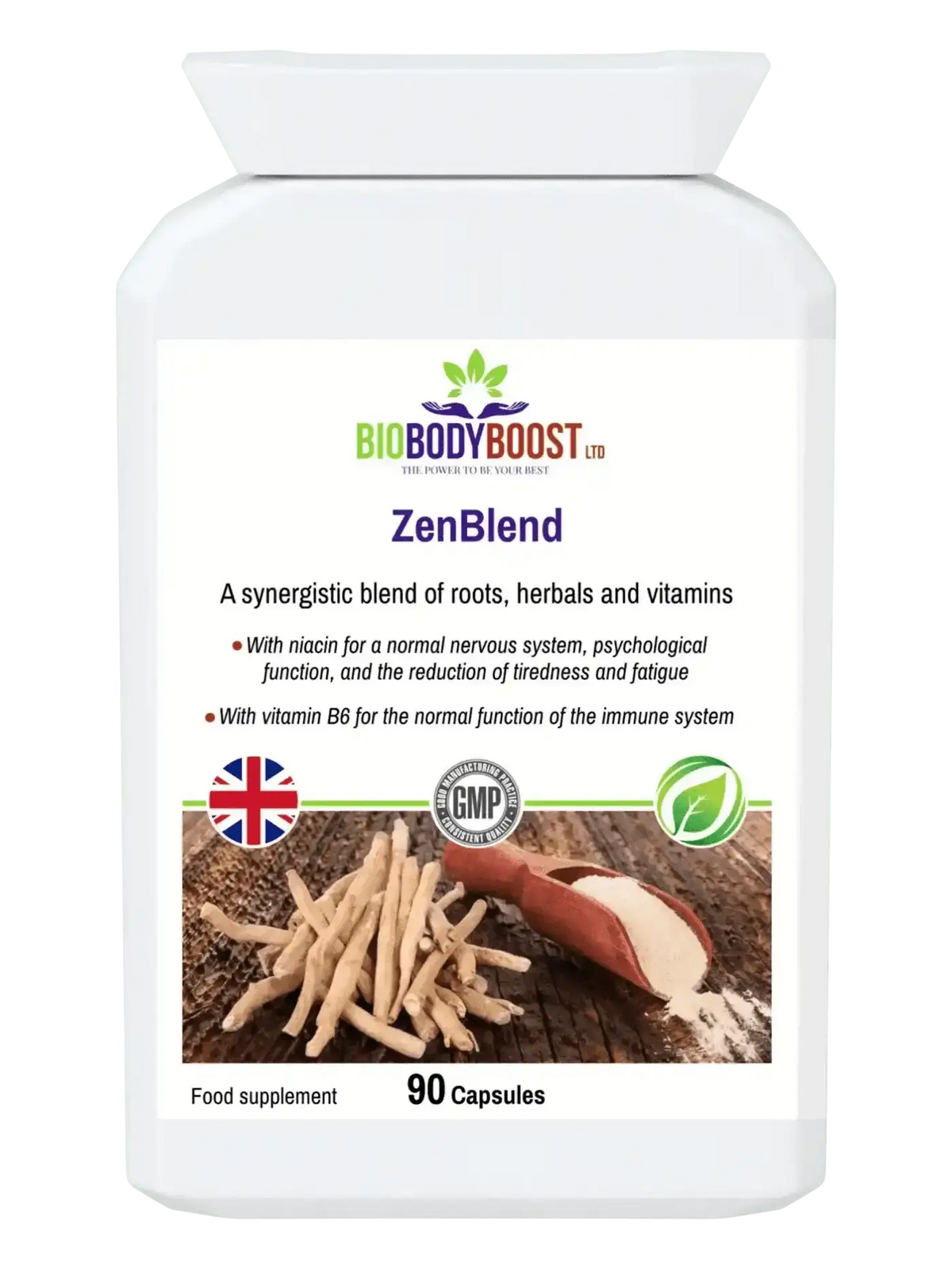
| All-round stress + cognitive + energy | ZenBlend (all three) | KSM-66 + rhodiola + ginseng + L-theanine + niacin in one formula |
Are adaptogens halal?
Yes — ashwagandha, rhodiola and Panax ginseng are all plant roots or rhizomes with no animal involvement and no intoxicant properties. None produce impairment of mental faculties or euphoria. All three have long histories of use in traditional medicine systems including Unani (Islamic medicine). The halal compliance check for adaptogen supplements is the capsule shell (HPMC not gelatine) and manufacturing environment. Full ashwagandha halal guide here.
ZenBlend combines KSM-66 ashwagandha (600mg equiv), rhodiola, Korean Panax ginseng, L-theanine and niacin (B3) — the full adaptogen stack in one halal certified, vegan, HPMC capsule formula. Browse the full Energy and Focus UK collection.
What is the best adaptogen supplement UK?
There is no single “best” — the right choice depends on the primary problem. For chronic stress and sleep: ashwagandha KSM-66 (Langade 2019 RCT: 23% cortisol reduction, significant sleep improvement). For acute mental fatigue and burnout: rhodiola rosea (Olsson 2009 RCT: significant burnout and fatigue improvement at 4 weeks, faster onset than ashwagandha). For sustained cognitive energy: Korean Panax ginseng (Reay 2006 RCT, systematic review of 9 RCTs). For a comprehensive stress + cognitive + energy stack: ZenBlend combines all three with L-theanine and niacin in one halal-certified formula.
Can I take ashwagandha and rhodiola together?
Yes — ashwagandha and rhodiola address stress via different mechanisms (HPA axis normalisation vs MAO inhibition and JNK modulation) and complement rather than compete. This is the rationale behind ZenBlend’s formula, which combines both. The combination provides both the longer-term cortisol normalisation of ashwagandha and the faster-onset anti-fatigue action of rhodiola. No significant adverse interactions are known between them at typical supplemental doses.
Are adaptogens halal UK?
Yes — ashwagandha, rhodiola and Panax ginseng are plant roots with no animal content and no intoxicant properties. They have long histories of use in Islamic Unani medicine. No major scholarly body has ruled them haram. The compliance check is the capsule shell (HPMC = halal; porcine gelatine = haram) and manufacturing environment certification. ZenBlend uses HPMC capsules and carries full third-party halal certification from UHA (Universal Halal Authority), Cert Ref 24623.
How long do adaptogens take to work?
Rhodiola: 1–2 weeks for anti-fatigue benefit (fastest onset). Ashwagandha: 4–8 weeks for cortisol normalisation and sleep improvement (Langade 2019: measured at 8 weeks). Korean Panax ginseng: variable, cognitive effects measurable acutely in some trials and over 8+ weeks for sustained benefit. L-theanine (in ZenBlend): acute effect within 30–60 minutes for calm alertness. For the chronic stress and sleep application that most people start adaptogens for, commit to a minimum 8-week trial of consistent daily use before assessing.