Important safety warning. Always take fibre supplements with plenty of water — minimum 250ml per heaped teaspoon. Risk of choking if swallowed dry or with inadequate liquid. Not suitable for people with swallowing difficulties. BioSlim may contain traces of mustard and sesame.
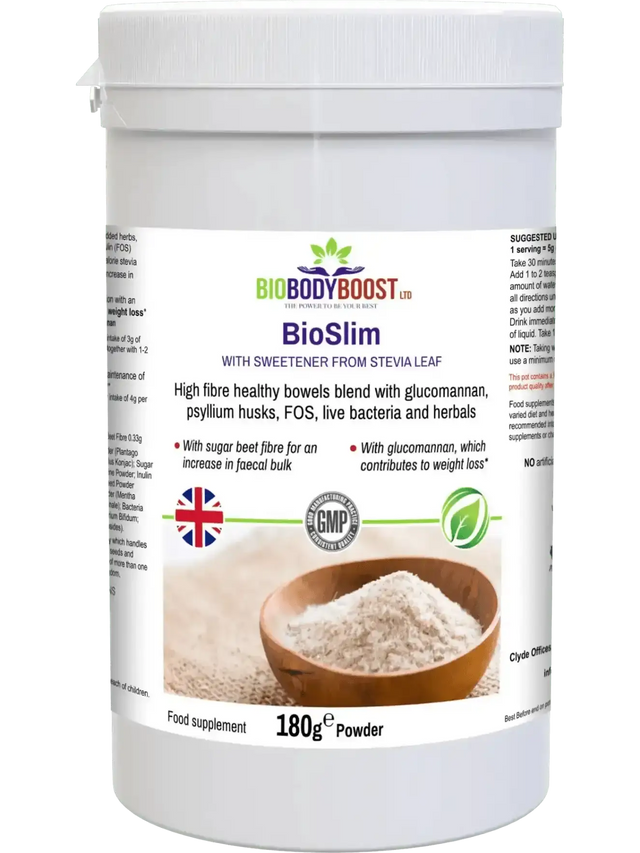
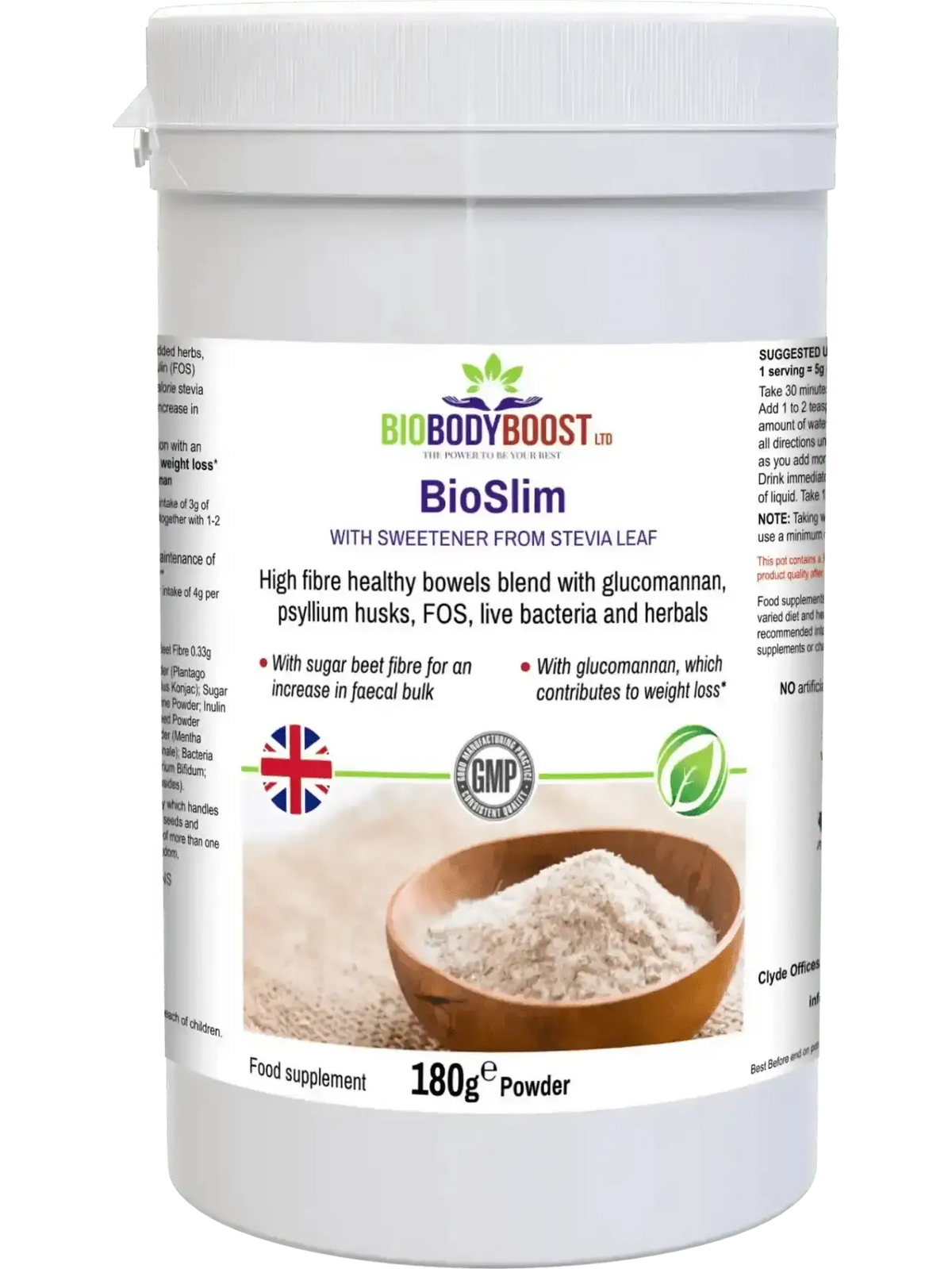
Quick answer: the average UK adult consumes approximately 18g fibre daily against the NHS recommendation of 30g. Most UK fibre supplements are single-ingredient psyllium or generic glucomannan. BioSlim provides four fibre sources — psyllium husks, glucomannan, sugar beet fibre and inulin — with Lactobacillus acidophilus, Bifidobacterium bifidum, L-glutamine, fennel, peppermint and ginger, carrying three EFSA-authorised claims. No other UK halal-certified fibre supplement combines this evidence base, claim structure and microbiome support in one product.
Why fibre is the UK’s most widespread nutritional gap
The NHS targets 30g dietary fibre daily for adults — a target met by fewer than 10% of UK adults. UK NDNS data shows average adult fibre intake is approximately 18g/day. The consequences of chronic fibre insufficiency: irregular bowel function, elevated LDL cholesterol (soluble fibre reduces LDL via bile acid sequestration), impaired gut microbiome diversity (fibre is the primary prebiotic substrate for beneficial bacteria), higher post-meal blood glucose peaks, and poorer satiety contributing to weight management difficulty.
The three EFSA-authorised claims behind BioSlim
1. Glucomannan and weight management
Glucomannan is the only dietary fibre with an EU/UK-retained EFSA-authorised weight management claim: “Glucomannan in the context of an energy-restricted diet contributes to weight loss.” The effective dose is specifically stated in the EFSA claim: 3g glucomannan daily in three separate 1g doses with 1–2 glasses of water, taken before main meals. This specificity matters — products providing less than 1g per dose cannot legitimately carry this claim. BioSlim provides 1.05g glucomannan per 5g serving — at three servings daily, the exact claim-qualifying dose is met.
What research shows: Sood et al. (2008, American Journal of Clinical Nutrition, meta-analysis of 14 RCTs) found glucomannan supplementation significantly reduced fasting blood glucose, total cholesterol, LDL and triglycerides vs placebo. The satiety mechanism: glucomannan forms a highly viscous gel in the stomach and small intestine (absorbing 50x its weight in water), significantly slowing gastric emptying and extending satiety between meals.
2. Glucomannan and normal blood cholesterol
Separate EFSA-authorised claim: glucomannan contributes to maintenance of normal blood cholesterol levels at 4g daily. Mechanism: the viscous glucomannan gel in the small intestine binds bile acids (which are made from cholesterol) and prevents their reabsorption, forcing the liver to synthesise new bile acids from circulating LDL. This is the same mechanism by which psyllium reduces LDL, but glucomannan’s exceptional viscosity makes it one of the most potent soluble fibres for this effect.
3. Sugar beet fibre and bowel regularity
EFSA-authorised claim: sugar beet fibre contributes to an increase in faecal bulk. The insoluble components of sugar beet fibre absorb water in the large intestine increasing stool volume and transit speed; the soluble components are fermented by gut bacteria, increasing bacterial mass and contributing further to stool bulk. BioSlim provides 0.33g sugar beet fibre per 5g serving.
Psyllium — the complementary soluble and insoluble fibre
Psyllium husk (Plantago ovata) is unique in being both soluble and insoluble — the outer husk is soluble (forming gel in water), the inner seed is insoluble (adds bulk). This dual action makes psyllium uniquely effective for both constipation (bulk forming) and diarrhoea (gel absorbs excess water). McRorie (2015, JAAPA systematic review) confirmed psyllium significantly improved stool consistency, frequency and transit time — making it one of the most comprehensively evidenced single dietary fibres available. Psyllium is the main ingredient and primary fibre source in BioSlim by volume.
Inulin (FOS) and the microbiome
Fructo-oligosaccharides (FOS/inulin) are soluble prebiotic fibres fermented selectively by Bifidobacteria and Lactobacillus — the beneficial gut bacteria. Unlike the other fibres in BioSlim which have structural and cholesterol functions, inulin’s primary value is microbiome: it selectively feeds beneficial bacteria, increasing their relative abundance and the short-chain fatty acids (butyrate, propionate, acetate) they produce. Butyrate is the primary fuel for colonocytes (colon cells) and is anti-inflammatory at the gut wall level.
L-glutamine — gut barrier fuel
Intestinal epithelial cells (enterocytes) use L-glutamine as their primary fuel source rather than glucose. Adequate L-glutamine supports enterocyte energy supply, maintains tight junction protein expression (the molecular basis of gut barrier integrity) and reduces intestinal permeability (“leaky gut”) under stress conditions. BioSlim includes L-glutamine alongside the fibre complex for this gut barrier rationale.
How to use BioSlim correctly
For bowel regularity: 1 serving (5g — approximately 1 heaped teaspoon) mixed into a large glass of water, taken at the same time daily. Increase fluid intake throughout the day. Consistency over 2–4 weeks produces the best regularity benefit.
For the EFSA weight loss claim: 3 servings daily (one before each main meal), 30 minutes before eating. Mix 5g into a quarter glass of water, stir to a paste, then fill the glass. Drink immediately and follow with another full glass of water. Within an energy-restricted diet.
For cholesterol management: 4g glucomannan daily (approximately 4 servings), in two doses before the two main meals.
BioSlim — 180g powder, 36 servings at 5g each. Halal and kosher certified. Vegan. UK GMP. Peppermint flavoured for palatability. Browse the full Gut Health UK collection. Pair with BioTic 20 Billion for comprehensive microbiome support alongside the prebiotic fibre base.
Is psyllium husk halal UK?
Yes — psyllium (Plantago ovata seed husks) is a plant fibre with no animal involvement. Inherently halal, vegan and kosher. BioSlim provides psyllium as the primary fibre source in HPMC-equivalent powder format with full third-party halal and kosher certification covering the full formula including the sugar beet fibre, glucomannan (konjac root — also plant) and inulin (chicory root). The live cultures (Lactobacillus acidophilus, Bifidobacterium bifidum) are produced by bacterial fermentation with halal-certified growth media.
How long does psyllium husk take to work?
For bowel regularity: most people notice improvement in stool consistency and frequency within 1–3 days of consistent use with adequate fluid intake. Full regularity benefit typically establishes at 1–2 weeks. For cholesterol reduction (glucomannan EFSA claim pathway): 4–8 weeks of consistent use at the claim dose (4g glucomannan daily). For weight management support (glucomannan satiety effect): the gel forms before each meal within 30 minutes of ingestion, so satiety benefit is more immediate — but meaningful weight loss requires sustained use alongside a calorie-reduced diet over weeks.
Does glucomannan really help with weight loss?
In the context of a calorie-restricted diet, yes — glucomannan has the only EFSA-authorised weight loss claim of any dietary fibre. The mechanism is satiety: glucomannan absorbs approximately 50x its weight in water, forming a viscous gel that significantly slows gastric emptying and extends satiety between meals, reducing calorie intake at subsequent meals. Sood 2008 meta-analysis (14 RCTs) confirmed significant weight reduction alongside significant improvements in fasting glucose, total cholesterol and LDL. Glucomannan is not a fat-burning supplement — it is a satiety and metabolic health tool that supports calorie reduction adherence.