Quick answer — including the legal position most brands won’t tell you: NMN (nicotinamide mononucleotide) is the most searched supplement in the UK in 2026. It is also one of the most misrepresented. NMN is not currently authorised as a novel food in Great Britain or the EU — meaning legally it should not be sold as a food supplement without Foods Standards Agency authorisation, which is still pending. Many retailers sell it anyway. Nicotinamide riboside (NR) is authorised in Great Britain at 300mg/day. Niacin (nicotinamide/vitamin B3) is the established legal UK NAD+ precursor — available in food supplements with EU-authorised health claims — and has been used since the 1930s. This guide covers the science honestly, the law clearly and the practical options for UK consumers.
What NAD+ is and why it matters
NAD+ (nicotinamide adenine dinucleotide) is a coenzyme involved in over 500 enzymatic reactions in every cell. Its two most important roles: (1) primary electron carrier in the mitochondrial electron transport chain — directly required for ATP energy production; (2) required substrate for sirtuins (SIRT1–7) and PARPs — proteins that repair DNA, regulate gene expression and control cellular stress responses. These are the longevity-relevant mechanisms that have driven scientific interest.
Imai and Guarente (2014, Trends in Cell Biology) reviewed evidence showing NAD+ declines approximately 50% between young adulthood and middle age across multiple tissues, correlating with declining mitochondrial function, accumulating DNA damage and reduced sirtuin activity. This is the scientific foundation for NAD+ supplementation interest.
The UK legal position — what most NMN articles omit
NMN: not authorised in Great Britain or EU
NMN is a novel food in the UK because it was not widely consumed as a food before May 1997. The UK Food Standards Agency lists NMN as “under assessment” in the Novel Foods Catalogue — authorisation applications have been submitted but approval has not been granted. Without this authorisation, NMN legally should not be sold as a food supplement in Great Britain. Many UK and international retailers sell it in a regulatory grey area. UK consumers purchasing NMN are buying a product whose legal status is unresolved.
NR (Nicotinamide Riboside): authorised at 300mg/day
NR has received novel food authorisation in Great Britain with a maximum adult intake of 300mg/day. It is not authorised during pregnancy or lactation. NR is legal to sell in UK food supplements at this dose. It reliably raises blood NAD+ in human trials.
Niacin (Vitamin B3 / Nicotinamide): fully legal, EU-authorised claims
Nicotinamide and nicotinic acid are established nutrients with EU/UK-retained authorised health claims. They convert to NAD+ via the Preiss-Handler and salvage pathways and have done so in human biology since niacin was identified as the cure for pellagra (severe NAD+ deficiency disease) in the 1930s. Legal, inexpensive, widely available. The EU-authorised claims include: “niacin contributes to normal energy-yielding metabolism” and “niacin contributes to the reduction of tiredness and fatigue.”
What the human evidence shows
NMN trials
Huang et al. (2022, Frontiers in Aging, RCT, n=80 middle-aged and older adults) found NMN 300mg/day for 60 days significantly increased blood NAD+ levels vs placebo, with improvements in physical performance and fatigue measures. Yoshino et al. (2021, Science, n=25 postmenopausal women with prediabetes) found NMN 250mg/day significantly improved skeletal muscle insulin sensitivity. Honest caveat: blood NAD+ rises reliably. Downstream benefits (longevity extension, disease prevention) are not yet demonstrated in long-term human RCTs. These are promising Phase I/II findings.
NR trials
Multiple trials confirm NR at 250–1,000mg/day significantly raises blood NAD+. Same limitation as NMN: the biomarker rises, but meaningful clinical outcomes at scale are still being established in longer trials.
Is NMN halal?
NMN is typically produced by enzymatic synthesis from nicotinamide and ribose (plant/microbial fermentation). No animal involvement. Inherently halal from a source standpoint. The compliance checks: (1) capsule shell — many NMN products use gelatine softgels for stability; look for HPMC delayed-release capsules; (2) manufacturing environment certification; (3) third-party halal certification of the complete formula. NR and niacin are also inherently halal. The UK legal position (not authorised novel food for NMN) is separate from halal compliance.
What BBB provides for NAD+ and mitochondrial support
BioBodyBoost does not sell NMN (not authorised in UK as novel food) or standalone NR. The BBB approach to NAD+ and mitochondrial function operates via legal, EU-authorised ingredients:
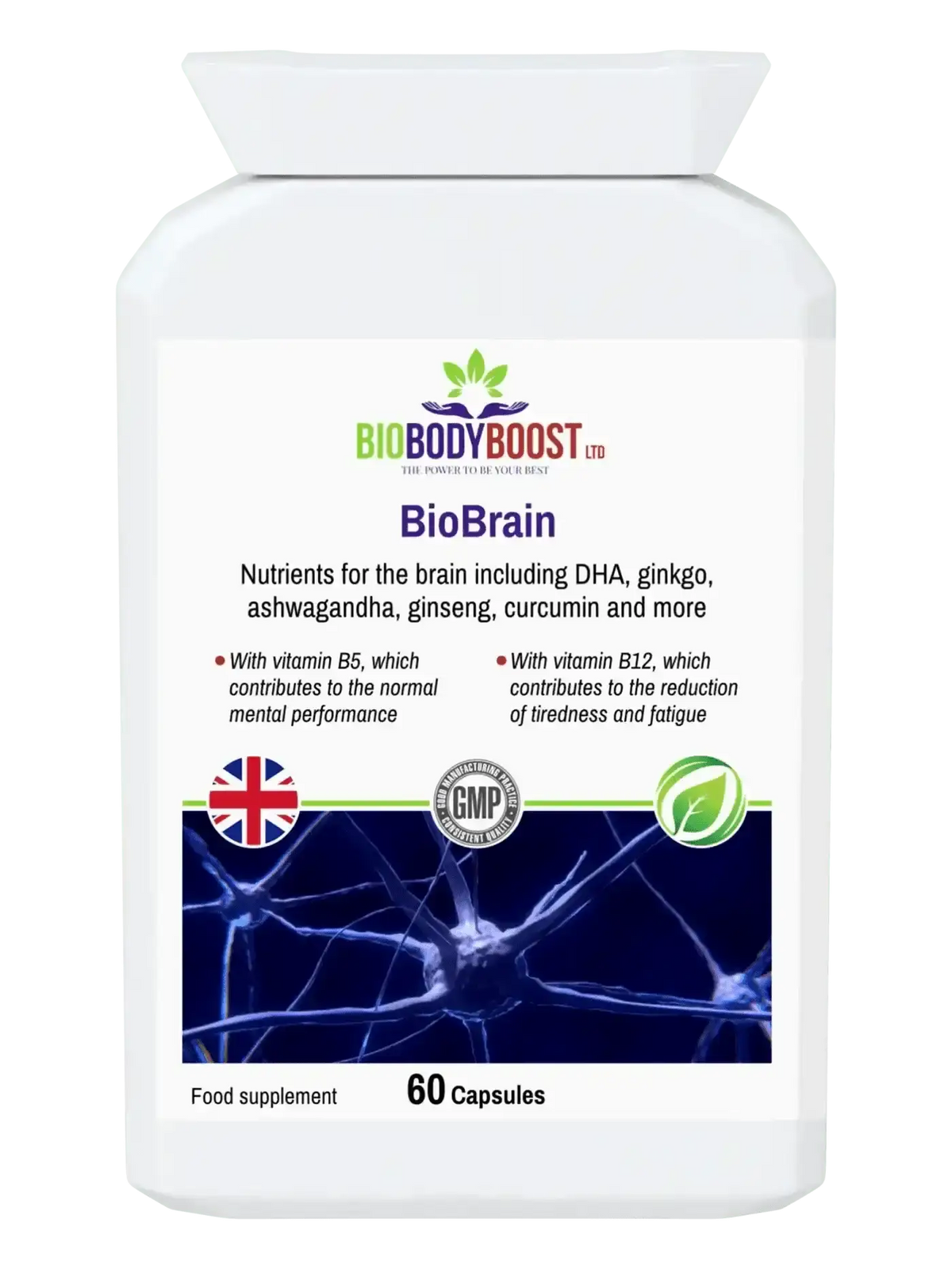
- BioBrain — niacin 100% NRV as the established NAD+ precursor, alongside N-Acetyl L-Carnitine (mitochondrial fatty acid transport), phosphatidylserine, bacopa monnieri, Korean Panax ginseng, ginkgo biloba, DHA from algae, B12, B6. The comprehensive cognitive and mitochondrial support formula. Halal certified, vegan.
- Daily Multi Complex — niacin alongside the full B vitamin co-factor matrix for energy-yielding metabolism. The nutritional foundation.
- See the full mitochondria and longevity over 45 guide for the complete halal cellular energy stack.
NMN vs niacin: is there a practical difference?
At pharmacological doses (300–500mg NMN or NR daily), these supplements raise blood NAD+ significantly above what standard-dose niacin achieves. Whether this blood NAD+ increase translates to meaningful clinical benefit in people without a specific NAD+ deficiency condition is still being established. Niacin at nutritional doses (16–18mg NRV) provides the B3 cofactor for baseline NAD+-dependent enzyme function — it is not equivalent to a 300–500mg NAD+ booster supplement. The honest framing: BioBrain provides niacin for baseline NAD+-dependent function alongside a comprehensive mitochondrial and cognitive formula — not as an NMN replacement at pharmacological doses.
Is NMN legal in the UK?
Not currently — NMN is listed as “under assessment” in the UK Food Standards Agency Novel Foods Catalogue. Novel food authorisation is required for ingredients not widely consumed before May 1997 — NMN qualifies as a novel food. Authorisation applications have been submitted but not yet approved. Legally, NMN should not be sold as a food supplement in Great Britain without this authorisation. Many retailers sell it in a regulatory grey area. NR is authorised at 300mg/day. Niacin is fully authorised with EU-retained health claims.
Does NMN actually work?
NMN reliably raises blood NAD+ — confirmed by Huang 2022 (Frontiers in Aging, n=80) and Yoshino 2021 (Science, n=25) among others. Whether raising blood NAD+ produces meaningful longevity or performance benefits in humans at scale is still being established in longer-term RCTs. The mechanism is scientifically compelling; the clinical outcome evidence is early-phase. NMN should not be marketed as a proven longevity or anti-aging treatment based on current human evidence — and the UK legal position means any UK NMN retailer is selling in a regulatory grey area regardless of evidence quality.
What is the halal alternative to NMN in the UK?
For legal UK NAD+ pathway support: (1) niacin (nicotinamide/vitamin B3) — established legal NAD+ precursor via the salvage pathway, EU-authorised health claims, in BioBrain and Daily Multi Complex; (2) NR (nicotinamide riboside) — legally authorised at 300mg/day in Great Britain, available from specialist UK longevity supplement retailers. For the complete mitochondrial context, BioBrain provides niacin + NALCAR + CoQ10 + DHA — the legal halal-certified UK approach to supporting NAD+-dependent and mitochondrial function. BioBrain is not an NMN replacement at pharmacological doses but is the evidence-based, legally compliant, halal-certified UK approach.