Written by the BioBodyBoost Nutrition Team · Reviewed by a Registered Nutritionist (RNutr) · Updated May 2026 · Editorial standards →
Liposomal vitamin C has moved from niche biohacking circles to mainstream UK supplement shelves in the past two years. It costs more than standard vitamin C tablets. The question most people are asking is: is it actually worth it? The answer is yes — but only in specific circumstances, and with specific product criteria that most UK options don’t fully meet.
The Problem With Standard Vitamin C Above 200mg
Standard vitamin C is absorbed via two intestinal transporters: SVCT1 and SVCT2. These are saturable — above approximately 200mg per dose, absorption efficiency drops sharply. A 1,000mg tablet does not deliver 1,000mg to your bloodstream. High-dose ascorbic acid also causes osmotic effects in the large intestine — the gastric discomfort and loose stools that many people experience at 1,000mg+ are a direct result of unabsorbed ascorbic acid drawing water into the colon.
How Liposomal Delivery Works
Liposomes are nano-sized spheres made from phospholipids — the same molecules that form cell membranes. Vitamin C encapsulated inside a liposome is shielded from stomach acid during transit and enters the bloodstream via endocytosis, bypassing the saturable intestinal transporters entirely. Research published in Nutrition and Metabolic Insights confirmed that liposomal vitamin C achieves significantly greater plasma concentrations than standard oral vitamin C at equivalent doses.
Delivery Methods Compared
| Delivery method | Absorption mechanism | Bioavailability ceiling | Gastric tolerance | Halal options UK |
|---|---|---|---|---|
| Liposomal liquid (sunflower lecithin) | Endocytosis, bypasses transporters | High — no ceiling | Excellent | BioBodyBoost |
| Liposomal liquid (soy lecithin) | Endocytosis, bypasses transporters | High — no ceiling | Good | Not halal certified |
| Standard liquid vitamin C | SVCT1/SVCT2 transporters | ~200mg effective dose | Generally good | Limited |
| Standard tablet 1,000mg | SVCT1/SVCT2 transporters | ~200mg effective dose | Often poor | Varies |
Who Benefits Most From Liposomal Vitamin C
Liposomal delivery makes the biggest difference for people who need consistent immune support at a meaningful dose; find standard high-dose vitamin C harsh on the stomach; have compromised gut absorption (IBS, IBD, post-antibiotic disruption or low stomach acid all reduce SVCT transporter efficiency); or want vitamin C for collagen co-factor activity, where dose-efficient absorption is directly relevant to skin, joint and connective tissue health.
Why Sunflower Lecithin vs Soy Lecithin Matters
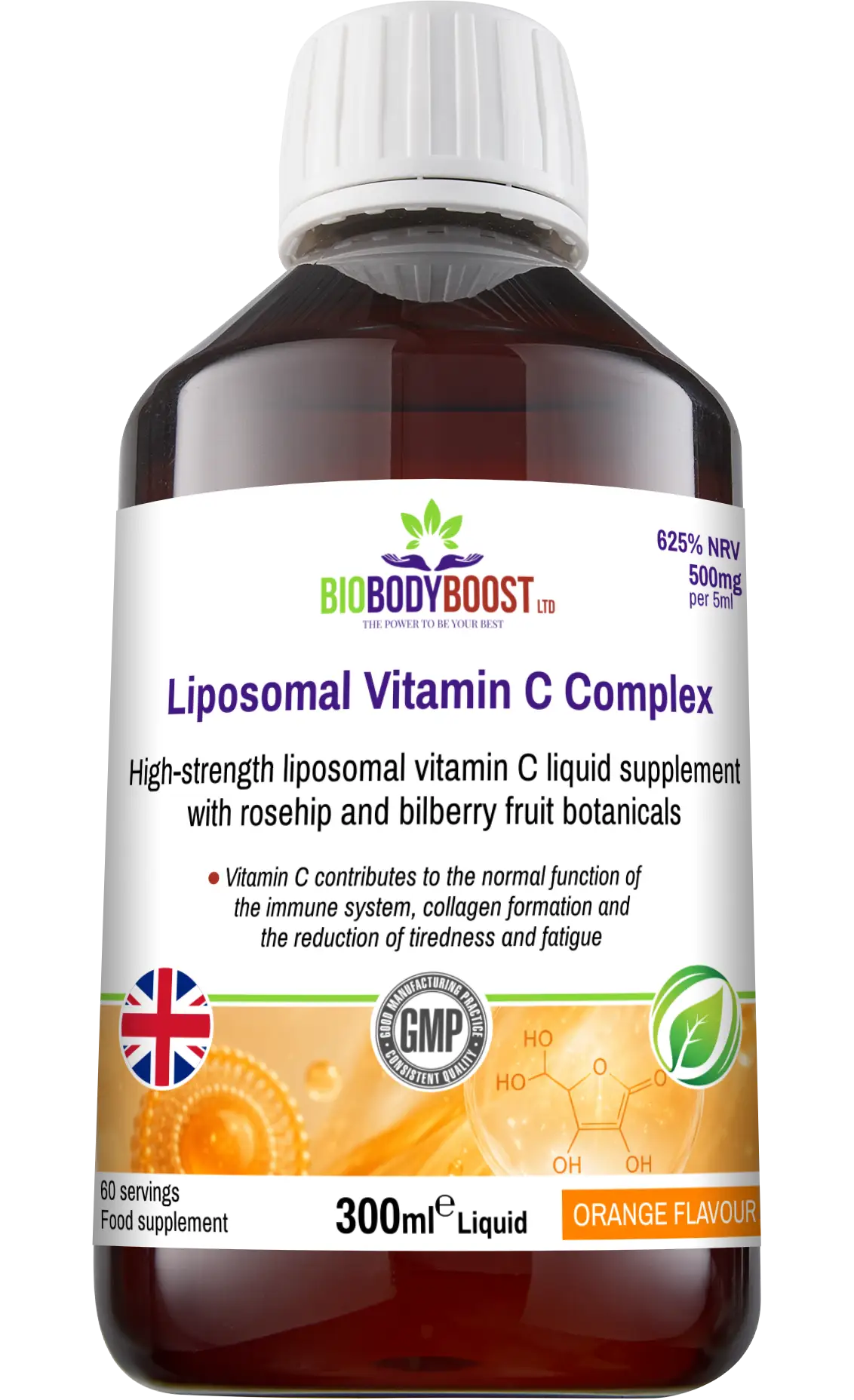
Most liposomal vitamin C brands — including Lipolife — use soy lecithin. Soy lecithin is cheaper, potentially GMO, not always halal or kosher certified, and a potential allergen. Sunflower lecithin avoids all of these issues and is fully aligned with halal, kosher, vegan and non-GMO requirements. BioBodyBoost Liposomal Vitamin C Complex uses sunflower lecithin throughout — 500mg per 5ml serving, halal approved, kosher approved, vegan and soy-free, with 500mg rosehip and 250mg bilberry for a broader antioxidant and vascular support profile. £25.99 for 300ml (60 servings).
Frequently Asked Questions
Is liposomal vitamin C safe to take daily?
Yes. The EFSA tolerable upper intake level for vitamin C is 2,000mg daily. At 500mg, liposomal vitamin C is well within safe limits for long-term daily use.
Can I take liposomal vitamin C instead of regular vitamin C tablets?
Yes — it’s a direct upgrade. 500mg liposomally delivered provides superior plasma concentrations to standard high-dose tablets with no gastric side effects.
Does liposomal vitamin C need to be refrigerated?
Once opened, yes — refrigerate and consume within 30 days. Unopened, store in a cool dry place away from direct light.
What’s the difference between liposomal and buffered vitamin C?
Buffered vitamin C uses mineral salts (sodium ascorbate, calcium ascorbate) to reduce the acidity of standard ascorbic acid, which improves gastric tolerance but does not improve absorption above the transporter ceiling. Liposomal delivery solves both the absorption and the gastric tolerance problems simultaneously.
Explore the full Immunity UK and Halal Vitamins UK collections.
Food supplements should not replace a varied diet or healthy lifestyle. Halal and kosher approved. Vegan. Consult your GP before use if pregnant, breastfeeding or managing a diagnosed health condition.