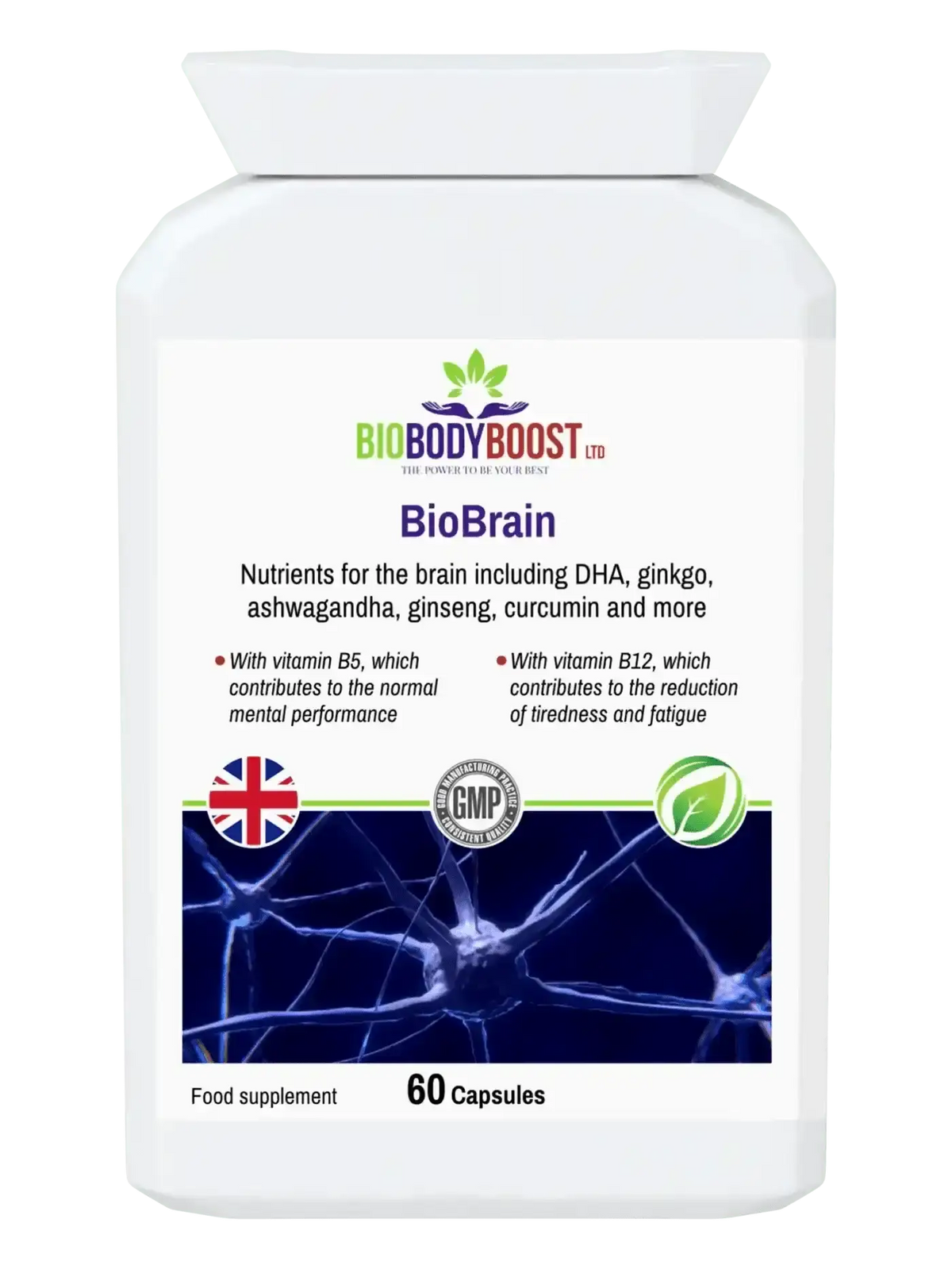

Quick answer: CoQ10 (Coenzyme Q10) is halal. Commercial CoQ10 is produced by microbial fermentation — typically using Rhodobacter sphaeroides bacteria or Candida tropicalis yeast — from plant-derived substrates. No animal involvement at any stage. It is also vegan and kosher. The compliance check for CoQ10 supplements is the capsule shell (HPMC not gelatine) and the manufacturing environment. BioBrain contains CoQ10 as part of its nootropic and mitochondrial support formula — halal certified under UHA Certificate Reference 24623.
What CoQ10 actually is
Coenzyme Q10 (ubiquinone in its oxidised form, ubiquinol in its active reduced form) is a fat-soluble quinone compound found in every cell in the body, with the highest concentrations in the heart, liver, kidney and skeletal muscle — the tissues with the highest energy demand. Its primary role: it is an essential electron carrier in the mitochondrial electron transport chain, shuttling electrons between Complex I/II and Complex III, enabling ATP production. Without CoQ10, the electron transport chain cannot function efficiently.
The body synthesises CoQ10 endogenously from the amino acid tyrosine via the mevalonate pathway — the same pathway as cholesterol. This is why statin drugs (which block the mevalonate pathway) reduce both cholesterol AND CoQ10 levels simultaneously — the primary rationale for CoQ10 supplementation in statin users.
Where commercial CoQ10 comes from
All commercial CoQ10 used in food supplements is produced by microbial fermentation — not from animal sources. The primary production method: Rhodobacter sphaeroides (a photosynthetic bacterium) or Candida tropicalis (a yeast) are fermented on plant-derived growth media, producing CoQ10 as a natural metabolic byproduct. The CoQ10 is then extracted, purified and standardised. This process has been the industry standard since the 1970s when Japan developed large-scale microbial fermentation for CoQ10 production.
Is CoQ10 halal? Yes — the fermentation substrates are plant-derived, the microorganisms are bacteria or yeast (not animals), and no animal-derived processing aids are involved in standard production. Multiple major halal certification bodies including IFANCA have confirmed fermentation-derived CoQ10 as halal. The compliance checks are the capsule format (HPMC not gelatine) and the manufacturing environment certification.
What the evidence shows
Mitochondrial support and energy
CoQ10 is required for the electron transport chain regardless of supplementation — the question is whether supplemental CoQ10 meaningfully raises tissue levels in people with adequate endogenous synthesis. Evidence is most consistent for: (1) people on statins where CoQ10 synthesis is pharmacologically reduced; (2) older adults where endogenous synthesis declines with age; (3) people with mitochondrial conditions. A 2014 Journal of the American College of Cardiology meta-analysis found CoQ10 supplementation significantly reduced all-cause mortality by 42% in heart failure patients vs placebo over 2 years — the strongest human evidence for CoQ10 in a specific clinical population.
Statin-induced myopathy
Statins reduce CoQ10 synthesis alongside cholesterol. Statin-induced muscle pain (myopathy) affects approximately 5–10% of statin users. A 2014 Atherosclerosis meta-analysis found CoQ10 supplementation significantly reduced statin-induced myopathy symptoms vs placebo. CoQ10 supplementation is commonly recommended for statin users by cardiologists for this reason.
Blood pressure
A 2007 Journal of Human Hypertension meta-analysis (12 RCTs) found CoQ10 supplementation significantly reduced systolic and diastolic blood pressure vs placebo — mean reductions of approximately 17/10 mmHg. Mechanism: CoQ10 improves endothelial function and reduces vascular resistance.

The full formula: CoQ10 alongside NALCAR, bacopa, ginkgo and B vitamins — every ingredient dosed and declared.
CoQ10 in BioBrain
BioBrain contains CoQ10 alongside N-Acetyl L-Carnitine (NALCAR — mitochondrial fatty acid transport), phosphatidylserine, bacopa monnieri, Korean Panax ginseng, ginkgo biloba, DHA from algae, niacin (NAD+ precursor) and B vitamins. The combination addresses multiple mitochondrial and cognitive support pathways simultaneously:
- CoQ10: electron transport chain efficiency
- NALCAR: fatty acid transport into mitochondria for oxidation
- Niacin: NAD+ precursor (electron carrier in Complex I)
- DHA: neuronal membrane fluidity for signal transmission
BioBrain is halal certified, vegan, HPMC capsule. UK GMP manufactured by Specialist Supplements Ltd. UHA Certificate Reference 24623.
Is CoQ10 halal UK?
Yes — commercial CoQ10 is produced by microbial fermentation (Rhodobacter sphaeroides bacteria or Candida tropicalis yeast) on plant-derived substrates. No animal involvement at any stage. Halal certification bodies including IFANCA have confirmed fermentation-derived CoQ10 as halal. The compliance check for CoQ10 supplements is the capsule shell (HPMC not gelatine) and manufacturing environment. BioBrain provides CoQ10 in HPMC capsules under full UHA halal certification.
Should I take CoQ10 if I’m on statins?
Statins block the mevalonate pathway which reduces both cholesterol and endogenous CoQ10 synthesis simultaneously. If you experience muscle pain or fatigue on statins, CoQ10 supplementation is worth discussing with your GP — a 2014 meta-analysis found it significantly reduced statin-induced myopathy symptoms. Discuss with your prescribing doctor before starting. CoQ10 has no known interactions with statin drugs but your doctor should be aware of all supplements you take. The NHS medicines guide covers statin information.
BioBodyBoost — Halal Certified UK Supplements
Use code HALAL10 for 10% off your first order — halal approved under UHA Certificate Ref. 24623, vegan, UK made. Shop the full range →