Enema kits sell steadily in the UK, yet almost nothing written about them is both honest and practical — content is either wellness hype ("flush toxins!") or silence. This is the guide in between: what a home enema kit actually is, how to use one safely and hygienically, and — most importantly — the situations where you shouldn't use one at all.
What a Home Enema Kit Is
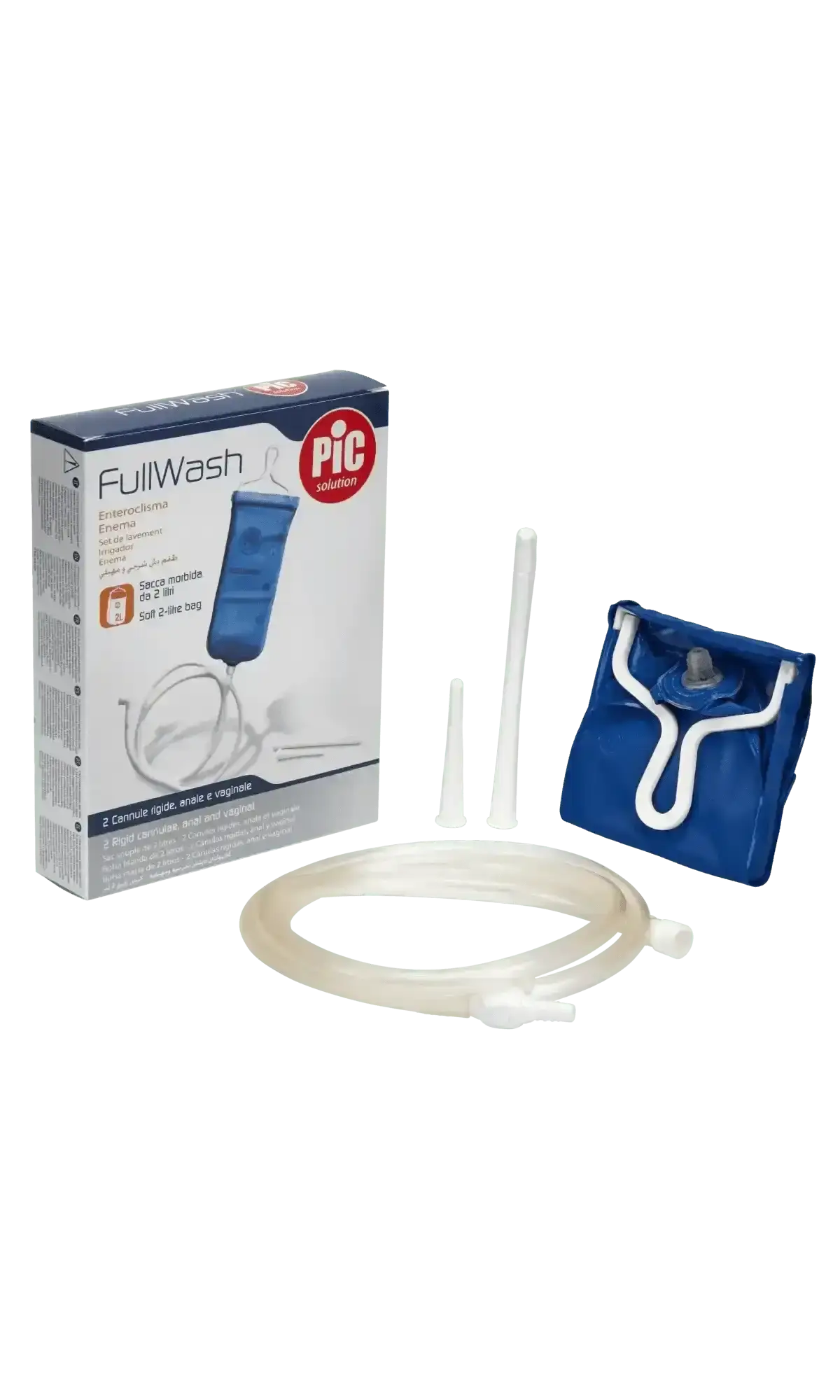
A gravity-fed kit: a bag or bucket (ours holds 2 litres), a hose with a flow clamp, and nozzles. Warm water introduced into the rectum softens stool and prompts the bowel to empty. That's the entire mechanism — water, gravity and the bowel's own reflex. Enemas have been used in medicine for centuries and water enemas remain in clinical use today, typically before certain procedures.
Honest Framing First
An enema empties the lower bowel. It does not "detoxify" you — your liver and kidneys do that — and it is not a weight-loss or wellness upgrade. Legitimate home uses are narrow: occasional relief of constipation when oral approaches haven't helped, and bowel preparation when advised by a clinician. If you're reaching for an enema regularly, the problem needing attention is the constipation itself — start with fibre, magnesium and the approaches in our natural laxatives guide, and involve your GP.

Do NOT Use an Enema If…
- You have rectal bleeding, haemorrhoid flare, anal fissure, or recent bowel/rectal surgery
- You have diagnosed or suspected bowel obstruction, severe abdominal pain, nausea or vomiting — these need urgent medical assessment, not an enema
- You have inflammatory bowel disease (Crohn's, ulcerative colitis), diverticulitis, or significant heart or kidney disease — clinician guidance only
- You are pregnant, unless advised by your midwife or doctor
- For children — never without medical direction
Safe Use, Step by Step
- Water: previously boiled, cooled to body temperature (around 37°C — test on your wrist like a baby bottle). Never hot, never cold, never tap-cold. Plain water only; do not add salts, coffee or solutions you've seen online — hypertonic and caffeinated enemas carry real risks and belong nowhere near home use.
- Volume: start small — 500ml or less is plenty for a first-time constipation-relief enema. You do not need the full 2 litres.
- Setup: hang the bag roughly 30–60cm above hip height. Higher = faster flow = more cramping. Lubricate the nozzle with a water-based lubricant.
- Position: lie on your left side, knees drawn up, on a towel near a toilet.
- Flow: insert the nozzle gently no more than 5–7cm — never force it — and open the clamp slowly. If cramping builds, close the clamp, breathe, resume slowly or stop.
- Hold briefly, then release: a few minutes is enough. Stay near the toilet for the following half hour.
Hygiene Rules for Reusable Kits
- Wash all parts with hot soapy water immediately after every use, rinse thoroughly, and hang to air-dry completely — a damp coiled hose grows biofilm
- Sterilise the nozzle periodically (boiling water or sterilising solution)
- One kit, one person. Never share, even within a household
- Replace the hose or nozzle if discolouration or odour develops
Stop and Seek Medical Help If
You experience significant pain, bleeding, dizziness, or no result alongside worsening symptoms. And if constipation is a recurring theme rather than a rare event: persistent change in bowel habit, blood in stool or unexplained weight loss needs a GP appointment, not equipment.
The Kit
Our 2-litre reusable home enema kit includes the bag, hose with flow clamp and nozzles. For the oral route to regularity — which should always come first — see MagneBowel, FibreFix and the wider Gut Health UK collection.
FAQs
How often is it safe to use an enema?
Occasionally — as an exception, not a routine. Regular reliance can disturb normal bowel function and electrolytes, and signals an underlying issue that deserves diagnosis.
What water should I use?
Previously boiled water cooled to body temperature. Plain — no additives.
Does an enema help with bloating or "detox"?
It empties the lower bowel; any flatter feeling is that and nothing more. It does not remove toxins — organs do that. For bloating, gut flora and digestion are the real levers: see probiotics for bloating.
Enema or laxative first?
Oral approaches first, almost always — fibre, fluids, magnesium, then botanical options. An enema is the occasional last resort of home measures, not the starting point.
This article is general information, not medical advice. Do not use an enema if any contraindication above applies. Consult your GP for persistent constipation or any change in bowel habit.