Written by the BioBodyBoost Team · August 2026 · Our standards →
Quick answer: some probiotic bacteria genuinely do die in stomach acid — studies show unprotected strains can lose the majority of their count in transit. Survival depends on three things: the strain (some are naturally acid-resistant), the capsule technology, and whether you take them with food. This is why CFU at end of shelf life and strain selection matter more than the headline billion-count on the front of the tub.
What happens to a probiotic after you swallow it
The stomach sits at roughly pH 1.5–3.5 when empty — hostile territory designed to kill bacteria. A probiotic has to pass through within 30–120 minutes, survive bile salts in the small intestine, and arrive in the colon alive to matter. Every stage removes a percentage. Good products are engineered around this reality rather than pretending it away.
The three survival factors
1. Strain resistance. Lactobacillus and Bifidobacterium strains vary enormously; species used in quality formulas are selected for documented acid and bile tolerance. Spore-formers (Bacillus) survive best of all but suit fewer use cases. Strain naming on the label — not just "probiotic blend" — is your first quality signal, as covered in our guide to choosing a probiotic by CFU and strain.
2. Capsule design. Delayed-release and acid-resistant HPMC capsules hold together through the stomach and open in the intestine. Standard gelatine capsules dissolve fast — in the worst place.
3. Timing. Taking probiotics with a meal buffers stomach acid toward pH 4–5, dramatically improving survival versus an empty stomach. It is the single free upgrade most people miss.
Why overage and end-of-shelf-life CFU matter
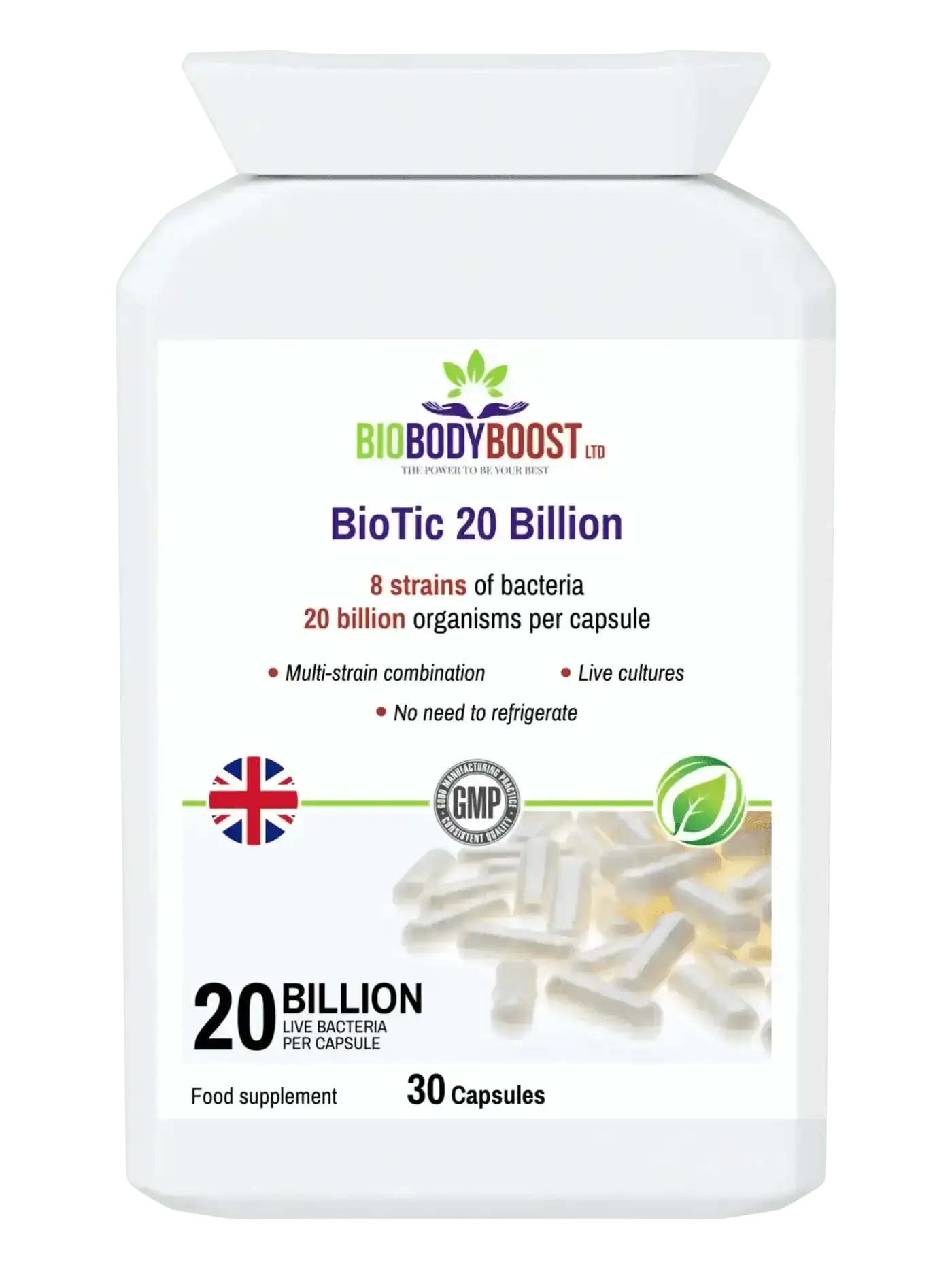
Reputable manufacturers overfill — adding more CFU at production than the label claims — so the stated count still holds at expiry. A "20 billion" product tested at manufacture might be 5 billion by the time you buy it if this isn't done. BioTic 20 Billion declares its 8 named strains and count in acid-resistant plant HPMC capsules — halal approved, kosher approved, UK made — with the gentler BioTic 4 Billion for sensitive starters.
Frequently asked questions
Should probiotics be taken on an empty stomach?
No — with or just before a meal is better for survival. The "empty stomach" advice is a myth for most strains.
Do probiotics need to be refrigerated?
Freeze-dried strains in blister-sealed capsules are shelf-stable; refrigeration extends life but modern formats don't require it. Heat and moisture are the real killers.
How do I know my probiotic is working?
Look for gradual changes over 2–4 weeks — more predictable digestion, less bloating. If nothing changes by week 6–8, the strains may not match your need; our IBS strain guide covers matching strains to symptoms.
Explore the Gut Health UK collection.
Food supplements should not replace a varied diet or healthy lifestyle. Persistent digestive symptoms should be assessed by a GP.