If you want sharper focus without adding another complicated habit to your day, the best vegan omega 3 for brain health is usually the one that gives you meaningful DHA from a clean, reliable algae source. That is the part many people miss. Plenty of plant-based foods contain omega 3, but not all forms support the brain in the same way.
For anyone eating a vegan or mostly plant-based diet, this matters. Brain health is not just about memory years down the line. It shows up in everyday life - concentration at work, mental clarity during busy mornings, and staying switched on when your routine is already stretched. Choosing the right omega 3 can be a simple upgrade with real payoff.
Why omega 3 matters for the brain
Your brain is rich in fats, and DHA is one of the key structural omega 3 fats found there. It helps support normal brain function and plays a role in keeping brain cell membranes flexible and efficient. In practical terms, that connects to how well your brain cells communicate.
EPA also matters, although it tends to be discussed more often in relation to mood and inflammation. For brain support, the two often work best together. If your goal is calm focus, mental stamina, and long-term cognitive support, a vegan omega 3 with both DHA and EPA is generally a stronger choice than one focused on ALA alone.
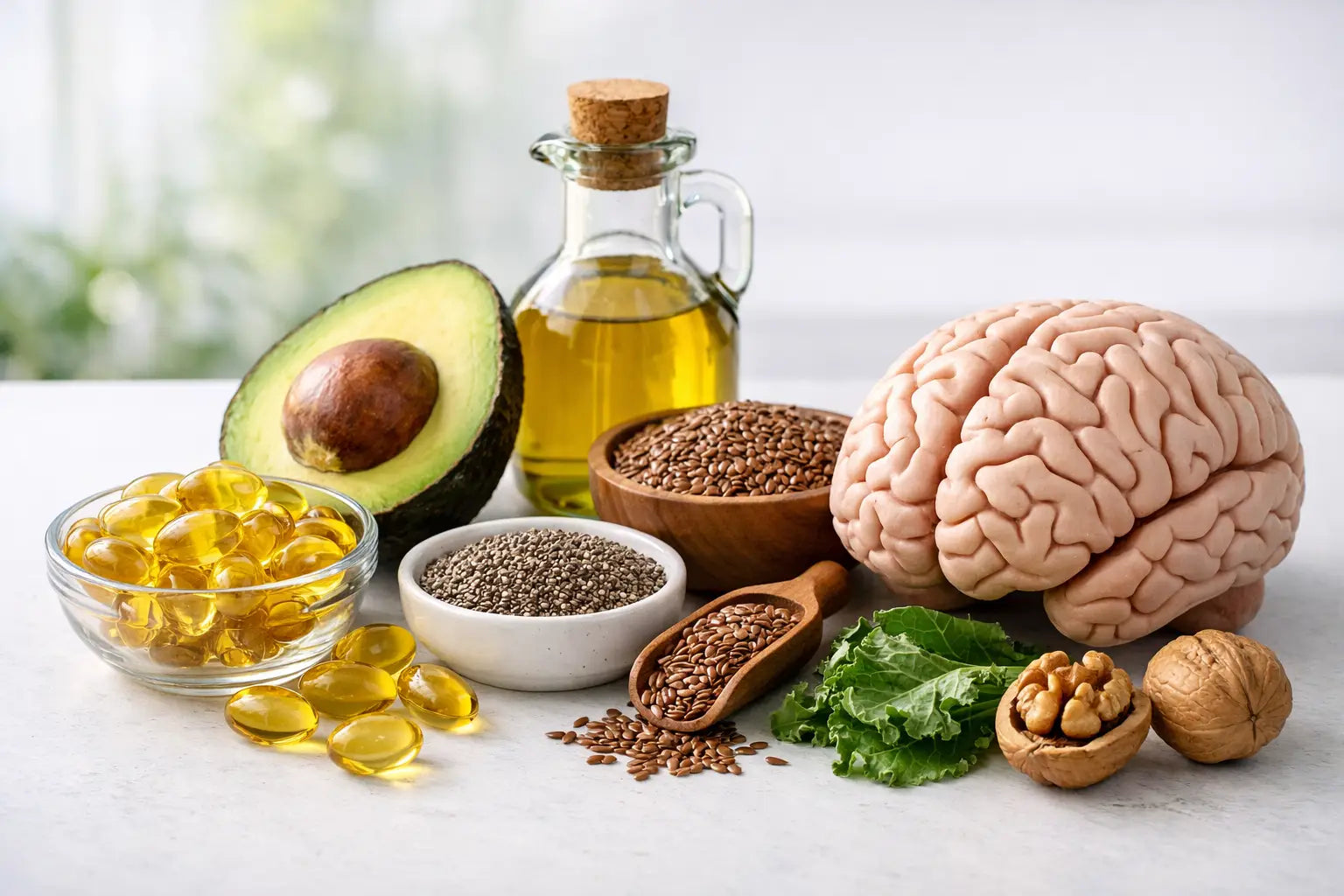
That is the trade-off worth understanding. ALA is the omega 3 found in flaxseed, chia, hemp, and walnuts. These foods are nutritious and absolutely worth eating, but the body converts only a small amount of ALA into DHA and EPA. Conversion varies from person to person and can be especially limited if your diet is high in omega 6 fats or your intake is inconsistent.
Best vegan omega 3 for brain health - what actually works?
If you are comparing options, algae oil stands out as the best vegan omega 3 for brain health for most people. It supplies DHA directly, and many formulas now include EPA as well. That means you are not relying on your body to do a difficult conversion job from ALA.
This is the same reason algae-based omega 3 is often seen as the smarter route for plant-based users who want clear, measurable support. It is targeted. It is practical. And it aligns with a clean-label approach when sourced well.
Flaxseed oil, chia oil and hemp oil still have value, but they are better thought of as supportive dietary fats rather than the main event for brain-focused supplementation. They can help improve overall omega balance in the diet, yet they are rarely the strongest standalone answer if your priority is cognitive function.
Algae oil vs flaxseed oil
Flaxseed oil is widely available and often cheaper, which makes it appealing. It provides ALA and can be a useful part of a healthy routine. But if you are specifically looking for brain support, flaxseed oil is limited by that conversion step.
Algae oil is more direct. It gives you preformed DHA, and in some cases EPA too, which is why it tends to be the more effective option for people who want support they can actually build into a results-focused routine. If your budget allows only one targeted omega 3 supplement, algae oil is usually the better pick.
Does the DHA amount matter?
Yes, and more than the front of the label sometimes suggests. Many products emphasise that they are vegan omega 3, but the meaningful detail is how much DHA and EPA you get per daily serving. For brain health, DHA is the headline figure to check.
A formula that looks impressive but delivers only a small amount of DHA may not give you the support you are expecting. On the other hand, more is not automatically better for everyone. The right amount depends on your diet, your consistency, and whether you are taking it for general maintenance or more targeted support.
How to choose a high-quality vegan omega 3
The best formulas tend to get the basics right without making you work for the information. First, look for algae as the source. This is the cleanest route to vegan DHA and EPA and keeps the product aligned with plant-based values.
Next, check the actual omega content per serving. A supplement may contain a large amount of oil overall, but what matters is the amount of DHA and EPA inside it. Clear labelling is a good sign that the brand takes both formulation and transparency seriously.
Third-party testing matters too. Omega oils are delicate and can oxidise if they are poorly handled. A quality-focused supplement should be produced with stability, purity and freshness in mind. This is especially important if you want a daily product that feels clean, not heavy or unpleasant.
You may also want to look at the wider formula. Some people prefer a simple standalone omega 3. Others do well with a broader brain-support stack that includes nutrients such as vitamin D, B vitamins or plant-based antioxidants. It depends on whether you want one specific tool or a more rounded daily support plan.
Signs your current omega 3 approach may be missing the mark
Some people assume they have brain-supportive omega 3 covered because they add chia to porridge or use flax in smoothies. That is a strong nutrition habit, but it may not be enough if your intake of direct DHA and EPA is low.
You might also be using a vegan omega 3 that sounds impressive but gives only trace levels of the key active fats. If your goal is better focus, emotional steadiness or long-term cognitive support, low-potency formulas can leave you in the grey area where you are technically supplementing but not really moving the needle.
Consistency is another issue. Omega 3 is not a one-off fix for a mentally draining week. It works better as a steady part of your routine, much like hydration, sleep or protein intake. Small daily actions tend to deliver more than occasional bursts of good intentions.
Who benefits most from a vegan omega 3 for brain health?
Busy professionals often notice the value first. When your day is packed with meetings, screens and constant task-switching, mental energy gets drained quickly. A quality algae-based omega 3 fits neatly into a routine built around focus, stress resilience and daily performance.
It can also make sense for students, shift workers and parents juggling a lot at once. These are all situations where calm concentration matters. While omega 3 is not a substitute for sleep, nutrition or managing stress, it can be one of the cleaner foundations for better cognitive support.
Older adults may be especially motivated by the long game. Supporting the brain is not only about how you feel this week. It is also about building healthy habits that support cognitive wellbeing over time.
Best vegan omega 3 for brain health - what to avoid
Be cautious with products that hide the important numbers. If you cannot easily find the DHA and EPA content, that is not a great start. Marketing terms like plant-powered or brain blend sound good, but they do not replace a properly dosed formula.
Also watch for unnecessary fillers, overly complicated ingredient lists, or oils that do not sit well with your digestion. A good supplement should be easy to take, easy to trust and easy to keep using. Clean ingredients and sensible formulation matter because daily supplements only work if they fit real life.
If you are choosing for the whole household, dietary compatibility can matter just as much as potency. Vegan, gluten-free and dairy-free options often make adherence easier, especially when one product needs to suit multiple needs.
The smartest way to use it daily
Take your omega 3 consistently and ideally with food, as this can help with absorption and make the routine easier to remember. Morning works well for some people because it links the habit to the start of the day. Others prefer lunch or dinner. The best time is the one you will actually stick to.
Pairing omega 3 with a generally balanced diet makes the results more meaningful. Think less ultra-processed food, more whole-food fats, enough protein, and a better balance between omega 3 and omega 6 intake. Supplements work best when they support a good baseline, not when they are expected to cover every gap.
At BioBodyBoost, that is the lens worth keeping - simple, research-backed support that fits into everyday life and helps you feel sharper, steadier and more switched on.
If you want a clean answer, choose an algae-based supplement with meaningful DHA, ideally with EPA, clear testing standards and a formula you can take every day without fuss. Brain support does not need to be dramatic. It just needs to be smart, steady and built to last.