This is one of the most common labelling confusions in the UK supplement aisle, and one many brands get wrong on their own product pages — ourselves included, until we audited it. Here is the honest answer.
Are probiotics vegan?
Most probiotics are vegetarian but not vegan, because the live bacterial strains are typically grown on dairy-derived culture media before being freeze-dried into the finished capsule.
The capsule shell is only half the story. A probiotic can use a plant-based HPMC shell and still not qualify as vegan, because the organisms inside were cultured on a milk-derived substrate. Trace carry-over from that growth medium is why manufacturers classify these products as vegetarian.
What HPMC actually tells you
HPMC — hydroxypropyl methylcellulose — is a plant-derived capsule shell made from cellulose. It matters a great deal for halal and kosher suitability, because the alternative is usually bovine or porcine gelatine.
So an HPMC probiotic capsule is reliable evidence that the shell contains no animal gelatine. It is not evidence that the contents are vegan. Both facts can be true at once: plant-based shell, dairy-cultured strains, vegetarian overall.

How our own probiotics are classified
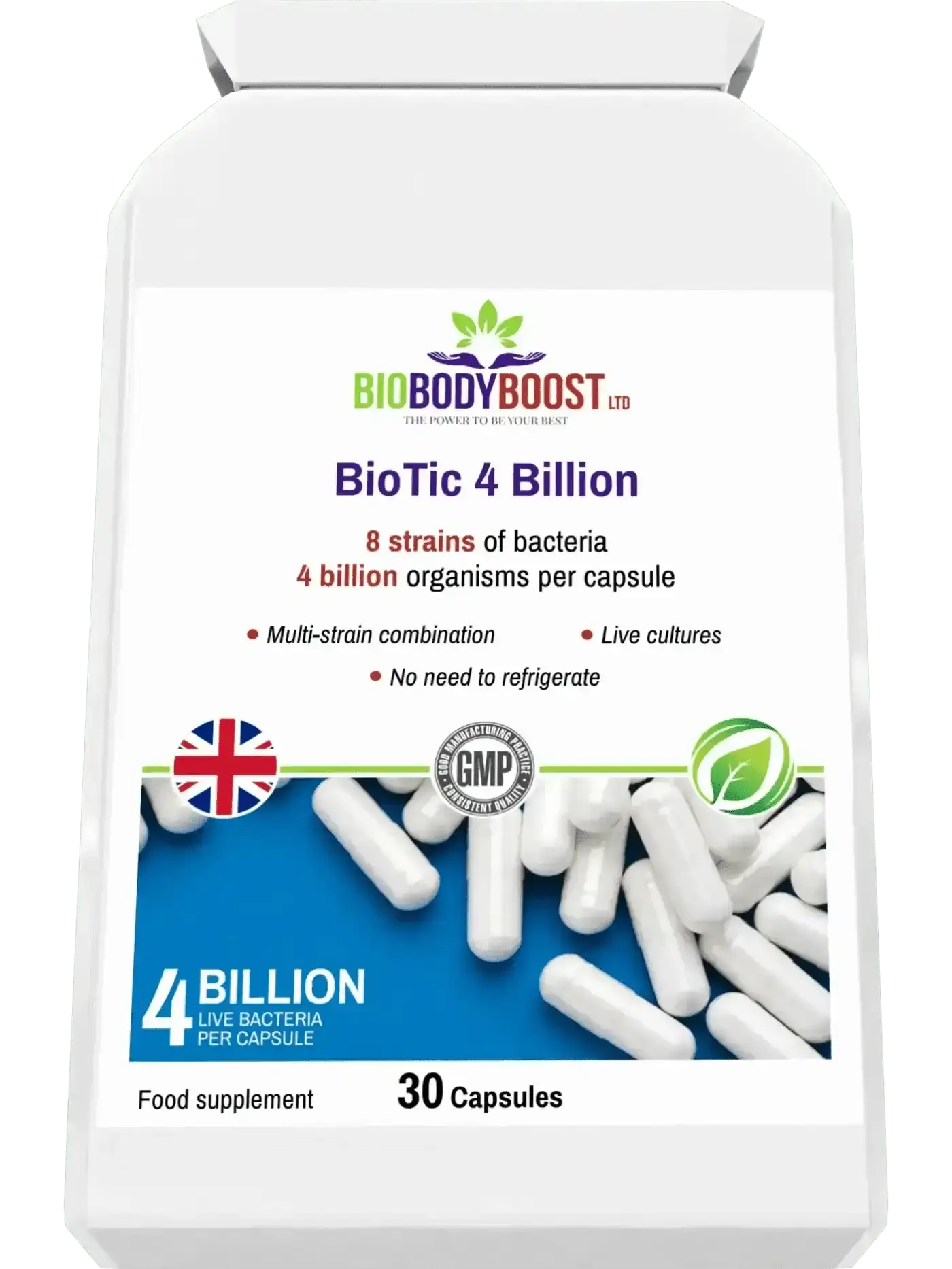
We corrected our own labelling on this point. Both BioTic 4 Billion CFU and BioTic 20 Billion CFU are vegetarian, halal approved and kosher approved, in HPMC capsule shells — but they are not vegan, and we no longer describe them as such. Eight strains, no refrigeration needed, made in the UK.
If you need a genuinely vegan option for gut support, our plant-derived digestive enzymes are vegan and cover a different job — enzymes rather than live cultures.
Why brands get this wrong
Usually not deliberately. "Vegan capsule" appears on a supplier spec sheet, gets copied onto a product page as "vegan", and nobody re-reads it. Anyone maintaining a supplement catalogue should check whether the vegan claim refers to the shell or the whole product — they are frequently different answers.
What to check before buying a probiotic
- CFU count and strain list. Named strains beat a vague "probiotic blend".
- Shell material. HPMC for halal, kosher and vegetarian suitability; gelatine is the thing to avoid.
- Storage. Shelf-stable formulations travel; fridge-only products do not.
- Vegan status stated explicitly, not inferred from the capsule alone.
Questions we get asked
Are any probiotics genuinely vegan?
Some are, where strains are cultured on plant-based media and the manufacturer verifies it end to end. These are less common and usually state "vegan" explicitly on the finished product, not just the capsule.
Are probiotics halal?
They can be. The two things to verify are the capsule shell (HPMC rather than gelatine) and halal certification of the facility. Our probiotics meet both. Browse the full Halal Vitamins UK range.
Does a higher CFU count mean a better probiotic?
Not automatically. Strain diversity, survivability through stomach acid and honest storage instructions matter as much as the headline number.
Live cultures carry no authorised health claims under UK and EU law. Food supplements should not be used as a substitute for a varied diet and healthy lifestyle.